The Disabled Myth
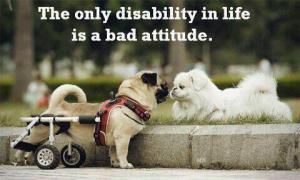 I am disabled.
When you look at me, you can’t see that I am disabled. I look like anyone else. As some people would say, I look “normal”. I’m not in a wheelchair, I don’t walk with a cane and I don’t wear a hearing aid.
Yet I am different. I am blind in my right eye but because no one can see any outward manifestations of this, they think that I am like anyone else who has all their faculties “intact”.
The point I’m trying to make is that we are all the same and should be treated as such. You who is lucky enough to have all your senses intact, me with my one bum eye, and the guy in the wheelchair.
We all have something to offer. We all have value to bring to this world.
I was in a clothing shop the other day – at this point in time, its name escapes me. Along the aisles, I encountered a man in a wheelchair with a number of clothes on his lap – obviously waiting to see what else he liked in the store so that he could take his completed bundle of goodies along to the change room.
As I approached where he was, I could feel a sense of defiance emanating from him. He was giving off the vibe: “Yes, I am entitled to be in this shop trying on clothes. So sue me!”
I didn’t think twice of it at this stage but it cropped up in my mind a couple of days later. I asked myself why people who are not abled bodied are often seen to close themselves off from others, giving off a very hostile vibe. A “don’t-feel-sorry-for-me” vibe.
People who are lucky enough not to have impaired senses tend to, in my experience, feel sorry for their not-so-abled brethren. But unfortunately with this sense of “feeling sorry” they disempower the other person. They look at someone in a wheelchair and (although they might not say it) they’ll think: “Shame! I am going to do something to help.”
Don’t! Doing what you think will help a differently-abled person is the worst thing that you can do. Chances are very good that you will be doing something that for them that they absolutely don’t want. In actual fact, it could very well be counter to what they want and you’ll end up offending them – something that I’m sure you set out not to do.
So when you encounter a person in a wheelchair, walking with a cane or a guide dog, or wearing a hearing aid, don’t start treating them differently. Treat them as you would anyone else: like a human being who has value to give to the world.