
Trust Yourself
“Trust yourself.”
That’s the advice I always gave my two sons before they walked on to a wrestling mat, right before a match.
It took me a long time to get to that point, to trust them enough to leave it in their own hands.
“I just can’t figure him out.”
“I do everything for him and he just won’t listen to me anymore.”
I can hear the frustration in the voice of every wrestling parent that I hear mutter these words.
Believe me, I know.
I’ve been there myself.
I understand.
It took me a long time to figure out – that they no longer want you to figure it out.
If you have one of these young men who no longer listens to you, I attest instinctively, they yearn to figure it out for themselves.
Thus, they no longer listen to you.
Which causes your frustration.
I have learned this frustration emanates from the fact the child is ready for Phase 2 in the development of an athlete, and you are still stuck in Phase 1.
I believe there are two phases to being a Sports Parent and developing an athlete with the overall goal to prepare him for life.
Phase 1, is the Partnership Phase.
This is the phase where you, as his parent, do everything necessary to put him in the position to have the opportunity for success.
You run ahead of him and clear his path.
With your efforts he see success.
If the purpose of sport is to prepare a young men for life, then in the overall scheme of things, it is not Phase 1 that is the most important phase, it Phase 2.
The Development Phase.
The hardest of the two phases.
This is the where most sports parents frustration levels start to rise.
This is where the partnership with their son ends and his preparation for life begins.
The Development Phase is the phase where your child learns how to ‘figure it out’ on his own.
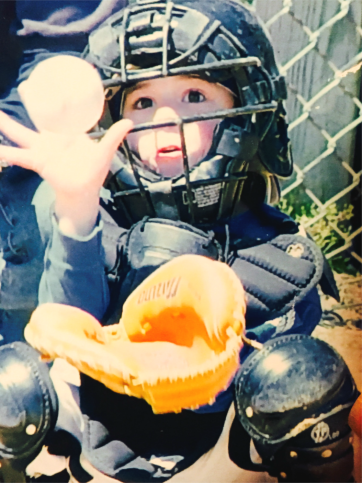
The two phase process can be best illustrated with this baseball analogy.
Imagine you are the coach of your son’s baseball team.
Your son is your catcher.
You would like for him to be the best catcher that he can be.
As a coach your job is to get him ready for the next level of play.
There are two parts to being a great catcher.
The first part is to learn how ‘to receive a game’.
The second part is for him to ‘call a great game.’
The first part of being a great catcher can be obtained in Phase 1.
The second part can only be obtained in Phase 2.
In Phase 1, the Partnership Phase, you may be more important to his overall success than he is at this early stage.
You as the coach, call the game for him.
As his coach you are synchronized with him in order to execute a precise game plan in order to win the game.
By you calling every pitch allows him to concentrate on becoming a great receiver.
He will see success from the results of the calls you made.
You will have virtually made all the decisions for him.
And he, to his credit, will have trusted you enough to follow your every instruction.
I suggest once an athlete gets to this part in the process he craves to be more involved in the decisions that created his own success.
He craves to be the most important part of his own success.
And if his cravings aren’t met, you run the risk of him over ripening.
His appreciation for all that you do for him will slowly turn into resentment towards you as he comes to realize and understand the significant role that you have played in his success.
Which in his mind translates into the realization that people feel he has played a much smaller role in his own success, than he knows he actually has.
And he hates that realization.
He yearns to figure it out on his own.
Without you.
Don’t be offended by this, for this is a good thing.
Isn’t sports supposed to prepare a young man for the real world?
Obviously you won’t be there in his life to make every decision for him.
He must learn to become successful with the decisions that he makes.
He must learn to figure it out.
It is a natural progression in the process of preparing a young man for life.
As a parent you must not get stuck in Phase 1.
It is an easy trap to fall into.
Let me warn you the longer that you stay in Phase 1, the more diminishing returns you will see.
If, as a sports parent, you do not embrace the transition from Phase 1 to Phase 2, the price that will be paid will be your son’s passion for the sport.
Don’t burn that passion.
Flame it.
Allow him to develop.
Allow him to figure it out on his own.
To gain experience.
Which comes from making mistakes.
Obvious ones to you, but understand it is not you that is figuring it out now.
It is him.
You have to allow him to make calls that you don’t agree with – allow him to attempt and fail on his own.
A minor league baseball coach once told me that when he gets a highly touted phenom in the minors for the first time, he allows them to fall flat on their face, on their own, before he offers them any advice.
His reasoning is they are more receptive to his advice after they failed on their own.
When they fail on their own, they are then ready.
For change.
Up to this point they have been a phenom who has always done things that worked.
But now the ante has been upped.
The competition increased.
What worked for and against 99% of the population is no longer the mission.
It is to beat the best 1% of the competition, which is the new mission.
And that requires a totally different preparation mindset.
A mindset that is exactly like the one they will need when they have to go out into the world on their own.
They need to be able to figure it out.
They do that by first you teaching them how to call their game.
Then allowing them to call their own game.
Having your son have success by you figuring it out is not the goal.
Preparing him to make decisions in life that lead to his own success is the real goal.
And this occurs only in Phase 2.
By allowing your son to call a great game, he will then be able to make decisions in his own life, without you.
And if he happens to call for a fastball over the plate when the right call was to call for a curve-ball low and away, well then he will remember that the next time he is in that same situation.
And the pain of that memory will cause him to make an adjustment.
They say great catchers make great coaches.
Great catchers also make great parents.
What is the difference between a franchise and a sole unit business ?
The magic is in the duplication.
And that is the reward.
That someday the son you allowed to figure it out on his own will one day teach his kids to do the same.
Trust yourself and in the process to allow them to figure it out on their own.
So, the next time you catch yourself saying,
“I just can’t figure him out,”
Realize that your son is trying to ‘figure it out’.
Trust in the process.
Trust in him to be able to do so.
Trust me.
It has taken me a long time to learn that the best way to get rid of frustration is to embrace Phase 2.
Home Contact Paperbacks Ebooks Audiobooks Shorts

Subscribe to this blog and get a FREE GIFT
Related Posts:
Be Incapable of Discouragement
You Must Beat ALL of Your Opponents
Greatness vs. Greatness Arrived



