How to Cope with Intense Emotions
 Taking a neutral position is one powerful way to diffuse stress.
I know this. And I was just thinking about this last night, while I was NOT remaining neutral.
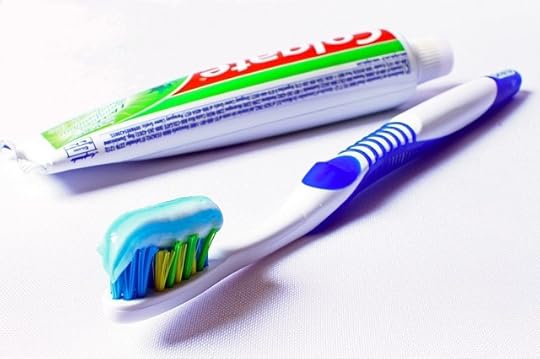
I was thinking of the benefits of detaching from these moments of high emotion as I was overwhelmed by frustration over my daughter’s never-ending bedtime routine. I am so not kidding. It takes the girl 40 minutes to brush her teeth. Forty minutes, people.
And, perhaps me flipping out over the lengthy teeth-brushing time was not the best way to go. I figure, that my rant over her apparent inability to put pajamas, any pajamas on in less than six hours, probably did not speed matters along. Pretty sure my long day was made longer by my heightened emotion and her 30-minute face-washing routine.
Next time, I’ll do what Allen Klein suggests because It Makes Sense.
In his book, You Can’t Ruin My Day: 52 Wake-Up Calls to turn Any Situation Around, the author, speaker, and Jollyologist writes, that “if you put your car in neutral gear, it detaches the transmission from the motor. Putting a difficult situation in neutral is like that; it will detach you from your upset.”
Since, I’ve gotten pretty good at not to detaching from the upset around the bedtime scene, I will now do it differently by learning how to neutralize that intensity by practicing a few of the exercises Allen recommends in his great book.
How to Neutralize High Emotion
Here are two of Klein’s suggestions:
1. Give up being right. Even if you are right, insisting on it makes other people wrong, and nobody wants to be put in that place. Me reminding my daughter that she was slow and late and behind was a negative comment on her behavior and (more than a little snarky) and not a wise motivating strategy.
I could have done this so much better by not making anyone right or wrong; by just reminding her of the passing time and letting her go through her routine. If in the end, she was late, then she can be held accountable for that, but nagging her along put me in the “right” position her in the “wrong” and both of us feeling irritated and upset.
2. Use a green lens. In the book, Klein writes “Clinical psychologist Maria Nemeth suggests that we view other people through a “green lens” rather than a red one, which views people in a negative way. Nemeth’s green lens view of people, on the other hand presents a way of seeing others in a more positive way.”
With a new perspective, such as the green lens, we can see that everyone has their own goals and dreams and desire. Everyone has their own way of doing things, their own talents and skills. Everyone deserves to be treated with dignity and respect.
Using these exercises to diffuse the intense emotion can help us shift to the more neutral middle ground. From there we can operate with the calm and clarity we’ll need to work through anything, including a never-ending bedtime routine.
Allen Klein is the world’s one and only Jollyologist. 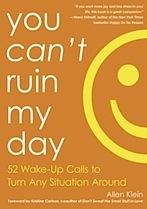 Through his books and presentations, Klein shows people worldwide how to use humor to deal with everything from traffic jams to tragedies.
He is an award-winning professional speaker and a recipient of: a Lifetime Achievement Award from the Association for Applied and Therapeutic Humor, a Certified Speaking Professional designation from the National Speakers Association, and a Toastmaster’s Communication and Leadership Award.
Klein is also a best-selling author of 25 books which have sold over 600,000 copies.
To learn more about Klein’s work go to learn more about Allen Klein, go to www.allenklein.com