Losing Can Help Us Win
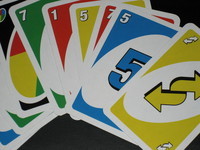 Whether you’re playing Uno with a cutthroat 9-year-old or interviewing for the promotion, losing out on what we want never feels good, but it might just be what we need to boost our motivation to achieve even bigger goals.
According to research published in the journal Psychological Science “near misses,” such as losing on the last-second shot, or missing a winning lottery number by one digit actually boost our motivation to win.
“While we often think of motivation as being targeted to a specific reward or goal, these findings support the notion that motivation is like energy and reward is like direction — once this motivational energy is activated, it leads an individual to seek out a broad range of goals and rewards,” says researcher Monica Wadhwa in a press release about the study.
When we lose by a little – an outcome the researchers called the “near win effect” — our motivation intensifies and drives us to succeed at the next task or goal even if it’s unrelated to the first one that we narrowly missed.
Failure as a Power Position
I’ve felt this on the golf course. When I miss the putt by half-an-inch, I can’t wait to get to the next hole and try again. When I’m having an off day and missing fairways and putts all along, I tend to feel more frustrated and weary and less motivated to keep going.
At work, a rejection that comes with an “I’d love to see more ideas” comment is always easier to swallow than a “No” or “This isn’t right for us.”
The close-but-not-yet sense makes me feel hopeful and motivated to try again.
The Experiment
In their experiment Wadhwa and a colleague had students play a mobile phone game.
Participants were to click on tiles in a grid which covered images of diamonds and rocks. The goal was to uncover eight diamonds, without finding the rocks.
Students who played, would receive a chocolate bar at the end of the game.
Yet, as part of the experiment the game was tweaked so that one group of students would come oh, so close to victory, uncovering seven diamonds before hitting a rock. Another group uncovered the rock on the second try.
At the conclusion of the game those students who lost the game on the last tile, were timed walking to their candy bar reward at the end of the hall. As it turns out they moved about 12 seconds faster than those who lost on the second tile.
The researchers said that the findings indicated a near win may provide a stronger motivational boost than an actual win.
But, failure and rejection can leave us feeling physically and emotionally bruised. So, how can we deal with those bad feelings and keep moving forward? There are plenty of ways to do it and I’ll tell you about some of them Wednesday.
A version of this post appeared earlier on PsychCentral.com