
Reading into the murders exactly what they want
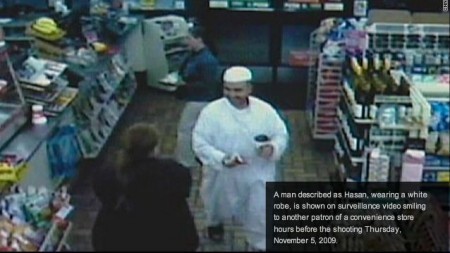
When Major Nidal Malik Hasan, a Muslim extremist who'd preached that "Muslims should stand up and fight against the aggressor", murdered 13 soldiers at Food Hood while shouting "God is great", it was too soon to wonder if he was motivated by his faith:
(The ABC's) first substantial report, by correspondent Lisa Millar, failed in eight minutes to even note the killer was a Muslim, hinting only that Hasan may have suffered harassment because of his unspecified "family background".
At midday, ABC correspondent John Shovelan filed another long report, which did fleetingly note that Hasan "had been a Muslim all his life", but only after painting him as one more suicidal soldier traumatised by American's war-mongering.
Hasan had "spent years dealing with troops suffering post-traumatic stress after returning from war zones", said Shovelan, and already 75 soldiers at Fort Hood had killed themselves.
Small problem with this theory: Hasan had not actually committed suicide and had never been to war.
Yet this "war-is-hell" angle was too handy an excuse, leading reporter Kim Landers to next suggest on PM: "This attack raises new questions about the toll that continuous fighting in Iraq and Afghanistan is taking on the US military and individual soldiers."
It did? Let me repeat, Kim: Hasan is a psychiatrist. He never fought anywhere, until the day he decided to fight America....
SBS that night claimed that investigators were still searching for a motive for the massacres, only to have newsreader Lee Lin Chin then suggest the one SBS preferred: "And later in the program we'll be examining some of the problems faced by Muslim soldiers in the military."
The Sydney Morning Herald likewise reported only that Hasan had faced "harassment" from the army for being Muslim and merely opposed the wars in Iraq and Afghanistan "after hearing the stories of returning servicemen".
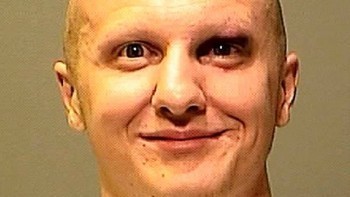
But with the shooting of congressman Gabrielle Giffords and the murder of six bystanders, it was not too soon for the ABC to instantly speculate about the (purely imagined) ideology driving the killer (above), actually a madman who'd conceived a hatred of Giffords long before the rise of Palin and the Tea Party movement.
Gerard Henderson:
On ABC News Breakfast yesterday the co-presenters Mary Gearin and Waleed Aly made it clear early in the program that they saw the hostility to Barack Obama's program - as exemplified in the Tea Party and Palin - as providing a spark which could ignite a murderous rage against the likes of Giffords.
This became evident in the segment reviewing the morning newspapers shortly before the 7am news bulletin. The guest commentator was the academic and Herald Sun columnist Jill Singer. It was one of those ABC discussions where everyone essentially agrees with everyone else.
Eventually Gearin put the leading question: "Can we blame Sarah Palin?" Singer had a bit each way and concluded: "I don't know."
The proper answer was - wait for the evidence.
Soon after the co-presenters read from the program's message board. Gearin cited the view of "Purple Tomcat" that it was Palin's fault. And Aly referred to the position of "Mark", who commented: "I notice Republicans are saying 'let's not politicise this' and then it's always Democrats that end up getting shot or killed." Aly acknowledged that perhaps the comment was "generalised". You can say that again. The targets of the previous two political assassinations in the US were Republican presidents Ronald Reagan and Gerald Ford. Later in the program both Gearin and Aly acknowledged that all theories about Loughner's motives were speculative.
On ABC metropolitan radio Philip Clark expressed concern about the "extreme opinion" in the US political debate by what he termed the extreme right-wing. He mentioned Fox's Glenn Beck. And a listener phoned in criticising, you've guessed it, Israel.
UPDATE
Exactly the same phenomenon is observed at the New York Times.
UPDATE 2
Michael Gerson notes an historical parallel:
WHEN president John Kennedy visited Dallas in November 1963, he was greeted by a full-page newspaper ad accusing him of being a communist fellow traveller.
To his wife he observed, "Oh, you know, we're headed into nut country today." The city, according to historian William Manchester, was a mecca for "the Minutemen, the John Birch and Patrick Henry societies".
In the hours following Kennedy's assassination, aides assumed a right-wing radical was responsible. When Robert Kennedy informed Jacqueline about Lee Harvey Oswald's leftist background, she felt sick.
"He didn't even have the satisfaction of being killed for civil rights," she said. "It's - it had to be some silly little communist." Eventually, the Warren commission found no direct connection between Kennedy's assassination and the city's "general atmosphere of hate".
UPDATE 3
One of the sanest takes is from Megan McArdle:
Many of the people who rushed to blame this on their political opponents made themselves look like first class jerks, an impression that was not improved when we got more information, and they doubled down rather than simply admit that they had perhaps jumped to conclusions.
At this writing, it seems as though the violent rhetoric this guy was listening to came from the voices in his head, not the radio or cable TV. There is no evidence that his ideas were significantly influenced by anyone, left or right, or that saying mean things about Giffords made his fixations worse; we're talking about someone whose main grievance seems to have been that she wouldn't address his concerns about a conspiracy to control the grammar of American Standard English.
This never looked much like an assassination, which usually targets a single politician, not nine-year-old girls who happen to be standing near them. And after reading his ramblings, it's pretty clear that he was some kind of crazy, and that his community turned away from his craziness rather than trying to intervene. But even that judgement may be premature.
(Thanks to reader Michael. No comments during break.)


Andrew Bolt's Blog

- Andrew Bolt's profile
- 5 followers

