Incidental Characters and Walk-Ons
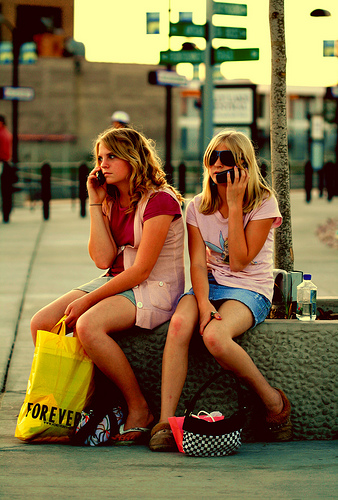 Incidental characters are like walk-ons in a play—they enter, perform some brief action, and then exit. Walk-ons aren't in the story long enough to develop character or, in many cases, to have names. But the reader must be able to distinguish one from another, so the writer often gives them physical characteristics or mannerisms that can be described in a few words for a quick reference.
 For example, the hero might be stuck in a grocery store line behind a bubbly girl who's chatting with the cashier, a tall, thin fellow. After the reader has "seen" them, if the hero is talking or thinking about them, he might begin referring to them as Bubbles and Stretch. This gives the reader a much better picture than repeating the girl and the boy. It also helps the reader identify them, especially when the walk-ons are the same sex: the first girl with a phone, the second girl with a yellow bag, the girl at the cash register, the girl in the line.
 Give these characters some feature that can be described simply: one might have impossibly red hair (the red queen), another might wear a hat (blue hat) or have brown eyes. An lumpy-looking, deeply tanned character might remind the point-of-view character of a twice-baked potato and become "the potato" in future references.
 Limit these names to characters who are involved in enough action that they need to be distinguishable and whose names would not naturally be given. Too much of a good thing isn't always wonderful.
If this sounds like a lecture, it's because it is. :) It's from one of my classes. I love to hear what you think. Any ideas or suggestions? Examples, good or bad?


No comments have been added yet.