Is It Worth Reading Go Set A Watchman?
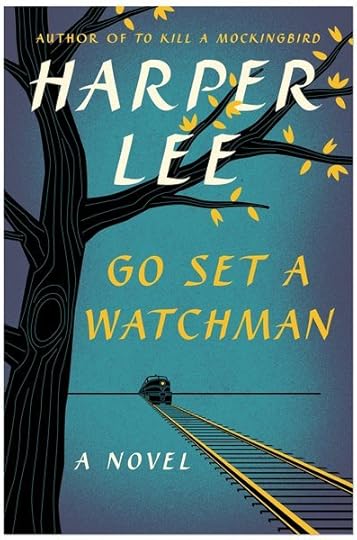
So if you have been living under a rock – for the past, oh let's say five months – then you should know that To Kill a Mockingbird author Harper Lee released a sequel to her critically acclaimed first novel titled, Go Set a Watchmen.
 Not to be confused by this Watchman:
 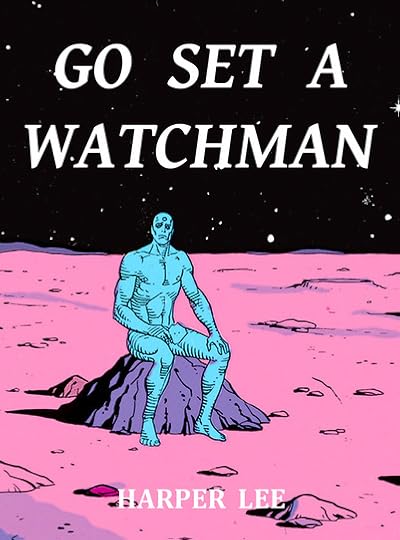 See that? I made a joke.
I'm just trying to make up for that depressing blog post last month when I discussed The Top 10 Killed Off Literary Characters That You're Still Emotionally Scarred Over.
I guess this month's blog post is a little bit of a step up.
So anyway, Harper Lee's Go Set A Watchman.
The title comes from a phrase in the Book of the Prophet Isaiah which states:
"For thus hath the Lord said unto me, Go, set a watchman, let him declare what he seeth." - Isaiah 21:6
Back in February, Lee's publisher confirmed the sequel announcing that the novel takes place 20 years after the events in To Kill a Mockingbird.
The new novel is set in the same Alabama town of Maycomb in the early 1950s, where Scot returns to her hometown from New York to visit her aging father, Atticus Finch. Except, her visit takes an unexpected turn when she learns her father's dark attitude toward society.
You can probably already guess what it is.
Anyway, the novel was finally released on Tuesday, July 14th and there has been many mixed reviews about Lee's sequel. Especially the uproar many people had when they found out that Atticus Finch was a racist.
Yes. You read that right. That Atticus Finch.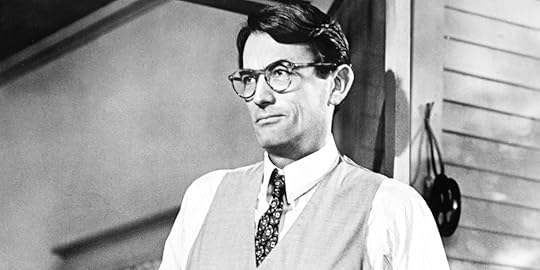 But there are several things to keep in mind before you do decide to pick up the book.
The first and foremost is that you have to understand the origins of Go Set a Watchman. Go Set a Watchman (GSAW) was the original rough draft to Harper Lee's To Kill a Mockingbird when she submitted it for publication. This novel was written a little over 50 years ago.
To make a long story short, Lee had submitted the rough draft of her manuscript to her then editor, Tay Hohoff. Hohoff read the manuscript and suggested that Lee rewrite the novel so that she approached the book from the perspective of Scout in her youth. That's how To Kill a Mockingbird was born.
So then what did Lee ended up doing with her original manuscript?
Well, like all early rough drafts, she abandoned GSAW and set on rewriting her novel. It took Lee two years to update the draft of her novel. It ending up becoming the literary classic that every child in high school and middle school was assigned to read, and later write an in-depth literary analysis on.
Good times.
 So after work last week, I ran over to Vroman's Bookstore to buy a copy of Harper Lee's newest novel.
And because I already learned before that this novel was essentially the rejected first draft of To Kill a Mockingbird, I was not surprised to find the entire novel . . . dry.
This was the main problem that I had with GSAW.
As someone who is familiar when it comes to reading rough draft manuscripts before, I really did feel like I was reading a draft to a novel – or poorly done fan-fiction – that I was suppose to edit.
Not going to lie, there were times when I felt like I should have broken out the red pen on this book.
Mind you, I haven't felt that way since I forced myself to finish reading Breaking Dawn.
But there were several lines in this novel, which I was like . . . um, okay?
Like this line in Chapter 1 when Jean Louise is on the train back home to Maycomb: "She sternly repressed a tendency to boisterousness when she reflected that Sidney Lanier must have been somewhat like her long-departed cousin, Joshua Singleton St. Clair . . ." (page 5). Or like this other line here in Chapter 2 when Jean Louise and Atticus are reunited, and Atticus tries to silently hush a now twenty-six year old Scout from prying into her Aunt Alexandra's private life: Atticus raised his eyebrows in warning. He watched his daughter's daemon rise and dominate her . . . When she looked thus, only God and Robert Browning knew what she was likely to say." (pages 19 – 20). And finally, my favorite weird line from this book comes from the beginning of Chapter 8, when the author foreshadows to her readers the realization that comes across Jean Louise Finch when she finds out her father is a racist :
"With the same suddenness that a barbarous boy yanks the larva of an ant lion from its hole to leave it struggling in the sun, Jean Louise was snatched from her quiet realm and left alone to protect her sensitive epidermis as best she could on a humid Sunday afternoon at precisely 2:28 p.m." (page 100). So there is a definite feeling when reading GSAW that the novel isn't really a completed novel. You're reading a published manuscript that isn't in its sleek, final form.
That being said, I will say that there is something sort-of cool about reading a manuscript that was later revised to launch one of the best-selling books of all time. You can truly see how this novel was later progressed to spawn To Kill a Mockingbird.
As much as so many fans of To Kill a Mockingbird wanted to like this novel, their disappointed was met when the novel just fell too short on the plot and some of the dialogue that was exchanged between several of characters.
The truth of the matter, is that you're not reading a novel, but a draft of what could have been To Kill a Mockingbird if Lee hadn't revised it.
But there are some good lines in GSAW that are still a testimony to how appealing a writer Harper Lee can be. Even throughout the mess of GSAW, Lee still has the charm in her writing that first appealed to readers when they picked up To Kill a Mockingbird.
In Chapter 3, when Jean Louise recognizes the town's attitude reflected in her Aunt Alexandra, she describes how the daughters in Maycomb were suppose to act when they became women: "Alexandra saw what Maycomb saw: Maycomb expected every daughter to do her duty. The duty of [Atticus's] only daughter to her widowed father after the death of his only son was clear: Jean Louise would return and make her home with Atticus; that was what a daughter did, and she who did not was no daughter." (page 30). Or this amazing speech Jean Louise gives to her presumed fiancé, Hank about her opinion on marriage in Chapter 6: "I learned from watching sleek, Madison Avenuey young marrieds . . . they go through a kind of tribal fandango, but the application's universal. It begins by the wives being bored to death because their men are so tired from making money they don't pay any attention to 'em. But when their wives start hollering, instead of trying to understand why, the men just go find a sympathetic shoulder to cry on. Then when they get tired of talking about themselves they go back to their wives. Everything's rosy for a while, but the men get tired and their wives start yelln' again and around it goes. Men in this age have turned the Other Woman into a psychiatrist's couch, and at far less expense, too." (page 48). Or finally, this heartbreaking line at the end of Chapter 10 from Jean Louise when she can't fathom the idea of why race hadn't been an issue for her: "Had she insight, could she have pierced the barriers of her highly selective, insular world, she may have discovered that all her life she had been with a visual defect which had gone unnoticed and neglected by herself and those closest to her: she was born color blind." (page 122). So Harper Lee is still able to arrest your attention with GSAW. The tone is the same as the one we have been used to since we've read To Kill a Mockingbird, along with pastoral scenes (although they are mostly told from flashbacks) about Scout's childhood with Jem and Dill.
But there is too many clichés that pop up here and there among the pages. So much so that it nearly drives you to the point of irritation. There's no genuine dramatic climaxes, there's not enough development on the new characters that Lee introduces in GSAW and the plot – as simple as it is – lacks immensely.
However, you have to give Lee's editor some credit when she first gotten her hands on Lee's original manuscript. Talk about how Hohoff saw a few paragraphs in GSAW referring to the trail of a young black man and pushed Lee to write a classic masterpiece.
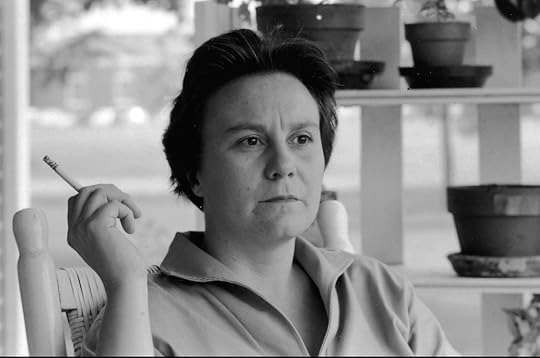 So now the question is: IS THIS BOOK WORTH READING?
The answer: NO.
As I said before, the entire novel is a drafted original version of To Kill a Mockingbird, published and then tailored to be released into a sequel.
It isn't an outstanding novel, but thankfully it doesn't ruin the majestic thoughts and ideas that To Kill a Mockingbird has. Think of GSAW as the Behind the Scenes selection when you pop in a DVD to your favorite movie. As much as you love the film in its originality, the Behind the Scenes breaks it down and explains to you where most of the inspiration for the film came from.
So if you do not wish to read Go Set a Watchman, that is entirely your choice.
But hey, at least we can always turn to Gregory Peck to keep our spirits up!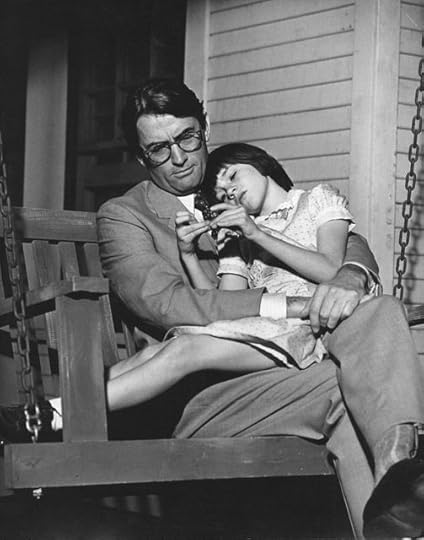 Lee, Harper. Go Set a Watchman: A Novel. HarperCollins, Print 2015.
Not to be confused by this Watchman: See that? I made a joke.I'm just trying to make up for that depressing blog post last month when I discussed The Top 10 Killed Off Literary Characters That You're Still Emotionally Scarred Over.
I guess this month's blog post is a little bit of a step up.
So anyway, Harper Lee's Go Set A Watchman.
The title comes from a phrase in the Book of the Prophet Isaiah which states:
"For thus hath the Lord said unto me, Go, set a watchman, let him declare what he seeth." - Isaiah 21:6
Back in February, Lee's publisher confirmed the sequel announcing that the novel takes place 20 years after the events in To Kill a Mockingbird.
The new novel is set in the same Alabama town of Maycomb in the early 1950s, where Scot returns to her hometown from New York to visit her aging father, Atticus Finch. Except, her visit takes an unexpected turn when she learns her father's dark attitude toward society.
You can probably already guess what it is.
Anyway, the novel was finally released on Tuesday, July 14th and there has been many mixed reviews about Lee's sequel. Especially the uproar many people had when they found out that Atticus Finch was a racist.
Yes. You read that right. That Atticus Finch.
But there are several things to keep in mind before you do decide to pick up the book. The first and foremost is that you have to understand the origins of Go Set a Watchman. Go Set a Watchman (GSAW) was the original rough draft to Harper Lee's To Kill a Mockingbird when she submitted it for publication. This novel was written a little over 50 years ago.
To make a long story short, Lee had submitted the rough draft of her manuscript to her then editor, Tay Hohoff. Hohoff read the manuscript and suggested that Lee rewrite the novel so that she approached the book from the perspective of Scout in her youth. That's how To Kill a Mockingbird was born.
So then what did Lee ended up doing with her original manuscript?
Well, like all early rough drafts, she abandoned GSAW and set on rewriting her novel. It took Lee two years to update the draft of her novel. It ending up becoming the literary classic that every child in high school and middle school was assigned to read, and later write an in-depth literary analysis on.
Good times.
So after work last week, I ran over to Vroman's Bookstore to buy a copy of Harper Lee's newest novel. And because I already learned before that this novel was essentially the rejected first draft of To Kill a Mockingbird, I was not surprised to find the entire novel . . . dry.
This was the main problem that I had with GSAW.
As someone who is familiar when it comes to reading rough draft manuscripts before, I really did feel like I was reading a draft to a novel – or poorly done fan-fiction – that I was suppose to edit.
Not going to lie, there were times when I felt like I should have broken out the red pen on this book.
Mind you, I haven't felt that way since I forced myself to finish reading Breaking Dawn.
But there were several lines in this novel, which I was like . . . um, okay?
Like this line in Chapter 1 when Jean Louise is on the train back home to Maycomb: "She sternly repressed a tendency to boisterousness when she reflected that Sidney Lanier must have been somewhat like her long-departed cousin, Joshua Singleton St. Clair . . ." (page 5). Or like this other line here in Chapter 2 when Jean Louise and Atticus are reunited, and Atticus tries to silently hush a now twenty-six year old Scout from prying into her Aunt Alexandra's private life: Atticus raised his eyebrows in warning. He watched his daughter's daemon rise and dominate her . . . When she looked thus, only God and Robert Browning knew what she was likely to say." (pages 19 – 20). And finally, my favorite weird line from this book comes from the beginning of Chapter 8, when the author foreshadows to her readers the realization that comes across Jean Louise Finch when she finds out her father is a racist :
"With the same suddenness that a barbarous boy yanks the larva of an ant lion from its hole to leave it struggling in the sun, Jean Louise was snatched from her quiet realm and left alone to protect her sensitive epidermis as best she could on a humid Sunday afternoon at precisely 2:28 p.m." (page 100).
So there is a definite feeling when reading GSAW that the novel isn't really a completed novel. You're reading a published manuscript that isn't in its sleek, final form.That being said, I will say that there is something sort-of cool about reading a manuscript that was later revised to launch one of the best-selling books of all time. You can truly see how this novel was later progressed to spawn To Kill a Mockingbird.
As much as so many fans of To Kill a Mockingbird wanted to like this novel, their disappointed was met when the novel just fell too short on the plot and some of the dialogue that was exchanged between several of characters.
The truth of the matter, is that you're not reading a novel, but a draft of what could have been To Kill a Mockingbird if Lee hadn't revised it.
But there are some good lines in GSAW that are still a testimony to how appealing a writer Harper Lee can be. Even throughout the mess of GSAW, Lee still has the charm in her writing that first appealed to readers when they picked up To Kill a Mockingbird.
In Chapter 3, when Jean Louise recognizes the town's attitude reflected in her Aunt Alexandra, she describes how the daughters in Maycomb were suppose to act when they became women: "Alexandra saw what Maycomb saw: Maycomb expected every daughter to do her duty. The duty of [Atticus's] only daughter to her widowed father after the death of his only son was clear: Jean Louise would return and make her home with Atticus; that was what a daughter did, and she who did not was no daughter." (page 30). Or this amazing speech Jean Louise gives to her presumed fiancé, Hank about her opinion on marriage in Chapter 6: "I learned from watching sleek, Madison Avenuey young marrieds . . . they go through a kind of tribal fandango, but the application's universal. It begins by the wives being bored to death because their men are so tired from making money they don't pay any attention to 'em. But when their wives start hollering, instead of trying to understand why, the men just go find a sympathetic shoulder to cry on. Then when they get tired of talking about themselves they go back to their wives. Everything's rosy for a while, but the men get tired and their wives start yelln' again and around it goes. Men in this age have turned the Other Woman into a psychiatrist's couch, and at far less expense, too." (page 48). Or finally, this heartbreaking line at the end of Chapter 10 from Jean Louise when she can't fathom the idea of why race hadn't been an issue for her: "Had she insight, could she have pierced the barriers of her highly selective, insular world, she may have discovered that all her life she had been with a visual defect which had gone unnoticed and neglected by herself and those closest to her: she was born color blind." (page 122).
So Harper Lee is still able to arrest your attention with GSAW. The tone is the same as the one we have been used to since we've read To Kill a Mockingbird, along with pastoral scenes (although they are mostly told from flashbacks) about Scout's childhood with Jem and Dill. But there is too many clichés that pop up here and there among the pages. So much so that it nearly drives you to the point of irritation. There's no genuine dramatic climaxes, there's not enough development on the new characters that Lee introduces in GSAW and the plot – as simple as it is – lacks immensely.
However, you have to give Lee's editor some credit when she first gotten her hands on Lee's original manuscript. Talk about how Hohoff saw a few paragraphs in GSAW referring to the trail of a young black man and pushed Lee to write a classic masterpiece.
So now the question is: IS THIS BOOK WORTH READING?The answer: NO.
As I said before, the entire novel is a drafted original version of To Kill a Mockingbird, published and then tailored to be released into a sequel.
It isn't an outstanding novel, but thankfully it doesn't ruin the majestic thoughts and ideas that To Kill a Mockingbird has. Think of GSAW as the Behind the Scenes selection when you pop in a DVD to your favorite movie. As much as you love the film in its originality, the Behind the Scenes breaks it down and explains to you where most of the inspiration for the film came from.
So if you do not wish to read Go Set a Watchman, that is entirely your choice.
But hey, at least we can always turn to Gregory Peck to keep our spirits up!
Lee, Harper. Go Set a Watchman: A Novel. HarperCollins, Print 2015.

No comments have been added yet.