
Apple Should Never Stop Making Macs
Apple’s intangible connection to the creators of the digital age—the developers, the engineers, the artists—has played a unsung role its dominance in the consumer space. Apple’s Mac computers are the chosen tool of the builders who have conceived, constructed and improved upon the web and mobile applications that have changed the world during the last 10 years. Not understanding this relationship between company and industry could lead some investors, summoning guidance from a spreadsheet and banal business school tactics, to declare that Apple should kill off the Mac.
It’s true that consumption of digital content, of software, has been migrating to mobile. Everybody understands that this will continue. But that doesn’t mean that mobile applications, or those for televisions, cars, appliances or wherever software hops next will be built on phones with on-screen keyboards. As long as engineers use laptops and computers to build, then Apple should produce them.
Apple’s Macbook Pros, Macbook Airs, iMacs and other computers comprise only $6.9 billion, or 9% of the company’s total revenue. Their significance to Apple as the world’s tech mainstay, however, is far greater. Continuing to produce Macs isn’t about nostalgia or some mawkish lament of abandoning a connection to the past. Doing just that can be salvation for some companies. Apple’s computers, however, aren’t phonographs. They’re the utterly recognizable tools of the Web, of mobile, of an upwardly mobile class of creators.
Co-opting nearly the entire class of tech creatives as champion users, for Apple, is equivalent to Nike getting the best 50 players in the NBA to wear its sneakers for free. Many of those players do wear Nike, of course, but it costs the shoemaker hundreds of millions of dollars. Lebron James and Kobe Bryant get more than $30 million a year from Nike. This connection that Apple has built with tech’s vanguard should be cherished and nurtured. Microsoft knows well that this link to the creators is worth many times the value of the hardware that they actually purchase.
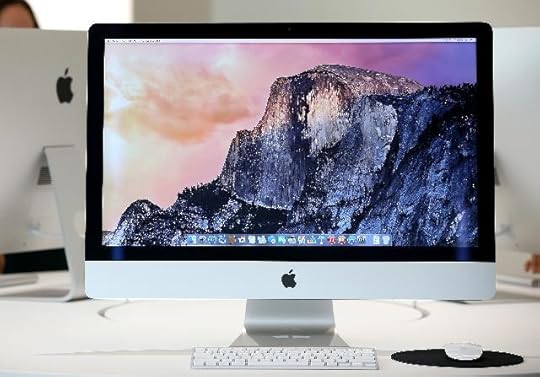
Apple’s Macs are worth far more than the sales they produce
Apple’s hegemony on the desks of Silicon Valley helps ensure developers will continue to favor all of its products, like iPhones over worthy challengers from Samsung and HTC. This, in turn, keeps Apple’s mobile app market more vibrant, refreshed and free of bugs when compared with the decidedly second-place effort from Android. There’s a reason apps show up first for iOS, despite Android’s larger overall user numbers.
The maniacal following the company has developed allows it the luxury of knowing that any new product it produces will be snapped up, on its first day of sales, in the millions of units, giving anything Apple makes an automatic headwind toward winning a market. That dominance in all devices, for Apple, begins with the machines on which most software for these devices is built. IPads, Apple Watches, iPhones, the coming Apple television product—these are all platforms whose software is created on Apple’s original product.
It wasn’t always this way. Many engineers in the late 1990s and early 2000s wouldn’t touch an Apple machine. Apples could be slow and their software didn’t give programmers the kind of flexibility they’re afforded now. At work, I had an iBook and an eMac and I hated both of them. I much preferred my personal Dell machine from the same era. But then came OS X and a superior generation of hardware, screens and overall flexibility.


Christopher Steiner's Blog

- Christopher Steiner's profile
- 21 followers

