
It’s Time Again for Hurricane 101
 Heather says:
June 1st marks the beginning of hurricane season. For those of us on the East and Gulf Coasts, we know this means anxious meteorologists glorifying every thunderstorm that appears in the oceans. Although the public tends to become jaded with media saturation, there is no reason to get caught with your pants down.
Hurricane Hugo was the landmark event of my childhood. Thankfully my family made it through safely with relatively little damage. I remember not only the storm, but the camaraderie that developed during the clean up. Everyone in my neighborhood pitched in, adults cleared downed trees and grilled defrosting meals. Older kids babysat and entertained the younger ones so the adults could work unhindered. I was only eleven, so my memories consist mostly of the awesome forts we were able to build with scavenged materials. I was too young to understand what a nightmare filing for damages or dealing with FEMA could be.
Here are some tips to be sure you and your family are safe should a storm make landfall. (Many of these apply to those living near fault lines or in tornado country who don’t have the benefit of prior warning.)
Check your insurance coverage. Do you have adequate protection from both wind and water? Are they with the same or competing companies? Keep these documents in a safe, dry place and remember to bring them along if you must evacuate. Have enough food and clean water for each family member to last at least 72 hours. One gallon of water per person per day.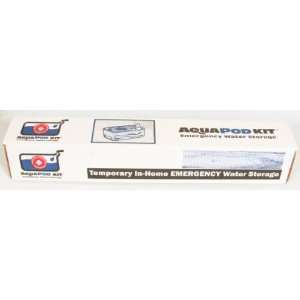 As long as water is still flowing it can be used after boiling. 2 drops of unscented chlorine bleach purifies one quart of water. This is a last resort if boiling is not an option. Let any particles settle out, filter using coffee filters, paper towels or a cloth, then add the bleach, stir or shake well, and allow to sit for 30 minutes. Your bleach must be at full strength, be sure to have a new, unopened bottle in your kit, rotate for a new one every three months. Food should be ready to eat or only require minimal preparation. Please don’t forget to have a manual can opener on hand. You may end up the most popular person on your block. Candles, batteries, flashlights, and a crank or battery operated radio are a must. Keep your gas tank filled at least half way at all times. Keep an emergency cash supply on hand, as ATMs do not work without power. Have an evacuation plan. Shelters are only for those in the most dire need, those who have no where else to go. Take identification and proof of residency with you. If an area is badly damaged law enforcement will restrict access to people trying to return. Have a plan for Fido and Fluffy as well. Most shelters do not take pets, know what you are going to do before a warning has been announced. As a pet owner this is an important responsibility that is frequently overlooked. Have a well stocked first-aid kit. Keep all prescription medications filled and take them with you, if you must leave. Have sturdy work gloves. Keep an extra pair with your emergency kit. Have sturdy shoes, you don’t need to be nailing a tarp to your roof in flip flops. Except for emergencies, stay put after a storm. Emergency personnel have enough to deal with: restoring utilities and rescuing those who were injured in the storm. Don’t add to their workload. Curfews may be established. Obey all law enforcement personnel. People under severe stress may act erratically. Check on your neighbors, especially the elderly. Remember snakes and other wildlife may become disoriented after a storm. Watch where you step and never put your hands where you cannot see when removing storm debris. If you live in a rural area, learn how to safely operate a chainsaw. This goes for you ladies, too. Downed limbs are pretty much a given. STAY AWAY from power lines. Own one, keep it in good condition, and have gasoline, oil, and chain oil on hand. Have plenty of propane or charcoal for your grill. I’ve brewed coffee using a grill in the past. My neighbors loved me for it. NEVER use a grill indoors. The flames produce deadly, odorless carbon monoxide. If you have to board your windows, make sure you already have the plywood on hand. It can be reused each year. Have a couple of tarps ready, they can be used to temporarily cover a broken window or a hole in the roof until more permanent repairs can be made. Remember cell towers may be damaged in a strong storm and communication may be spotty or non-existent for a while.
 And finally, if you’re watching a storm with potential to become a threat and you’re not in an evacuation zone, it’s time to check and make sure everything is ready.
Go ahead and get the laundry caught up, find the cooler, check the generator –if you have one–, swap the stored gasoline if you have / need that. Make ice if your freezer isn’t full.
A full freezer will stay at temperature for 48 hours, only 24 if it’s only half full.
If the kids have electronics, go ahead and make sure they are fully charged, be ready to ration their use.
If a storm does look like it will hit, let the people who haven’t thought ahead deal with each other in those last few hours. You’re ready; stay home, safe and dry, and make your own version of Harriet McLeod’s Go Away Cookies.
And while the drama is what the media plays on, remember it’s the little, preventable accidents that are most common.
Here is hoping for a quiet season!


 CommentsGreat gudie. As a Katrina survivor, I can atest to the ... by Life HammerI am fortunate with where I live that it would require the ... by JayMonsterI grew up in the east, and I remember Hugo too. That and ... by Frugal Babe


Heather Solos's Blog

- Heather Solos's profile
- 12 followers

