L is for Limnic Eruption and Lightning Storm
My theme for my 2015 A to Z Challenge came from my Disaster Crimes series. Disasters are a theme in each story, so it got me thinking about all the disasters that occur from natural disasters to manmade disasters.
Today’s disasters are...LIMNIC ERUPTION and LIGHTNING STORM
A Limnic Eruptionis a rare natural disaster that occurs (possibly due to earthquakes, and volcanic activity) when dissolved carbon dioxide erupts from deep lake water, also called a lake overture, which suffocates nearby wildlife, livestock and humans.
Fortunately, this phenomenon has only been recorded twice; once at Lake Monoun in 1984 killing 38 people and Lake Nyos in 1986 killing a staggering 1,700 people and 3,500 livestock. (Both in the Cameroon region of Central Africa.)
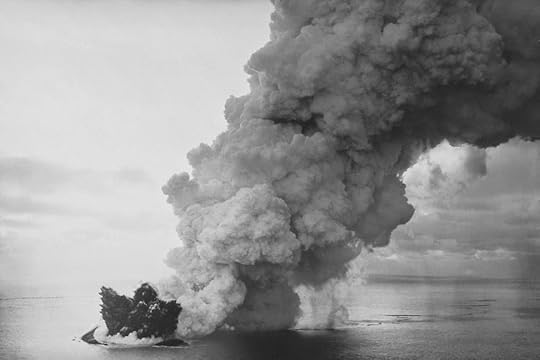 Surtsey Eruption
(This is an underwater volcanic eruption. There's no pictures of limnic
eruptions. Sorry but this is the closest I could find.)
Image from Wikipedia
A Lightning Storm (also known as an electrical storm) is a storm that produces a significant amount of lightning. Lightning can travel from cloud to cloud, from a cloud to the ground, and from a cloud to itself.
FACT: Lightning occurs approximately 40–50 times a second on earth. That’s nearly 1.4 billion flashes per year.
Difference between a lightning storm and a thunderstorm: A lightning storm is when lightning is visibly seen striking the earth several times during a storm. Thunderstorms are when you mostly here thunder and maybe see flashes of lightning. Lightning storms are actually a phenomena.
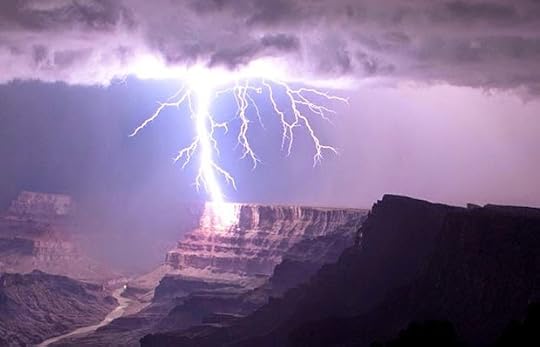 Image from PetaPixel.com
Grand Canyon
Some Science For You: In a lightning storm, the clouds are charged like batteries. The top of the cloud is positive and the bottom is negative, which is caused by charge separation when rising moisture collides with ice or sleet. When there is charge separation there is also an electric field. The strength of this electric field depends upon the amount of charge build up in the clouds. The electric field then breaks down the surrounding air, creating a conductor of electricity, and creates a conductive path to the earth’s surface. Objects on earth’s surface respond to the electric field and reach out with purplish streamers. When the two connect and the current flows you get lighting. The air around the strike becomes extremely hot and explodes, and that’s yours thunder. So the more charge separation in a cloud, the more lightning there is.
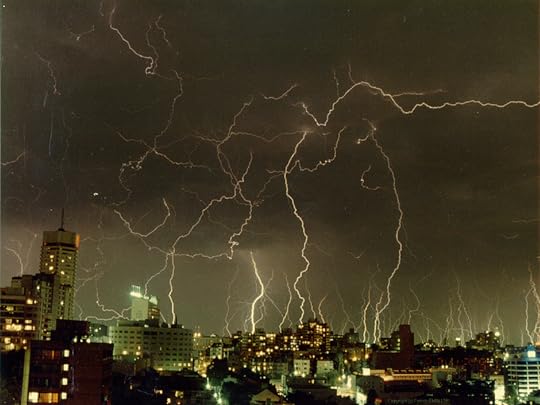 Image from Wikipedia
Sydney
QUESTIONS: Do you like thunderstorms? Or do you hide under your covers like I do? Have you (or someone you know) ever come close to getting hit by lightning?
Disasters:A: AvalancheB: Blizzard and BlackoutC: CycloneD: Drought and Dust Storm
E: Earthquake
F: FloodG: Gas Explosion
H: Hailstorm
I: Ice Storm and Iceberg
J. Judgment DayK: Killings
L: Limnic Eruption and Lightning Storm
 I'm a member of Tremp's Troops!

Today’s disasters are...LIMNIC ERUPTION and LIGHTNING STORM
A Limnic Eruptionis a rare natural disaster that occurs (possibly due to earthquakes, and volcanic activity) when dissolved carbon dioxide erupts from deep lake water, also called a lake overture, which suffocates nearby wildlife, livestock and humans.
Fortunately, this phenomenon has only been recorded twice; once at Lake Monoun in 1984 killing 38 people and Lake Nyos in 1986 killing a staggering 1,700 people and 3,500 livestock. (Both in the Cameroon region of Central Africa.)
 Surtsey Eruption
(This is an underwater volcanic eruption. There's no pictures of limnic
eruptions. Sorry but this is the closest I could find.)
Image from Wikipedia
A Lightning Storm (also known as an electrical storm) is a storm that produces a significant amount of lightning. Lightning can travel from cloud to cloud, from a cloud to the ground, and from a cloud to itself.
FACT: Lightning occurs approximately 40–50 times a second on earth. That’s nearly 1.4 billion flashes per year.
Difference between a lightning storm and a thunderstorm: A lightning storm is when lightning is visibly seen striking the earth several times during a storm. Thunderstorms are when you mostly here thunder and maybe see flashes of lightning. Lightning storms are actually a phenomena.
 Image from PetaPixel.com
Grand Canyon
Some Science For You: In a lightning storm, the clouds are charged like batteries. The top of the cloud is positive and the bottom is negative, which is caused by charge separation when rising moisture collides with ice or sleet. When there is charge separation there is also an electric field. The strength of this electric field depends upon the amount of charge build up in the clouds. The electric field then breaks down the surrounding air, creating a conductor of electricity, and creates a conductive path to the earth’s surface. Objects on earth’s surface respond to the electric field and reach out with purplish streamers. When the two connect and the current flows you get lighting. The air around the strike becomes extremely hot and explodes, and that’s yours thunder. So the more charge separation in a cloud, the more lightning there is.
 Image from Wikipedia
Sydney
QUESTIONS: Do you like thunderstorms? Or do you hide under your covers like I do? Have you (or someone you know) ever come close to getting hit by lightning?
Disasters:A: AvalancheB: Blizzard and BlackoutC: CycloneD: Drought and Dust Storm
E: Earthquake
F: FloodG: Gas Explosion
H: Hailstorm
I: Ice Storm and Iceberg
J. Judgment DayK: Killings
L: Limnic Eruption and Lightning Storm
 I'm a member of Tremp's Troops!


No comments have been added yet.