Why We Need Stories with Happy Endings
About once a year, my dad tells the story again.
You know, the one where he accidentally poked his brother with a pitchfork and then tore the soles of his own feet while jumping over cinder blocks while racing home to tell his mom who was tending to his sister who’d gotten got caught by a fishhook and everyone needed tetanus shots but laughed about it later?
Everyone except his mother, I presume. I mean come on, that poor lady.
But, you probably have one of those stories too, right? Many of them, even. Stories of crazy, we’ll-laugh-about-it later moments of resilience or resurrection, or tales of overcoming hardship and adversity.
Our lives are shaped by the stories we tell. They help us to know ourselves and connect to others. They help us to pull together and go on by making some sense of our experience and fostering optimism.
Most stories are universal. While your experience will be unique – I’m thinking few of you have been stabbed with a pitchfork (here’s hoping) — they will also share threads of loss and joy and pain and strength.
And how we tell these stories from the past, has a direct impact on the lives we live today. They contribute to a belief system that determines our reality. Whether the beliefs are true or not, we often act on them and that creates tangible outcomes.
Tales of Optimism
When we tell a story of overcoming adversity – the manuscript was turned down 53 times before it sold, but then I did it — our minds make a little check-mark next to the “I did it” part. The story reminds us that we’ve faced challenge before and prevailed.
In his book 10 Habits of Truly Optimistic People, author David Mezzapelle uses these kinds of stories to help us reconnect to our own optimism. The book is filled with the tales of others who believed that despite challenge and pain and unexpected outcomes, they could find a positive way through the experience. And they did.
Optimism doesn’t dissolve the adversity or pain, it simply allows us to believe in better outcomes so we work to make them happen. We tend to work harder, make healthier decisions, and endure when we think optimistically. And when we surround ourselves with optimistic stories – stories that remind us that anything is possible – we “catch” that optimism ourselves and go forward a little stronger.
Be the Hero
So, what narrative are you telling? Are you repeating tales (to yourself or others) where nothing works out right, nothing goes your way, you are never good enough?
Or, are you the hero in your own tale, rising up despite setback, laughing in the face of adversity, to create the life you desire.
Pick the story with a positive ending and use it to guide your toward a positive reality.
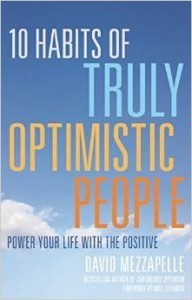 Special Note: On Wednesday, we are thrilled to have a guest post from author David Mezzapelle. Through his work he has identified 10 qualities that help us cultivate our optimism.
In the next post, he’ll tell you what they are.