
Science Fiction Simplified
Today’s genre is Science Fiction!!! Science Fiction is one of the largest section of fiction works. Everyone has at least one science fiction novel they love because it’s just a broad subject. Here’s the BISAC science fiction section:
FIC028000 FICTION / Science Fiction / General
FIC028010 FICTION / Science Fiction / Action & Adventure
FIC028090 FICTION / Science Fiction / Alien Contact
FIC028070 FICTION / Science Fiction / Apocalyptic & Post-Apocalyptic
FICTION / Science Fiction / Alternative History see Alternative History
FIC028040 FICTION / Science Fiction / Collections & Anthologies
FIC028100 FICTION / Science Fiction / Cyberpunk
FIC028110 FICTION / Science Fiction / Genetic Engineering
FIC028020 FICTION / Science Fiction / Hard Science Fiction
FIC028050 FICTION / Science Fiction / Military
FIC028030 FICTION / Science Fiction / Space Opera
FIC028060 FICTION / Science Fiction / Steampunk
FIC028080 FICTION / Science Fiction / Time Travel
However, what does all this mean? How do you know where your novel fits in?
Well, let’s break each subgenre down, starting from the bottom.
Time Travel
This one practically speaks for itself. Any time your character’s are going to the past or future by some method, they are time traveling. If you character’s are time traveling, then this is your genre. Simple enough. Here’s some examples of time travel: The Time Traveler’s Wife by Audrey Niffenegger(Though this can easily be romance.); A Sound Of Thunder by Ray Bradbury; Steins;Gate(Anime & video game).
Steampunk
Now, I feel this is one of the most interesting genre’s out there. Most of the time, it’s historical or like an alternative history back in the 19th century. However, what defines this genre is the technology. Where they have futuristic technology (for the character’s time period or ours) that is steam-powered or clockwork. Sometimes even both. So basically advanced technology using the power of the 19th Century. Also, it’s not only in the technology, but also the way they dress.
Okay, probably I’m over explaining. It’s what modern or futuristic concepts would look like if everything happened in the 19th Century. Here’s an example: Leviathan by Scott Westerfeld. Though I think this is better explained in pictures. So here you go.
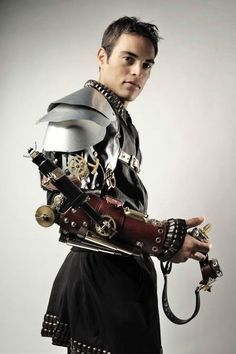
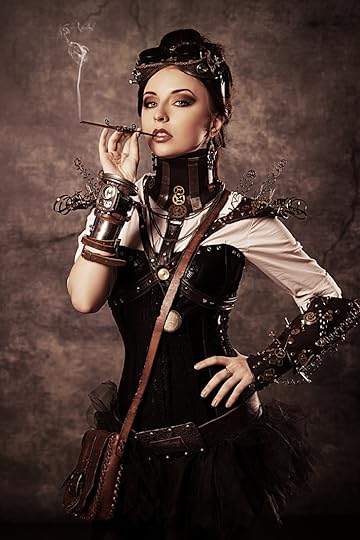
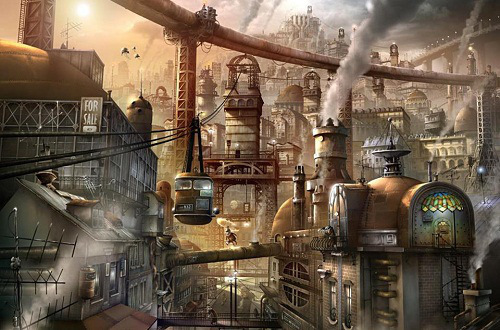
Space Opera
Space Opera involves emotional baggage, drama, action, and more. It’s a fun genre to work with. My book almost borders this genre. However, it has some must have’s and that includes space. Your character at one point must leave his or her planet and go to another one. If not then they should be floating around in a ship. However, you can add lots of action, romance, drama, comedy, and more to this genre. Here are some examples of Space Opera: Cowboy Bebop(show); The Hitchhiker’s Guide to the Galaxy by Douglas Adams.
Military
Again, it’s in the name. Whenever the story has war-like battles or revolves around military. Of course, it still has to have science fiction, whether the enemy is aliens or they’re just using really cool weapons. Some easy examples are: The War of the Worlds by H.G. Wells; Battlestar Galactica (show).
Hard Science Fiction
This science fiction means more than an idea.This provides details with scientific accuracy. It’s a science fiction story that sounds plausible and practical. Everything is with extreme detail to make it as realistic as possible. Examples are: Steins; gate (show); Eden of the East(show); Mission of Gravity by Hal Clement.
Genetic Engineering
I think this one is pretty straight forward. Whenever you story revolves around changing or adding to someone’s DNA with something else. Best way to see this is manually created Mutants, think X-men or Maximum Ride. Also, Avatar when they mixed human DNA with the natives. Even Frankenstein is a great example of this.
Cyberpunk
Think of Steampunk. Only instead of going to the past, we have a jump to the future. Usually, there are robots or new technology. However, everything isn’t pretty and organized. Usually, these stories have a messed up society. These stories are usually about detectives, bad governments, or the misuse of technology. Examples: I, Robot (Issac Asimov); Ghost in a Shell (show); The Matrix (film).
Collections & Anthologies
This is where you put a collection of stories rather than one.
Apocalyptic & Post-Apocalyptic
This is one of the most popular genres at the moment. This is a story taking place when the world/human race is under destruction or during the aftermath. I really don’t think this has to be explained, so I’ll just give examples. The Matrix(film); Falling Skies(show); The Maze Runner by James Dashner; I am Legend by Richard Matheson.
Alien Contact
This one can be quite confusing. This isn’t saying a story about aliens. This is a story when humans first meet aliens. We must come across aliens for the first time. First human contact. Examples are Like E.T. and The War of the Worlds.
Action & Adventure
Action and Adventure. The story must have a lot of action. There must be high-speed chases, gun fights, or good old fashioned punching. They should be going through dangerous jungles, searching for a lost treasure or something. My best example of this is my book. Native Foreigners is full of action. Something happens in every chapter.
General
Finally, there is general. This is where you put your story when you know for a matter of a fact it’s science fiction, yet it just doesn’t fit in any sub-category. Every science fiction book can fit in here without any rules to stop them(other than being science fiction).
So, that’s it. By the way, I know I skipped Alternate History. I’m going to discuss that one when I post about historical fiction. Remember this is just a guideline to help you decide.


More Than Scribbles

- Naylene Rondon's profile
- 22 followers

