
You read what people say about your work and sometimes you want to cry, or screa...
You read what people say about your work and sometimes you want to cry, or scream, or you think, even if they like it, they are talking about someone else's book. Thank you Richard Kramer for this review. It means so much coming from you. I love it. A great birthday present.
It goes like this, again and again, in endless towns. There’s a boy, somewhere, a somewhere that’s never New York. He doesn’t know he is not unusual, because there’s no one to tell him; he won’t find that out, and may never come to fully believe it, until he’s left one of those endless towns and come to New York, where he will ask the city to erase who he was and replace it with a portrait of who he would like to be. He’ll master subways, and menus, attain the knowingness he yearned for as a gay boy back wherever it was he came from, where he never wants to return. And that can be enough.
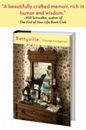
It wasn’t for George Hodgman. He went back to somewhere, in this case Paris, Missouri, as a man who’d accomplished a lot, lost a lot, who’s run out of excuses. He went back to care for his mother, Betty, aged, angry, alone, her arms wrapped tight around a self that was shattering, slowly. He put down the story of their time together, and the result is BETTYVILE, his hilarious, heartbreaking book, which I hesitate to describe as a memoir. It’s more than that; it’s a book for anyone whom, for whatever reason, feels that they can never tell their true story, that as much as they want it they can never be fully known. “I think people who have always felt okay in the world will never understand those of us who haven’t,” Hodgman writes. They will if they read this book. Its pages became mirrors for me. I saw myself in them, saw my own mother, heard all the words I’d never been able to say; BETTYVILLE sent me to Claireville.
Many times, while reading this, I put the book down (in a way you can’t put a Kindle down), grabbed a pad, and wrote out Hodgman’s sentences, which is a thing I do when I love a book. How do you become the kind of writer who can not only see things like that, but tell people about them, in that particular way? Here’s just one passage that got me out of my seat …
“I love the citizens of the city night. For Many years I was one of them … My life has been an odd hotel with strangers drifting through and friends sometimes growing concerned … In a city of arrogant wristwatches, I have rarely been able to keep a Timex running right …”
An odd hotel. Arrogant wristwatches. No one else writes like that. No one else can have lived this story. And no one else can have given it to us with the generosity Mr. Hodgman demonstrates in BETTYVILLE.
It goes like this, again and again, in endless towns. There’s a boy, somewhere, a somewhere that’s never New York. He doesn’t know he is not unusual, because there’s no one to tell him; he won’t find that out, and may never come to fully believe it, until he’s left one of those endless towns and come to New York, where he will ask the city to erase who he was and replace it with a portrait of who he would like to be. He’ll master subways, and menus, attain the knowingness he yearned for as a gay boy back wherever it was he came from, where he never wants to return. And that can be enough.
It wasn’t for George Hodgman. He went back to somewhere, in this case Paris, Missouri, as a man who’d accomplished a lot, lost a lot, who’s run out of excuses. He went back to care for his mother, Betty, aged, angry, alone, her arms wrapped tight around a self that was shattering, slowly. He put down the story of their time together, and the result is BETTYVILE, his hilarious, heartbreaking book, which I hesitate to describe as a memoir. It’s more than that; it’s a book for anyone whom, for whatever reason, feels that they can never tell their true story, that as much as they want it they can never be fully known. “I think people who have always felt okay in the world will never understand those of us who haven’t,” Hodgman writes. They will if they read this book. Its pages became mirrors for me. I saw myself in them, saw my own mother, heard all the words I’d never been able to say; BETTYVILLE sent me to Claireville.
Many times, while reading this, I put the book down (in a way you can’t put a Kindle down), grabbed a pad, and wrote out Hodgman’s sentences, which is a thing I do when I love a book. How do you become the kind of writer who can not only see things like that, but tell people about them, in that particular way? Here’s just one passage that got me out of my seat …
“I love the citizens of the city night. For Many years I was one of them … My life has been an odd hotel with strangers drifting through and friends sometimes growing concerned … In a city of arrogant wristwatches, I have rarely been able to keep a Timex running right …”
An odd hotel. Arrogant wristwatches. No one else writes like that. No one else can have lived this story. And no one else can have given it to us with the generosity Mr. Hodgman demonstrates in BETTYVILLE.


No comments have been added yet.
George Hodgman's Blog

- George Hodgman's profile
- 100 followers
George Hodgman isn't a Goodreads Author
(yet),
but they
do have a blog,
so here are some recent posts imported from
their feed.

