Lamenting What Has Been Lost In a City Where So Much Has...
Lamenting What Has Been Lost In a City Where So Much Has Been Saved
Visitors to New Orleans are often struck by the incredible number of buildings that remain extant from the 18th and 19th centuries. They know of the French Quarter and the Garden District even before they arrive, but as they tour they realize there are miles and miles of beautiful old neighborhoods that have survived hurricanes like Katrina and the ravages of time. But those who know the city well are often haunted by the memory of the historic buildings that have been lost to fires, floods, termites, ill conceived urban renewal projects, neglect, and decay. Even in neighborhoods like the Garden District that have had active preservation movements (and that have fared well in the major storms), the list of landmarks lost is staggering. Some of this is inevitable, of course. Wooden buildings don’t last forever, particularly in a subtropical climate. But in a city so filled with architectural reminders of the past, it is hard not to lament what is lost. I found this out first hand as I was writing my book The Great New Orleans Kidnapping Case and I set out to find the homes and businesses that were central to the story in 1870. Almost all had been destroyed or torn down many years ago. How could it be, I wondered, that in a city where so many old buildings still stand, almost all of the ones I hoped to find were gone? I was reminded that the old houses and storefronts that remain today are only a small fraction of what once existed, that they are fragile and precious, and that we need to vigorously protect what is left.
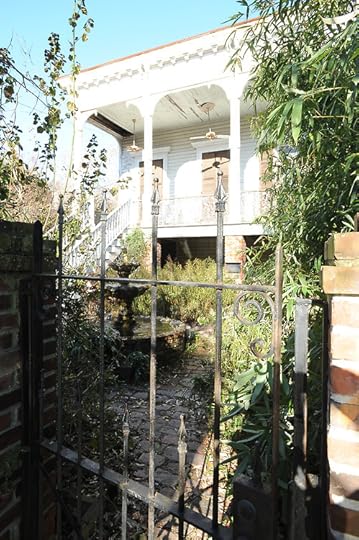
To help readers of my book visualize the neighborhoods where the story took place, I had to rely on photographs of those buildings that still exist near the key locations in the tale. The picture above, for example, is of a nineteenth-century house on Chestnut Street (near St. Andrew’s) that stands on a lot neighboring what was once the home (now torn down) of James Madison Broadwell, the captain of the famous steamboat Eclipse who some believed was the mastermind of the sensational Digby kidnapping in 1870.
When John Pope of the Times-Picayune recently asked readers to tell him about buildings they missed, hundreds of New Orleanians wrote in. Here is a link to photos of some of those landmarks:
http://www.nola.com/business/index.ssf/2014/09/lost_new_orleans.html#incart_river