The Great New Orleans Kidnapping Case: The Cast of...
The Great New Orleans Kidnapping Case: The Cast of Characters
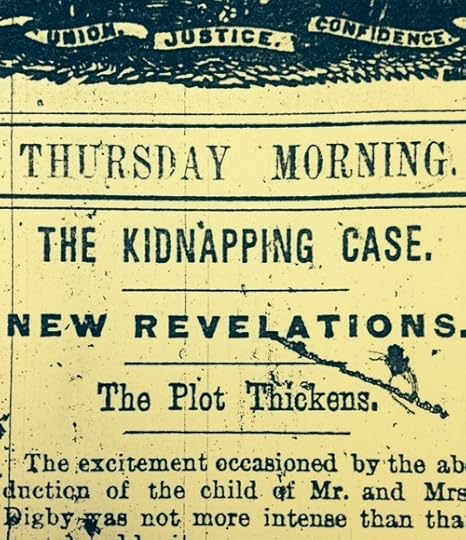
NEW ORLEANS, Summer 1870—On June 9th, 17-month-old Mollie Digby was kidnapped from in front of her house by two African-American women while her mother was inside. The case soon made headlines as rumors swirled that the child had been abducted for use as a Voodoo sacrifice. The search for the child and the media coverage expanded far beyond New Orleans, with leads arriving from as far away as Cincinnati.
At the heart of the mystery of Mollie’s kidnapping that is the basis for my book THE GREAT NEW ORLEANS KIDNAPPING CASE are some compelling characters. Below is a look at some of the key figures in the case:
Mollie Digby was 17-months-old when she was kidnapped from in front of her house in a working class neighborhood of New Orleans. Her abduction quickly became intertwined with the tumultuous politics of Reconstruction as many residents saw it as a sign of a world turned upside down by the Civil War and emancipation. Her story would make the front pages again in 1932 when another baby was kidnapped from his home—the Lindbergh baby.
Thomas and Bridgette Digby were immigrants who had fled the Irish potato famine and settled in New Orleans. Living in the flood prone “back of town,” Thomas drove a hackney cab and Bridgette took in laundry and sewing. The Digbys aspired to a better life for their three children. When their 17-month-old daughter, Mollie, was kidnapped, they were thrust into the spotlight.
Ellen Follin was an attractive, well-dressed, mixed-race widow with three children. After the police received a tip that a white child fitting the description of the Digby baby was seen at Follin’s house, she became one of the prime suspects in the case. The press became fascinated by her style, erudition, cool demeanor, and the “scandalous” business she operated.
James Madison Broadwell was once the captain of the Eclipse, the grandest and fastest steamboat on the Mississippi. He was so esteemed that his endorsement appeared in ads for cold remedies and other products. Fiercely proud and quick to defend his honor, he threatened violence when reporters suggested he may have masterminded the crime.
John Baptiste Jourdain was 40-years-old and relatively new to the police force when he became the first African- American detective ever to make national news. Born in New Orleans in June 1830, Jourdain was the son of a free woman of color and a white Creole descendant of one of Louisiana’s founding families. New Orleans Chief of Police Algernon Badger made Jourdain lead detective in the sensational Digby kidnapping case, in part, for political reasons. 1870 was the height of Radical Reconstruction and the New Orleans police force had just been integrated. If a black detective found the Digby baby or her abductors, Badger hoped it might dispel white fears that black law officers were not up to the task.
Thirty-one-year-old, Massachusetts-born Algernon Sidney Badger was the new police chief in new Orleans. A tall, powerfully built Union Army veteran, Badger oversaw the integration of the city’s police force during Reconstruction and he was eager to demonstrate that his black officers and detectives could effectively and fairly protect the public’s safety. When the kidnapping of Mollie Digby made headlines that spring, Badger appointed his best black detectives to the case. Although many ex-Confederates could not stand the thought of armed black policemen patrolling the streets with full authority to arrest whites, Badger hoped that by solving a high-profile, racially explosive case his men could build public confidence in his integrated force.
Henry Clay Warmoth, was the 28 year old “boy governor” of Louisiana. Democrats labeled the young, Illinois-born, Republican governor a “carpetbagger” who was foisted on the state by federal bayonets and the votes of former slaves. Warmoth believed he could win over the population with pro-business policies and Northern-style efficiency including skilled law enforcement. He also became personally involved in the Digby case, offerring a large reward for the capture of the kidnappers.