How I Came to Write The Great New Orleans Kidnapping Case
Every historian has a moment when, deeply immersed in old letters or newspapers, a story he or she wasn’t expecting catches their eye. In that finding, he or she must decide if they are willing to be the one to dig in, do the research, and share this story that is begging to be told.
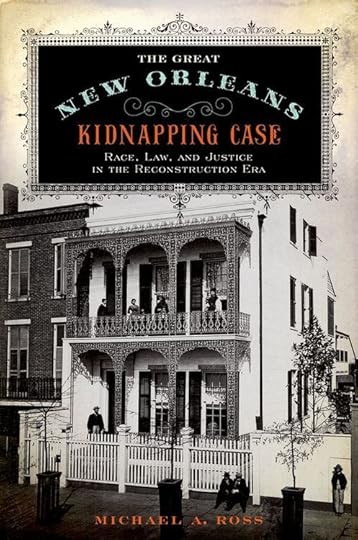
Many people have asked how I came to discover the Digby kidnapping case that is the basis for my forthcoming book THE GREAT NEW ORLEANS KIDNAPPING CASE, out in October from Oxford University Press.
Eight years ago, when I was reading all of the 1870 New Orleans newspapers looking for references to the efforts by ex-Confederates to obstruct Reconstruction in Louisiana’s state and local courts, I stumbled across the story of an alleged Voodoo abduction that demanded a quick read. “That can’t possibly have happened,” I thought to myself. “The press had to have been spreading unfounded rumors.” The New Orleans papers, after all, also reported ghost sightings.
But to my amazement, each day’s paper contained new articles about the kidnapping—including accounts of the police arresting and interrogating Voodoo practitioners. I was hooked, and just like the readers in 1870, I looked to each day’s newspapers for the latest revelations in the investigation. As I read on, I realized that the story was about more than a sensationalized kidnapping of a white child by two African-American women. The abduction, the investigation, and the trials that followed were deeply intertwined with the politics of Reconstruction in the South.
I wanted to share that story and to use it to reveal the tumultuous world in which it took place.