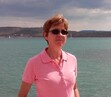
An Interview with David Litwack, Author of Along the Watchtower
Today, I’m pleased to welcome David Litwack, fantasy author of Along the Watchtower. David is touring with Masquerade Tours and comes bearing gifts, so make sure to enter the raffle at the end of the post. But first, join me as I ask him a few questions to find out more about him and his book.
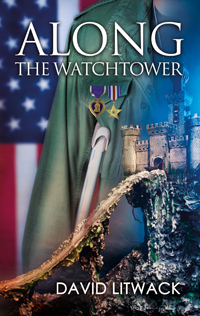
Title: Along the Watchtower
Author: David Litwack
Publication Date: June 13, 2013
Genre: Contemporary Fantasy
Synopsis
A Tragic Warrior Lost in Two Worlds…
The war in Iraq ended for Lieutenant Freddie Williams when an IED explosion left his mind and body shattered. Once he was a skilled gamer and expert in virtual warfare. Now he’s a broken warrior, emerging from a medically induced coma to discover he’s inhabiting two separate realities. The first is his waking world of pain, family trials, and remorse—and slow rehabilitation through the tender care of Becky, his physical therapist. The second is a dark fantasy realm of quests, demons, and magic that Freddie enters when he sleeps.
In his dreams he is Frederick, Prince of Stormwind, who must make sense of his horrific visions in order to save his embattled kingdom from the monstrous Horde. His only solace awaits him in the royal gardens, where the gentle words of the beautiful gardener, Rebecca, calm the storms in his soul. While in the conscious world, the severely wounded vet faces a strangely similar and equally perilous mission—a journey along a dark road haunted by demons of guilt and memory—and letting patient, loving Becky into his damaged and shuttered heart may be his only way back from Hell.
Buy Links
Amazon | Barnes & Noble | Book Depository | iBooks | Kobo

Hello David, and welcome to my blog!
Thank you Fros, I’m very happy to be here.
What has inspired you to write this book?
I’ve always been fascinated by how our view of reality is subjective, how each of us brings our own experiences and biases into play. But when we’re ripped from our normal lives and placed in extreme circumstances, our reality becomes fragmented. Such is the case with hospitals and war. A couple of years ago, I became engrossed in the online game, World of Warcraft, thanks to my son. I’m on the east coast and he’s on the west, so we’d meet every Wednesday evening in the virtual world of Azeroth, where our avatars would go on quests together. I was struck by how immersed I became in the mood of the game as we wandered through castles and crypts, solving riddles and vanquishing demons. For a short period of time, I could totally buy into the alternate reality. The gaming experience has a dream-like quality to it. And I began to wonder: how would this experience affect the dreams of someone whose reality has been fragmented by the trauma of war? These concepts—war, hospitals, and the fantasy world of online gaming—came together in Along the Watchtower.
Wow, the book sounds amazing! What other writing have you done? Anything else published?
I’ve had two other novels published. My first novel, There Comes a Prophet, is dystopian fiction. Unlike the latest batch of dystopians like The Hunger Games, it’s not about an oppressive dystopia, but rather one paved with good intentions. The word dystopia is derived from dysfunctional utopia—a world where idealists trying to make things better have made them horribly worse. My most recent effort, The Daughter of the Sea and the Sky, just came out in May. It’s about a world divided between the Blessed Lands, a place of the spirit, and the Republic, whose people worship at the altar of reason. A mysterious nine-year-old girl from the Blessed Lands sails into the lives of a troubled couple in the Republic and changes everyone she meets. She reveals nothing about herself, other than to say she’s the daughter of the sea and the sky. But she harbors a secret wound she herself cannot heal.You can find out more about these on my website: http://www.davidlitwack.com
What are you working on at the moment? Tell us a little about your current project(s).
I’m working on a sequel to There Comes a Prophet. I hadn’t planned on writing a sequel, but the main characters, Orah and Nathaniel, told me their quest wasn’t complete and kept nagging me to finish their story. Now, I plan on making it a trilogy.
What genres do you read mostly and what are you reading now?
I like the various forms of speculative fiction because I’ve always been suspicious about absolute reality. Different cultures see the world so differently. We conveniently choose to construct a world view that suits us—at least until something challenges it. What better way to challenge our view of reality—and therefore enable the potential for change—than to invent new worlds and show how characters cope with them.
I just started Neil Gaiman’s Stardust. I’d previously read American Gods and thought it was wonderful.
Do you have any advice for other indie authors?
Follow the advice of Abraham Lincoln (no stranger to adversity): “Let no feeling of discouragement prey upon you, and in the end you are sure to succeed.”
Very wise! Are there any sites or writing tools that you find useful and wish to recommend?
Of course, I never start writing without Dictionary.com and Thesaurus. com open in my browser. Wikipedia is also invaluable. But googling almost anything can yield rich results. For my new book, the sequel to There Comes a Prophet, I needed to learn more about weaving and the workings of a manually driven loom (think eighteenth century). I found a YouTube video where a nice Scottish lady describes weaving in a detailed and charming way.
Another good tool when editing is Autocrit, which scans your prose and identifies stylistic weaknesses. It doesn’t fix problems for you, but it certainly highlights opportunities for improvement.
Thank you for sharing these tips, David. I bet the authors among our readers will be very grateful. And I’ve used Autocrit, it’s truly fabulous. Tell us about your website/blog. What will readers find there?
My website is http://www.davidlitwack.com. My blog is a part of it. In addition to author information, it contains a lot of details about each of my three books (description, trailer, excerpt, review quotes), as well as an advanced look at my work in progress. I post a variety of topics on my blog—about my writing style, where I get my ideas, and what it’s like being an author.
What are the things in your life that you’re most grateful for?
My wife and my sons, and their good health and happiness.
Who is your favorite poet? Quote a couple of lines from your favorite poem.
A.E Houseman
“And since to look in things in bloom,
Fifty springs are little room,
About the woodlands I will go,
To see the cherry hung with snow.”
Thank you David for being here with us today!
Fros, thank you for this opportunity. It was a pleasure!

Bio
The urge to write first struck when working on a newsletter at a youth encampment in the woods of northern Maine. It may have been the night when lightning flashed at sunset followed by northern lights rippling after dark. Or maybe it was the newsletter’s editor, a girl with eyes the color of the ocean. But he was inspired to write about the blurry line between reality and the fantastic.
Using two fingers and lots of white-out, he religiously typed five pages a day throughout college and well into his twenties. Then life intervened. He paused to raise two sons and pursue a career, in the process becoming a well-known entrepreneur in the software industry, founding several successful companies. When he found time again to daydream, the urge to write returned. His novels include: There Comes a Prophet, Along the Watchtower, and the newly released The Daughter of the Sea and the Sky.
David and his wife split their time between Cape Cod, Florida and anywhere else that catches their fancy. He no longer limits himself to five pages a day and is thankful every keystroke for the invention of the word processor.
Social Media Links
Website | Facebook | Twitter | Goodreads | Newsletter
GIVEAWAY
Enter here to win some goodies!