
Everyone “Knows” Targeted Fat Loss is Impossible…But Is It?
Targeted fat loss, or “spot reduction,” has long been–and still is–a hot button pushed to sell fitness books, magazines, DVDs, supplements, and more.
One workout is for “slimming” your thighs and another is for “sculpting” your midsection. This food is supposed to reduce belly fat and that food can somehow make your hips leaner.
Is any of this actually possible, though? Are we actually able to influence where our bodies pull fat from?
Well, the answer is no…and yes. Let me explain…
You Can’t Directly Exercise Fat Off Certain Body Parts
Pick up just about any fitness magazine and you’ll find workouts for getting a six pack, slimming the thighs, getting rid of love handles, and the like.
I wish it were that simple.
While research has actually shown that training a muscle results in increased levels of blood flow and lipolysis in the area (the breakdown of fat cells into usable energy), it’s not in a large enough quantity to matter.
The reality is training the muscles of a certain area of your body burns calories and can result in muscle growth, both of which certainly can aid in fat loss, but it doesn’t directly burn the fat covering them to any significant degree.
You see, fat loss occurs in a whole-body fashion. You create the proper internal weight loss environment (a calorie deficit) and your body reduces fat stores all over the body, with certain areas reducing faster than others (more on why in a moment).
You can do all the crunches you want–you’ll never have a six pack until you’ve adequately reduced your overall body fat percentage, and that’s more a function of proper dieting than anything else.
Ironically, if you want an area of your body to be leaner, training the muscles without also ensuring you’re reducing your body fat percentage will only aggravate the problem. The muscles will grow and the layer of fat will remain, which will only result in the area looking bigger.
I run into this fairly often with women that get into weightlifting without also addressing their body fat percentage. This is why many women believe weightlifting makes them “bulky.”
You see, when you start out with your body fat percentage too high, lifting weights without also dieting properly only makes you look a little bigger. Some guys welcome this as it’s better than just being skinny fat, but most women hate it. They got into weightlifting to look lean, toned, and athletic, not to have even more trouble fitting into their clothes.
This is why I often repeat a simple rule of thumb: the more muscle you build, the leaner you have to be to avoid looking big and bulky. (Click here to tweet this!)
A woman that has built an appreciable amount of muscle (1+ years of weightlifting) will want to stay under 20% body fat to maintain the type of look most women want (toned arms, tight stomach, shapely legs, big butt, etc.). For us guys, we need to stay under 10% for the look we’re usually after (abs, small waist, vascularity, “dense”-looking muscle, etc.).
You Can Accelerate the Loss of “Stubborn” Fat
And now we come to why I added the “or is it?” question to the title of this article.
While you can’t do a bunch of squats to get leaner thighs or crunches to get a six pack, you can utilize some training and supplemental strategies to help those areas get leaner faster.
How is that possible?
Well, if you’ve ever tried to get below 20% (women) or 10% (men) body fat, you’ve probably noticed that a few areas of your body lost fat a lot slower than others. If you’re a woman, your hips, thighs, and butt were probably the last to really tighten up. If you’re a guy, it was almost certainly your lower abs, obliques, and lower back.
This isn’t a genetic curse–it’s simply a physiological mechanism.
You see, your body uses chemicals known as “catecholamines” to break fat cells down into usable energy. Catecholamines travel through your blood and “attach” to receptors on fat cells, which then trigger the release of the energy stored within the cells so it can be burned off.
Fat cells have two types of receptors for catecholamines, however: alpha-2 and beta-2 receptors. To keep this simple, beta-2 receptors speed up fat mobilization, whereas alpha-2 receptors hinder it.
The more alpha-2 receptors a fat cell has, the more “resistant” it is to being mobilized by catecholamines. On the other hand, the more beta-2 receptors a fat cell has, the more “receptive” it is to the fat-mobilizing molecules.
As you’ve probably guessed, the areas that get lean quickly have a lot of fat cells with more beta-2 receptors than alpha-2, and the areas that don’t have a large amount of fat cells with more alpha-2 than beta-2.
Another problem with these “stubborn fat” areas relates to blood flow. You may have noticed that fat in areas like the lower back and thighs are slightly colder to the touch than fat in other areas of your body like the arms or chest. This is simply because there’s less blood flowing through the areas.
Less blood flow = fewer catecholamines reach the fat cells = even slower fat loss.
So we have a double-whammy of fat loss hindrance here: large amounts of fat cells that don’t respond well to catecholamines and reduced blood flow to keep the catecholamines away.
Fortunately, there are a few things we can do to overcome these barriers and noticeably speed up the loss of fat in these “stubborn” areas of our bodies.
Fasted Training
Your body is in a “fasted” state when insulin is at a baseline level, and your body is relying on its energy stores. If you eat a moderate-sized meal, it takes 4 – 5 hours for your body to finish processing the food and enter this state.
Exercise done in this state accelerates fat mobilization and weightlifting in a fasted state is particularly effective.
In addition, blood flow in the abdominal region is increased when you’re in a fasted state, which means the catecholamines can reach this stubborn fat easier, resulting in more mobilization of it.
Fasted training first thing in the morning has an added benefit, as fasting for longer than 6 hours increases your body’s ability to burn fat.
There is a downside to fasted training, however.
When you exercise in a fasted state, muscle breakdown is dramatically increased. Preventing this is simple, though. All you have to do is take 10 grams of BCAAs, or 3-5 grams of leucine (warning: it tastes really bad) 10 – 15 minutes before training, This suppresses muscle breakdown during your workout.
High-Intensity Interval Cardio
In case you’re not familiar with “high-intensity interval training” or “HIIT,” it’s very simple: you start your workout with a warm-up, and then alternate between bouts of all-out exertion and low-intensity “cooldown.”
For example, you might warm up and then do 30 seconds of sprinting on a bicycle, followed by 45 – 60 seconds of slower pedaling, and you would repeat these intervals for 20 – 25 minutes.
Now, why do this form of cardio instead of the traditional steady-state type?
Well, studies such as those conducted by Laval University, East Tennessee State University, Baylor College of Medicine, and the University of New South Wales have conclusively proven that shorter sessions of high-intensity cardio result in greater fat loss over time than longer, low-intensity sessions.
In fact, a study conducted by The University of Western Ontario showed that doing just 4 – 6 30-second sprints burns more fat over time than 60 minutes of incline treadmill walking (one of the staples of “bodybuilding cardio”).
Furthermore, keeping your cardio sessions shorter means you better preserve your muscle and strength, which is vitally important when it comes to building a physique.
My Favorite Type of HIIT Cardio
I do all of my HIIT cardio on the recumbent bike for several reasons.
I like the stable position, which allows me to bring my iPad and read or watch a movie or show, but cycling also has particular benefits to usweightlifters.
You see, a study conducted by Stephen F Austin State University showed that different types of cardio affect your ability to build muscle and strength differently. The study subjects that ran and walked gained significantly less strength and size than those that cycled.
Why is this?
Well, the researchers believed that the main benefit of cycling was that the movement itself imitates weightlifting exercises that grow your legs, like squats and lunges. So if you can, hop on the bike for your HIIT cardio sessions.
Will HIIT Cardio Place Too Much Stress on the Body?
The idea that doing HIIT while dieting for weight loss is a bad idea because it places too much stress on the body has been kicking around for years. But it’s completely anecdotal–I’ve yet to see any clinical research that supports such a position.
I’ve worked with hundreds and hundreds of people of all ages and fitness levels, and I can’t actually think of one person that burned out on 3 – 5 weightlifting sesions and 3 – 4 HIIT sessions per week (which is what I recommend in my books).
That said, if you do start to feel overtrained, start replacing HIIT cardio sessions with LISS (low-intensity steady-state) and see if that helps.
Start by replacing one HIIT session with LISS and see how you feel that week. If you’re still having issues, replace another and see if that does it. Continue this until you’re feeling better or all HIIT sessions are now LISS.
Caffeine
Ingesting caffeine before exercise increases catecholamine production, resulting in greater fat mobilization.
The amount you should take depends on your tolerance. If you’re not a regular caffeine user, 150 – 200 mg will get you pretty pumped. If you are, it might take upwards of 400 – 500 mg to feel anything.
you can get your caffeine from a beverage like coffee, but interestingly enough, research has shown that the pure form you find in most pills and powders (caffeine anhydrous) is actually more effective for improving performance.
Thus, I recommend you take caffeine pills.
Click Here to Learn More About caffeine Pills
Yohimbine
Yohimbine is a substance found in the Pausinystalia yohimbe plant, and it acts as an alpha-2 antagonist (opponent) in the body, meaning it interferes with the function of alpha-2 receptors in the fat cells. As alpha-2 receptors block fat loss, blocking their activity speeds up fat loss.
Research has shown that .2 mg per kg of body weight is sufficient for these purposes. You should also know that post-meal insulin spikes completely negate the weight loss benefits of yohimbine, so it should only be used in a fasted state.
NOTE: As with anything, excess doses can have negative side effects. Don’t go crazy with this. Furthermore, research has shown that yohimbine can raise blood pressure. If you have high blood pressure, I don’t recommend you use it.
Click Here to Learn More About Yohimbine
Green Tea Extract
Green tea extract is an herbal product derived from green tea leaves. It contains a large amount of a substance known as a “catechin,” which is responsible for many of tea’s health benefits.
One of these benefits relates to weight loss. Research has shown that supplementation with GTE accelerates exercise-induced fat loss, and can help reduce abdominal fat, in particular.
Based on the studies cited above, you want to take 600 – 900 mg of catechins per day to realize their weight loss benefits. The average GTE product contains about 300 mg of catechins per pill.
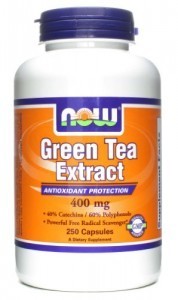
Click Here to Learn More About GTE
What do you think about targeted fat loss? Have anything else to share? Let me know in the comments below!
How to get lean and build serious muscle and strength, faster than you ever thought possible…
Depending on how you eat, train, and rest, building muscle and losing fat can be incredibly easy or incredibly hard. Unfortunately, most people make many different mistakes that leave them stuck in a rut.
And that’s why I wrote Bigger Leaner Stronger for men, and Thinner Leaner Stronger for women: they lay out EVERYTHING you need to know about diet and training to build muscle and lose fat effectively…
Buy Now
Amazon
Amazon UK
Amazon AU
Amazon CA
Audible Audiobook
BN
iBooks
iBooks Audiobook
Kobo
Google Play
Buy Now
Amazon
Amazon UK
Amazon AU
Amazon CA
Audible Audiobook
BN
iBooks
iBooks Audiobook
Kobo
Google Play


