Mike Robbins Talks About Making Peace with Ourselves
I got to know Mike a bit when I interviewed him for an article I was writing on authenticity a couple of years ago. He was warm, smart, open, and wholly authentic. It feels good when we meet people who are so truly themselves, so, his ideas and attitude resonated with me. I like him and he’s proven to be generous and open in all our communication.
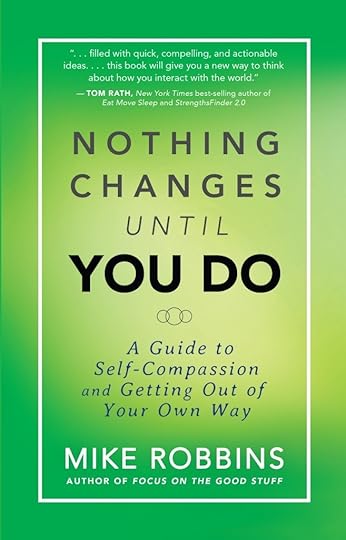 Mike’s authenticity and honesty also come through clearly in his new book, Nothing Changes Until You Do: A Guide to Self-Compassion and Getting Out of your Own Way. Through more than two-dozen short essays Robbins not only shares himself and his own challenges, but he also shows you the way through yours. His stories are our stories and we can all learn from the lessons and live a more compassionate, and fulfilling life.
He shared his thoughts about the book, and offered some of his everyday wisdom in this Q&A for Imperfect Spirituality.
IS: How did this book evolve?
MR: There have been some big ups and downs in my life in the past 5 years, we went through some challenging financial times, including doing a short sale on our house, my mom died of lung cancer, and we had two miscarriages – all of which were very painful and difficult experiences, yet they taught me a great deal. We also eventually got ourselves out of debt, figured some things out about parenting and marriage, and my business really took off in a wonderful way. In addition to all of the external highs and lows, I feel like my own sense of myself and my own growth has deepened and evolved a great deal…in addition to my awareness of others and what lots of people are going through. At the end of the day, I think that the most important and challenging human relationship we have is the one with ourselves…and this is what the book is all about…making peace with ourselves.
IS: You call it “Nothing Changes Until You Do: A guide to self-compassion and Getting Out of Your Own Way.” I love that, the Getting Out of Our Own Way, are we the biggest obstacle to our own growth and success?
MR: Yep! Most of what we do in life is fairly easy, it’s dealing with ourselves that is often most difficult. When we’re able to treat ourselves with kindness, love, and respect, we set ourselves up for true success. When we look outside of ourselves for success, we always fail or at least fall short, regardless of the circumstances or situations around us. The more able we are to make peace with ourselves, let go of limited thinking and negative behavior towards ourselves, and embrace our own beauty, power, and strength, the more life can flow. Although this is a fairly simple concept, that many of us understand…it’s not always easy for us to remember and practice in our daily lives. However, when we do remember, practice, and embody this, our life tends to flow with ease, grace, and success.
IS: How do you describe self-compassion?
MR: Self-compassion is made up of three primary components:
- Awareness – we have to be aware of how we are thinking about, talking about, relating to, and feeling about ourselves.
- Kindness – a sense of being kind, forgiving, and loving towards ourselves – regardless of the circumstances, outcomes, or situations we are experiencing
- Common humanity – remembering that we are not alone, we’re part of the human family, and whatever pain, challenge, or difficulty we might be facing or experiencing – we have shared emotional experiences with the rest of humanity
IS: What is the benefit?
The benefits of self-compassion are huge. When we’re compassionate with ourselves, we cut ourselves some slack, give ourselves a break, and let go of the erroneous and damaging perfection demands we often place upon ourselves. This allows us to let go of unnecessary pressure, stress, and negativity. Self-compassion also gives us space to make mistakes, be vulnerable, and ask for (and receive) support from others. It is a much more peaceful and healthy way to relate to ourselves and life. And, maybe most important of all, when we are compassionate with ourselves, we have the ability to have authentic compassion for others. As the saying goes, “We don’t see other people as they are, we see them as we are.”
IS: One of the principles you say, is to take good care of you, yet it easy to get caught up in doing for others or people pleasing. What are a couple of things we can do to care for ourselves better and why should we?
MR: Self-care is essential and not easy for many of us for a variety of reasons. A few things we can do to take better care of ourselves:
- Take some time by yourself – even if it is a short break at work, a walk, or ideally an afternoon or weekend away by yourself to recharge and refresh
- Ask for what you want – as the saying goes, “the answer’s always ‘no’ if you don’t ask
- Create daily rituals that support your well-being and growth. Sleep, exercise, meditation, food, and some of the other “basics” are a really important foundation for our self-care. We don’t have to be hyper diligent about it, but it is important to find simple rituals and routines (or stick to the ones we already have) in service of caring for ourselves. It’s not selfish to do this, it’s essential not only to our well-being, but to the health of the relationships and people around us. When we don’t take good care of ourselves, it not only has a negative impact on us, it also negatively impacts others.