
Debunking the Myth of Weightlifting and Joint Problems
When I started lifting, I was pretty concerned with my joint health. I definitely didn’t want to become one of those old guys always complaining about his back, knees, shoulders, and elbows, warning the young’uns to take it easy in the weight room lest they become like me.
On the other hand, I also knew plenty of middle-aged guys who never seemed to have joint pain and who had been lifting their entire lives.
What gives? Luck? Genetics? Is weightlifting inherently bad for our joints and we just have to hope for the best?
Let’s find out.
The Myth of Weightlifting and Joint Problems
At first glance, it would seem to make sense that weightlifting would, over time, give us joint problems.
I mean how good can it possibly be for our joints to squat, push, and pull hundreds of pounds over and over? Wouldn’t it speed up the “wear and tear” on the joint and thus the onset of osteoarthritis (the degradation of the joints)?
Interestingly enough, research doesn’t support these assumptions.
For example, this study was conducted with 25 competitive weightlifters–people that spend a lot more time training and lift a lot more weight than you or I do–and researchers found that on the whole, the subjects’ joints were as healthy, or healthier, than other people their age. (Researchers found the Olympic lifters had the most joint problems out of the group, however, which isn’t surprising considering the nature of these movements and the sheet amount of weight competitive lifters throw around.)
Furthermore, about half of the subjects admitted they were using anabolic steroids regularly, which means their joints were under even more strain than usual from the excessive weights lifted.
One other point worth noting is researchers found that previously injured joints were more susceptible to joint degeneration than healthy joints. So if you’ve sustained joint injuries in the past, lifting heavy weights week after week may aggravate them.
These findings are in line with other research conducted specifically on the Squat and Deadlift–two of the most maligned, and–ironically–effective, exercises you can do.
Even in extreme cases of squatting, such as powerlifters lifting 2.5 times bodyweight, the compressive forces placed on the knee and its tendons are well within its ranges of ultimate strength.
Stress placed on the ACL is negligible considering its ultimate strength (in one study, the highest ACL force recorded when squatting was a mere 6% of its ultimate strength).Highest recorded PCL forces were well within natural strength limits as well.
There’s plenty of research demonstrating that strength training, and squatting in particular, is an effective treatment for osteoarthritis, both in terms of reducing pain and improve function.
Research conducted by scientists at the University of Waterloo used real-time x-ray imaging (called fluoroscopy) to watch the spines of elite powerlifters while they fully flexed their spines with no weights, and while they deadlifted over 400 pounds. With the exception of one trial of one subject, all men completed their deadlifts within the normal range of motion they displayed during full flexion. Ligament lengths were unaffected, indicating that they don’t help support the load, but instead limit range of motion.
A study conducted by researchers at the University of Valencia found that the deadlift is an extremely effective way to train the paraspinal muscles, which run down both sides of your spine and play a major role in the prevention of back injuries.
So then, if weightlifting isn’t inherently bad for your joints, why do so many weightlifters seem to have shoulder, knees, and lower back problems?
When Weightlifting Can Lead to Joint Problems
First, you should know that weightlifting just isn’t a very dangerous activity. You’re far more likely to get injured playing just about any sport than you are lifting weights.
That said, like with any physical activity, the occasional ache or strain is inevitable, but if you do certain things wrong, you can get hurt. And with weightlifting, the common ways to get hurt involve injuring a joint like the shoulder or knee or the lower back.
What gives?
Well, in most cases of joint injury that I’ve come across, the person was…
1. Attempting to lift too much weight; and…
2. Doing it with poor form
These are the cardinal sins of weightlifting, and are what give certain exercises like the Squat, Deadlift, and Bench Press a bad reputation.
Simply put, weightlifting is not a forgiving sport if you don’t “respect” it. That is, if you get sloppy with heavy weights, bad things can happen. And ironically, this doesn’t just apply to free weights–machines are just as “dangerous” when used improperly.
So, take the time to learn proper form, especially on your big compound lifts and leave your ego at the door when you lift, and you’ll dramatically decrease your chance of getting hurt.
Pushing yourself in the gym is good, so long as you always maintain proper form as well. Go for that extra rep on your Squat or Deadlift…so long as you don’t have to hunch over to do it or turn the exercise into a . Try to hit that PR on your Bench Press…so long as you don’t flare your elbows out or roll your shoulders in the process.
There’s also the matter of ignoring signs that it’s time to back off. “No pain, no gain,” right? Not really. Pain means something is wrong, and if you ignore it and try to push through, you can get hurt. As I said earlier, if you lift weights regularly, you’re going to strain muscles now and then. Maybe it’ll affect your shoulder or knee, maybe your back, or even something random like your wrist or brachialis.
The key to dealing with pain is treating it like an injury until it’s better. Avoid exercises that aggravate it, ice it and apply heat accordingly, and let it heal. If that means no deadlifting or squatting for a few weeks, so be it. Find alternative exercises that you can do. Annoying, yes, but an injury that sets you back several months is much more frustrating.
6 Proven Ways to Reduce Joint Pain and Maintain Joint Health
While you don’t have to worry about joint injuries or degradation when you lift properly, you’ll probably run into some joint pains at some point. The culprit here is usually general inflammation of the areas, and there are several ways to fight this.
Ice and Compression
These form the I and C of the well-known “RICE” protocol, and while you can try to jerry-rig something using a wrap and ice pack, it’s pretty impractical.
I much prefer HyperIce’s products. You fill a bladder with crushed ice, wrap it around the affected body part (they make models for both shoulders, the knees, lower back, elbows, and more), and use an air release valve to compress it all against your body.
I’ve been using both the shoulder and knee models recently and it’s helped tremendously with post-workout joint aches.

Buy now
AmazonAmazon UK
Tiger Balm
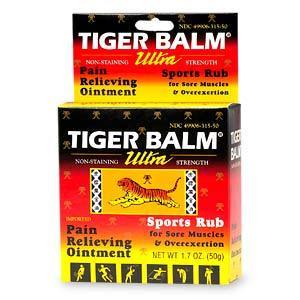
Tiger Balm is a popular topical analgesic commonly used for muscle and joint pain. Its main ingredients are camphor and menthol, and its other ingredients include cajaput oil, cassia oil, clove oil, and dementholized mint oil.
Research shows that Tiger Balm is effective for increasing blood flow to the applied area and for treating headaches, and I’ve found it quit helpful in reducing joint pain.
Buy now
AmazonAmazon UK
Arnica Gel
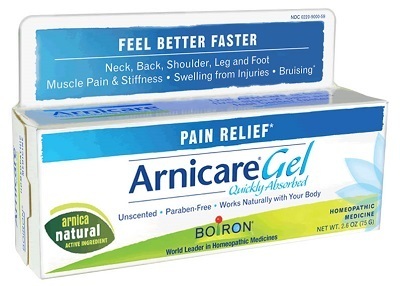
Arnica gel, produced from the Arnica Montana plant, has long been used to treat pains, including muscle soreness and strains and joint pain and inflammation.
Research has proven arnica gel to be an effective way to reduce joint pain, and equally as effective as ibuprofen in treating arthritis.
When I have joint or muscle pains, I apply both arnica gel and Tiger Balm several times per day and notice a significant improvement within a few days.
Buy now
AmazonAmazon UK
Spirulina
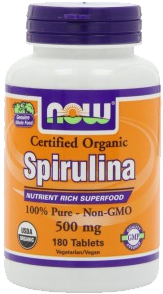
Spirulina is a non-toxic blue-green algae that is very similar to fish oil in its health benefits.
Research has shown that supplementation with spirulina can…
Reduce muscle damage caused by exercise
Improve exercise performance
Increase strength
Improve cholesterol and triglyceride levels
Reduce blood pressure
Improve blood sugar control
Reduce systemic inflammation
Improve allergy symptoms
Improve insulin sensitivity
The anti-inflammatory effects are what help with reducing joint pain, and animal research has shown that spirulina supplementation improves joint health.
Buy now
AmazonAmazon UK
Fish Oil
The next type of general health supplement that I highly recommend is fish oil, because it’s a great source of “omega-3 fatty acids.”
Omega-3 fatty acids (eicosapentaenoic acid–EPA–and docosahexaenoic acid–DHA) are an essential type of fat, meaning they can’t be synthesized by the body and must be obtained from the diet.
Research has shown that supplementation with fish oil can…
Increase muscle protein synthesis
Reduce muscle soreness, inflammation, and anxiety
Reduce blood pressure, depression, the negative effects of stress, and the risk forkidney and cardiovascular disease, as well as stroke and metabolic syndrome
Improve glucose uptake and insulin sensitivity in people with impaired insulin response and metabolism, and preserve it in the metabolically healthy
Improve memory and cognitive performance
Help prevent weight gain
Speed up fat loss
Quite an impressive roster of benefits, no?
Now, not all fish oils are made the same. There are two important things to consider when choosing one:
You want to know how the oil has been processed.
There are two forms of fish oil on the market today: the triglyceride form, and the ethyl ester form.
The triglyceride form is fish oil in its natural state, and the ethyl ester form is a processed version of the triglyceride form that includes a molecule of ethanol (alcohol).
While plenty of studies have proven the benefits of supplementation with fatty acid ethyl esters (FAEEs), research has shown that the triglyceride form is better absorbed by the body.
One of the reasons for this is the ethyl ester form is much more resistant to the enzymatic process by which the body breaks the oil down for use.
Another downside to the ethyl ester form is during the digestive process, your body converts it back to the triglyceride form, which results in the release of the ethanol molecule.
Although the dose is small, those with alcohol sensitivity or addiction can be negatively affected. Furthermore, research has provided evidence of cellular and organic toxicity and injury resulting from the ingestion of FAEEs
You want to know the EPA/DHA content of each serving.
Because of the varying quality of fish oils on the market, it’s important that you look at how many milligrams of EPa and DHA (omega-3 fatty acids) are actually in each serving.
Lower quality supplements might have as little as 150 – 200 milligrams per 1 gram of fat, which makes them nearly worthless as you have to take far too much every day to get enough omega-3s (you want a minimum of 2 – 3 grams of omega-3s per day).
A high-quality fish oil can be quite a bit more money than a low-quality one, but when you look at how much you’re getting for that money in terms of omega-3 fatty acids, the price makes more sense.
For example, here’s the label from a cheap, low-quality (ethyl ester) fish oil product:
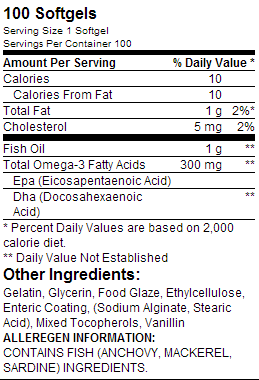
This product costs about $11, and comes with 100 pills containing 300 mg of omega-3 fatty acids each. This means you’re getting 30 grams of omega-3 fatty acids per bottle, and paying about 37 cents per gram.
Now, here’s the label from a high-quality triglyceride fish oil product that I use, Nordic Naturals’ Ultimate Omega:
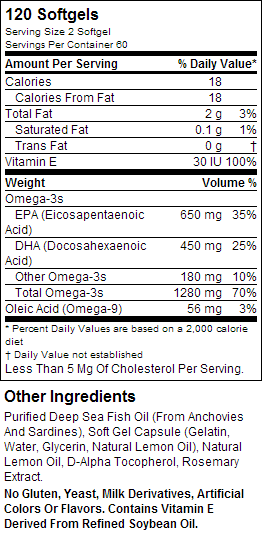
This product costs about $40, and comes with 120 pills containing 640 mg of omega-3 fatty acids each.
This means you’re getting about 77 grams of omega-3 fatty acids per bottle, and paying about 52 cents per gram.
So, as you can see, the initial price difference of $11 vs. $40 isn’t as drastic when you look at what you’re getting:
37 cents per gram of low-quality oil that isn’t likely to deliver all of the benefits you’re looking for vs. 52 cents per gram for the highest quality oil on the market that will.
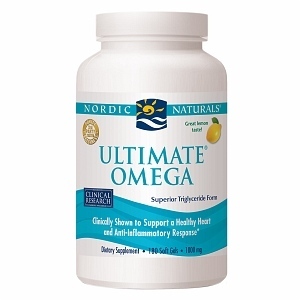
Thus, I recommend you go with the high-quality product whose nutrition facts label I showed above:
Buy now
AmazonAmazon UKBodybuilding.com
Glucosamine
Glucosamine is a natural substance present in shellfish, and it’s commonly sold as a joint health supplement.
Research has shown that glucosamine can help reduce the rate of collagen degeneration and the symptoms of osteoarthritis. Studies have also shown that it can protect cartilage in healthy athletes as well (one study was done with cyclists, and another with soccer players).
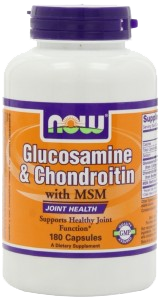
If you’re regularly engaging in activities that wear down cartilage like weightlifting or cardiovascular exercise, then I recommend taking this product to help protect your joints.
(Oh and in case you’re wondering, chondroitin is a substance found in cartilage that is also often sold as a supplement for joint health. Research is conflicting on whether it works or not, though.)
What do you think about weightlifting and joint problems and pains? Have anything else to share?


