Myth of the Week 016
A will-o'-the-wisp or ignis fatuus (in Latin, "foolish fire") is an atmospheric ghost light seen by travelers at night, especially over bogs, swamps, or marshes. It resembles a flickering lamp or lantern and is said to recede if it is approached, drawing travelers away from safe trails or pathways. The phenomenon is known by a variety of names, including jack-o'-lantern, friar's lantern, hinkypunk, and hobby lantern.
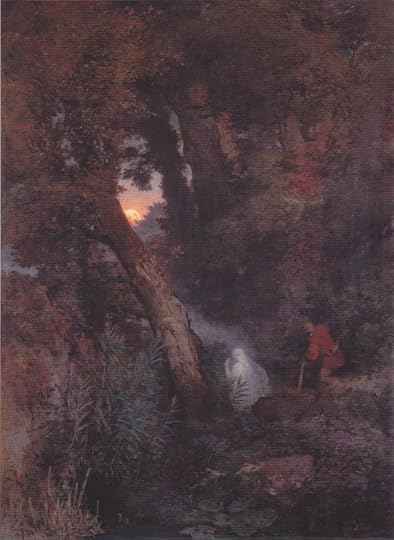
Arnold Böcklin, Will-o'-the-Wisp, 1862-1882.
In modern science, it is generally accepted that most ignis fatuus are caused by the oxidation of phosphine (PH3), diphosphane (P2H4), and methane (CH4), or by the bioluminescence of fireflies, glowworms, et al.


No comments have been added yet.