
Why the BCAA Supplement is Overrated
You know that gallon of pink liquid all the hardcore bodybuilders lug around at the gym? Chances are it’s a cocktail of branched-chain amino acids (BCAAs), and that they’ll swear by its muscle-building powers.
If you listen to the hype, the BCAA supplement is as fundamentally useful as whey protein and as powerful as creatine in its ability to help you build muscle and strength (or even moreso if you listen to some companies).
But, as is the case with many supplements, you’re not being told the whole story. Simply put, while BCAAs do have a valid use (which we’ll talk about), they’re not nearly as effective as they’re sold to be.
In this article, we’ll break down why. But let’s start at the beginning: what exactly are BCAAs, anyway?
What Are BCAAs?
Branched-chain amino acids, or BCAAs for short, are a group of three essential amino acids (amino acids that your body must get from your diet):
Leucine
Isoleucine
Valine
Leucine is the star of the trio, as it directly stimulates protein synthesis via the activation of an enzyme responsible for cell growth known as the mammalian target of rapamycin, or mTOR.
Isoleucine is number two on the list, as it improves glucose metabolism and increases muscular uptake.
Valine is a distant third as it doesn’t seem to do much of anything when compared to leucine and isoleucine.
You find high amounts of these amino acids in quality proteins such as meat, eggs and dairy products, with whey protein isolate being particularly high.
If that’s the case, then, are there benefits to using BCAA supplements in addition to eating such high-quality proteins? Is it worth the extra expense?
The BCAA Supplement’s (Supposed) Benefits
If I wanted to sell you a BCAA supplement, it wouldn’t be too hard. I could cite a variety of scientifically validated benefits, such as…
Improved immune function
Reduced fatigue
Reduced levels of exercise-induced muscle damage
Increased levels of post-exercise muscle growth
And more…
Basically, I could just tell the same story that just about every supplement company selling BCAAs tells, and it would be hard to refute at first glance.
But there are two very important points you’re not told about BCAA research:
1. Research commonly cited that demonstrates muscle-related benefits of BCAA supplementation was done with subjects that didn’t eat enough protein.
For example, this study is one of the poster boys for selling BCAAs. It examined the effects of BCAA supplementation on a group of wrestlers in a calorie deficit. After three weeks, the supplement group, who ingested an additional 52 grams of BCAAs per day preserved more muscle and lost a bit more fat than the control group (who didn’t supplement at all).
Sounds pretty cool, right? Well, what you won’t hear is that subjects, whose average weight was about 150 pounds, were eating a paltry ~80 grams of protein per day. If we look at research on the protein needs of athletes in a calorie restriction, we learn that they should have been eating double that amount of protein to preserve lean mass.
So all that study really tells us is if we feel like eating half the amount of protein we should be eating, a BCAA supplement can help mitigate the damage. Not too exciting.
Other studies that demonstrate various muscle-related benefits of BCAA supplementation have promising abstracts, but are almost always hampered by lack of dietary control and/or low protein intake, and in almost all cases, subjects are training fasted, which is a very important point we’ll talk more about in a minute.
2. You can simply get your BCAAs from food instead, and this is cheaper and far more satisfying.
Research that demonstrates the anabolic effects of BCAA supplementation before, during, and after exercise is often used to sell the powders. But this misses the forest for the trees.
What such research tells us is that acutely raising BCAA levels (and leucine in particular) before and after exercise helps us build more muscle. There is no evidence that doing it through the ingestion of a BCAA supplement is more effective than food, however.
In fact, there’s research to the contrary: food, and whey protein specifically, may be even more effective than amino acid drinks.
This is why I recommend you eat 30 to 40 grams of protein before and after working out, and why I use whey protein for these meals. It’s cheaper than BCAA powders, tastes better, and is more effective.
So that’s how things currently look when we strip away the hype and marketing angles. But before I move onto one legitimate use for BCAAs, I want to address a question that may have occurred to you:
Isn’t there a study that has resistance-trained subjects lift weights and supplement with BCAAs while also on a high-protein diet? I wish, because that would lend great insight into the controversy.
All we currently have is an unpublished study paid for by Scivation–the creator of the popular Xtend BCAA supplement–and headed up by Jim Stoppani, that…cough..demonstrated?…some remarkable results:
Daily intra-workout BCAA supplementation was twice as effective as intra-workout whey protein supplementation, and resulted in a whopping 9 lbs of muscle growth and 2% reduction in body fat in just 8 weeks…in strength-trained men with at least two years of weightlifting experience…who were eating 2.2 – 2.4 grams of protein per kg of body weight…and were in a calorie surplus according to Harris Benedict…
Wait…what? If I take BCAAs–no sorry, not just any BCAAs but Xtend–while I work out I can be in a calorie surplus and achieve steroid-level muscle growth and get leaner? Wow! Sign me up for that!
Not. Color me skeptical here. To quote Alan Aragon in his monthly research review:
“The skeptic in me is tempted to chalk up some of the results to not just funding source (Scivation), but also the longstanding friendship [my link] between Jim Stoppani and the Scivation staff. The fact is, there’s no way to quantify the degree of commercial bias inherent in this trial – or any other for that matter.”
Okay then, so BCAAs don’t look to be nearly as exciting as the supplement companies say. They do, however, have one scientifically validated, legitimate use…
When You Should Consider Using a BCAA Supplement
If you were on the fence about buying a BCAA supplement for general use, you’re probably off it now. It turns out, however, that this supplement does one scientifically supported use, and it relates to fasted training.
People usually think “fasted training” means “training on an empty stomach,” but it’s a bit different.
Fasted training means training in a “fasted state,” and this has to do with insulin levels in your blood. You see, when you eat food, it gets broken down into various molecules that your cells can use, and these molecules are released into your blood. Insulin is released as well, and its job is to shuttle these molecules into cells.
Now, depending on how much you eat, your plasma (blood) insulin levels can remain elevated for several hours (anywhere from 3 – 6+). Why is this important? Because insulin blocks lipolysis (the breakdown of fat cells in the body).
When your body is in this “fed” state–when its insulin levels are elevated and its absorbing nutrients you’ve eaten–little-to-no fat burning occurs.
Your body enters a “fasted” state when it has finished absorbing all nutrients from the food you’ve eaten and insulin levels return to their normal, low “baseline” levels. When you exercise your body in this state, fat loss is accelerated (and weighlifting in a fasted state is particularly effective).
So, as you can see, just feeling like you have an “empty stomach” doesn’t necessarily mean your insulin levels have returned to baseline.
The easiest way to work fasted training into your routine is to work out first thing in the morning, before you eat breakfast. This has an added benefit, as well: fasting for longer than 6 hours increases your body’s ability to burn fat.
There is a downside to fasted training, however, and this is where we get to BCAAs: when you exercise in a fasted state, muscle breakdown is dramatically increased. This is bad simply because too much muscle breakdown impairs total muscle growth over time. Preventing this is simple, though.
All you have to do is take 10 grams of BCAAs, or 3-5 grams of leucine (warning: it tastes really bad) 10 – 15 minutes before training. This suppresses muscle breakdown during your workout with a minimal impact on insulin levels (much lower than whey protein, which is more insulinogenic than white bread).
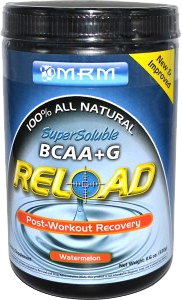
In terms of actual products, here’s what I use and like. I like that it’s naturally sweetened and flavored, and while you sacrifice some taste, I prefer that over the artificial junk found in most BCAAs.
Buy now
AmazonAmazon UKBodybuilding.com
If you don’t mind its rather awful taste and unmixability, pure leucine is the more cost-effective way to go. 250 grams runs about $24, and all you need is 5 grams before your fasted training sessions.

If you opt for the leucine, there’s also evidence that additional leucine in your post-workout meal can further stimulate muscle growth, so you can take another 5 grams after training. (This is why my protein powder contains added leucine.)
What do you think about BCAAs? Have anything else to add? Let me know in the comments below!


 newest »
 Hi Mike, thanks for all the amazing content you are producing, quick question, I always train in a fasted state using forge and pulse before workout and legion whey protein post workout, do you think its a good idea for mr to take 3-5 g leucine also before working out on weight training days? or should I be fine continuing what I have been doing , I have been losing weight pretty fast the first 3 weeks I have been on your program which is awesome just want to make sure to retain as much muscle as possible, would appreciate your thoughts, thx


