
Someone Else’s Party 別人的派對
Late March in Hong Kong brings clammy air, frequent drizzles and the gradual return of the subtropical heat. It is also marked by a spike in beer consumption and hotel room rates, caused not by the arrival of spring but a spectacle known as the Hong Kong Sevens. The three day rugby tournament is much more than just an international sporting event. To expatriates living in Hong Kong, it is a celebration bigger than Christmas and New Year. It is a cross between the Super Bowl, Halloween and Oktoberfest. It is Mardi Gras without the parade and Spring Break with bam bam sticks. The annual carnival fills the Hong Kong Stadium with cheers, beer breath and spontaneous eruptions of song and dance.
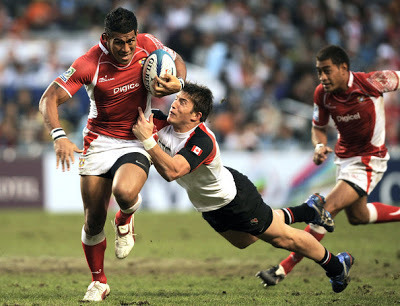 That's why they call it a contact sport
Rugby sevens, as the name would suggest, involves fewer players than regular rugby. Each game consists merely of two seven-minute halves. Think of it as beach volleyball or five-a-side soccer. To prove that size doesn’t matter, rugby sevens is set to make its Olympic debut at the 2016 Summer Games in Rio de Janeiro.
The first Hong Kong Sevens tournament was held in 1976. The sport was introduced to the British colony by a handful of rugby-loving English businessmen. Securing Cathay Pacific as a corporate sponsor ensured the event’s survival in an otherwise unathletic city. Indeed, the lack of local participation has always been a public relations issue for the Sevens. There wasn’t a single ethnic Chinese on the local team until Fuk-Ping Chan became the first Hong Kong born player to represent the city in 1997. Even today, the “Hong Kong Dragons” look more like the starting lineup of Manchester United than their parochial team name would suggest.
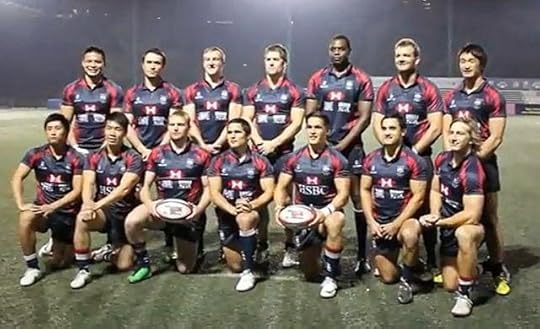 Spot the Asians
Rugby is a decidedly English pastime. The sport is dominated by Commonwealth nations around the world. England and ex-British colonies like Australia, New Zealand, Fiji and Samoa are favorites at the Hong Kong Sevens, which is why thousands of Brits, Aussies and Kiwis living in Hong Kong flock to the games every year. It didn’t take long before Americans and expats from other non-rugby-playing countries took notice. Rugby fans or not, they jumped on the bandwagon and turned the event into a pan-Caucasian extravaganza. During the Sevens weekend, expats and tourists swamp Hong Kong Stadium and overrun restaurants and bars. The normally quiet Caroline Hill Road in Causeway Bay – the only entry point to the stadium – is packed to the hilt. Streets are cordoned off for crowd control and scalpers are everywhere. Unhired taxis become the hottest commodity in town. The south stand of the stadium is where the rowdiest crowds congregate and minors are denied entry for safety reasons, which also makes it the most exciting place to be in Hong Kong.
Despite all the hullabaloo, the Hong Kong Sevens is a non-event among the locals. Unlike the Standard Chartered Marathon or the Stanley Dragon Boat Championships – both of which draw large local crowds – the Sevens is irrelevant to 95% of the city’s population and receives little to no coverage from the Chinese press. If it weren’t for the backed up traffic in Causeway Bay during that weekend, most locals wouldn’t even know that there was a tournament happening. For three days in March, Hong Kong Stadium is a sea of gweilo holding a beer in one hand and a hot dog in the other. It is as odd as going to the French Open and finding the Roland Garros Stadium full of, say, Japanese faces. If you look hard enough, you may spot the occasional local Hong Konger trying to blend in. To the average rugby-indifferent local, the Sevens is nothing but a tourist trap designed by businesses to promote air travel and boost hotel occupancy. With all the money visitors splurge on tickets, food, accommodation and official merchandise, the Hong Kong Sevens is easily the city’s biggest weekend in terms of tourism dollars.
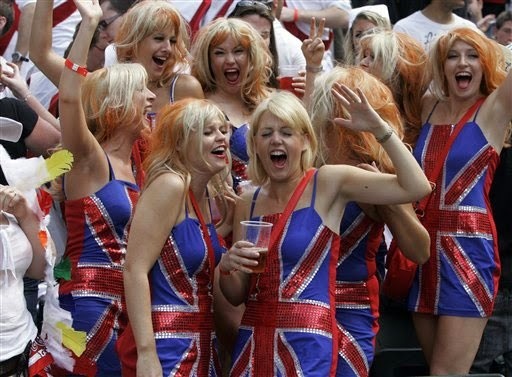 Feels just like home
The Sevens’ failure to catch on with the local population has as much to do with the sport’s limited popularity as it does with access. The increasing commercialization of the event is shutting out people outside the rugby-playing or finance community. Out of the 40,000 tickets to the tournament, less than 10% are available to the general public through an online ballot. The rest of them are either reserved for rugby clubs or sold in large blocks to corporations.
Inside the stadium, much of the east and west stands are converted into “by invitation only” corporate boxes. The arrangement allows bankers and lawyers to entertain valued clients in what has become the most important marketing event on the calendar. How many tickets a given client receives and whether he ends up on the main stand or in an upper level executive suite depends on the amount of business he has given the host in the past year. It is nothing personal. If you don’t work in finance or know someone who does, on the other hand, good luck with the ballot. The chance of winning it is less than one in ten.
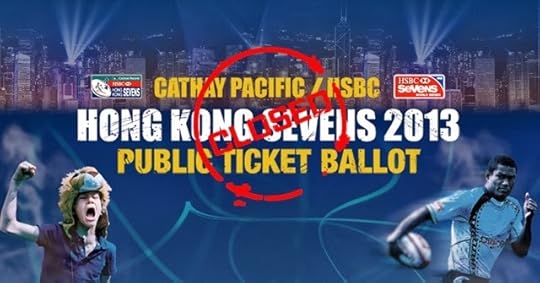 Better luck next year
As a child growing up in Hong Kong, I never heard of the Sevens. But since I moved back to the city a few years ago, I have gone to the event every year. Although I enjoy neither rugby nor beer, and much less dressing up in a superhero costume, I make a point of going even if only for a few hours. Like the rest of the people in the stadium, I gorge on bad ballpark food, dodge spilled beer and queue up outside overcrowded toilets. I pay little attention to the games and know close to nothing about the rules. Instead, I say hello to my friends, exchange a few business cards and pick up the latest gossip in the banking circles. It is a check-the-box exercise I don’t mind doing. The glaring absence of locals, whether by choice or by circumstance, still bothers me. Nevertheless, each time I see what a genuinely good time everyone is having, I say to myself: Why not? They only get to do this once a year.
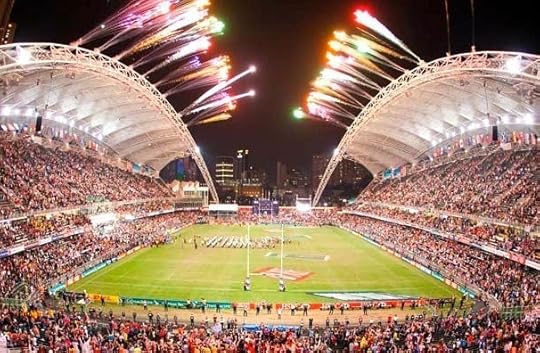 The best show in town
_______________________
 That's why they call it a contact sport
Rugby sevens, as the name would suggest, involves fewer players than regular rugby. Each game consists merely of two seven-minute halves. Think of it as beach volleyball or five-a-side soccer. To prove that size doesn’t matter, rugby sevens is set to make its Olympic debut at the 2016 Summer Games in Rio de Janeiro.
The first Hong Kong Sevens tournament was held in 1976. The sport was introduced to the British colony by a handful of rugby-loving English businessmen. Securing Cathay Pacific as a corporate sponsor ensured the event’s survival in an otherwise unathletic city. Indeed, the lack of local participation has always been a public relations issue for the Sevens. There wasn’t a single ethnic Chinese on the local team until Fuk-Ping Chan became the first Hong Kong born player to represent the city in 1997. Even today, the “Hong Kong Dragons” look more like the starting lineup of Manchester United than their parochial team name would suggest.
 Spot the Asians
Rugby is a decidedly English pastime. The sport is dominated by Commonwealth nations around the world. England and ex-British colonies like Australia, New Zealand, Fiji and Samoa are favorites at the Hong Kong Sevens, which is why thousands of Brits, Aussies and Kiwis living in Hong Kong flock to the games every year. It didn’t take long before Americans and expats from other non-rugby-playing countries took notice. Rugby fans or not, they jumped on the bandwagon and turned the event into a pan-Caucasian extravaganza. During the Sevens weekend, expats and tourists swamp Hong Kong Stadium and overrun restaurants and bars. The normally quiet Caroline Hill Road in Causeway Bay – the only entry point to the stadium – is packed to the hilt. Streets are cordoned off for crowd control and scalpers are everywhere. Unhired taxis become the hottest commodity in town. The south stand of the stadium is where the rowdiest crowds congregate and minors are denied entry for safety reasons, which also makes it the most exciting place to be in Hong Kong.
Despite all the hullabaloo, the Hong Kong Sevens is a non-event among the locals. Unlike the Standard Chartered Marathon or the Stanley Dragon Boat Championships – both of which draw large local crowds – the Sevens is irrelevant to 95% of the city’s population and receives little to no coverage from the Chinese press. If it weren’t for the backed up traffic in Causeway Bay during that weekend, most locals wouldn’t even know that there was a tournament happening. For three days in March, Hong Kong Stadium is a sea of gweilo holding a beer in one hand and a hot dog in the other. It is as odd as going to the French Open and finding the Roland Garros Stadium full of, say, Japanese faces. If you look hard enough, you may spot the occasional local Hong Konger trying to blend in. To the average rugby-indifferent local, the Sevens is nothing but a tourist trap designed by businesses to promote air travel and boost hotel occupancy. With all the money visitors splurge on tickets, food, accommodation and official merchandise, the Hong Kong Sevens is easily the city’s biggest weekend in terms of tourism dollars.
 Feels just like home
 The Sevens’ failure to catch on with the local population has as much to do with the sport’s limited popularity as it does with access. The increasing commercialization of the event is shutting out people outside the rugby-playing or finance community. Out of the 40,000 tickets to the tournament, less than 10% are available to the general public through an online ballot. The rest of them are either reserved for rugby clubs or sold in large blocks to corporations.
Inside the stadium, much of the east and west stands are converted into “by invitation only” corporate boxes. The arrangement allows bankers and lawyers to entertain valued clients in what has become the most important marketing event on the calendar. How many tickets a given client receives and whether he ends up on the main stand or in an upper level executive suite depends on the amount of business he has given the host in the past year. It is nothing personal. If you don’t work in finance or know someone who does, on the other hand, good luck with the ballot. The chance of winning it is less than one in ten.
 Better luck next year
As a child growing up in Hong Kong, I never heard of the Sevens. But since I moved back to the city a few years ago, I have gone to the event every year. Although I enjoy neither rugby nor beer, and much less dressing up in a superhero costume, I make a point of going even if only for a few hours. Like the rest of the people in the stadium, I gorge on bad ballpark food, dodge spilled beer and queue up outside overcrowded toilets. I pay little attention to the games and know close to nothing about the rules. Instead, I say hello to my friends, exchange a few business cards and pick up the latest gossip in the banking circles. It is a check-the-box exercise I don’t mind doing. The glaring absence of locals, whether by choice or by circumstance, still bothers me. Nevertheless, each time I see what a genuinely good time everyone is having, I say to myself: Why not? They only get to do this once a year.
 The best show in town
_______________________
This essay is taken from No City for Slow Men, published by Blacksmith Books, available at major bookstores in in Hong Kong and at Blacksmith Books.


No comments have been added yet.


