DECISIONS AND HOW THEY AFFECT YOUR LIFE
Every action we take is either productive or destructive. There is no in between. Think about it for a minute.
All our decisions and actions have a compounding effect on our lives. For more on this, read Darren Hardy’s, “the Compound Effect”. Even the little decisions, the ones that seem insignificant at the time, can change the course or path of our lives and the lives of those around us. Take a look around you. Where do you live? With whom do you live? What does your bank account look like? What do you do for a living? These things are a culmination of all the decisions you have made along the way. Imagine going back in time and changing something. Maybe you change the decision you made to go on that skiing trip, where you met your husband or wife. What kind of effect would that have on your life today? I urge you to watch the movie, “the Butterfly Effect”.
 In this movie, Ashton Kutcher is able to go back in time and change one thing from the past. He thinks this will solve his current problem, but it only makes things worse. You see, that one thing he changed, affected many other aspects of his life and ultimately the trajectory of everything that would follow. This always left him with a completely different and unexpected present life situation, causing the need for him to go back and make additional changes yet again, leaving him in a constantly changing cause and effect loop that he would never be able to get just the way he wanted. I’m not saying that the decisions you have made are good or bad. They are what they are. The point is, that if you have a goal in mind or a vision of what you want your life to look like, you will make choices that either lend to your desired outcome or steer you away. If you have no idea where you are going, you will absolutely arrive. The question is, where?
 We are always making decisions. The state of mind we are in, affects those decisions, which ultimately produces results. Action brings reaction. Cause brings effect. Let’s say you are an optimistic person–a “glass half full”–kind of thinker, and let’s suppose you have to decide on whether or not to fly across the country to take a seminar. This seminar is a sales technique seminar (an area you are failing in at the moment), the speaker is a true genius in the area of sales, and the seminar costs $2000 to attend. The company that is putting on the seminar promises to teach the exact techniques that you are lacking (the same techniques that could move your business forward). Remember, you are optimistic. What do you do? You will most likely spend the money, devote the time, and take the seminar. Why? You do it because you have the ability to foresee a positive outcome. You may even tell yourself things like, “With this new knowledge, I’ll be able to do: X, Y and Z, my sales will increase and my business will grow”. So you follow through, use the knowledge you’ve gained and move forward. Just like a true optimist.
What about the pessimist? What do they do when facing a decision like this? They may tell themself, “it’s too much money, I don’t have the time, or these things never work”. They can’t see a positive outcome. They only see the negative. Therefore they don’t take the seminar and they stay right where they are. This is an example of a decision and how it can affect the rest of your life. Some decisions can be as small as passing on dessert or ordering water with lunch rather than a Coke. Some decisions can be as huge as waiting five years to buy a house in a good neighborhood rather than raising your kids in a high crime area, just to be in your own home now. These decisions all come down to personal values and what is most important to you in the moment. Home ownership “right now” could be top priority to someone, and they purchase the house in the crime zone not thinking about the effect it will have on their kids ten years later. While the person who sees the big picture makes the decision from a logically based state of mind. The end results on the children in both these situations could be drastically different.
“Yes, there are two paths you can go by, but in the long run there’s still time to change the road you’re on.”– From Stairway to Heaven by Led Zeppelin (Page/Plant 1971)
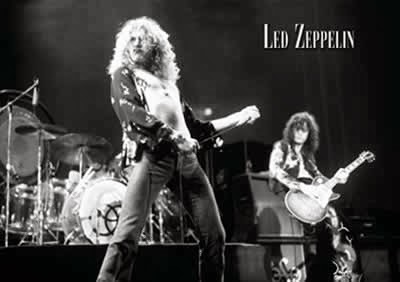
I included this lyric to make the point that although every decision we make has an effect on the rest of our life, we still have many opportunities to make different choices. We are constantly steering the ship. If we don’t like the direction we are going in, we can change course at any time.
I often ask myself why I make certain choices. I’ll get more into this in the “Power of Why” section in chapter 10. But for now, just remember that any choice we make comes from a place of personal belief. In other words, there is something within my core values that pushed me toward this decision. Everything we do, means something to us personally, even the smallest decision–like carefully removing the spider from the house and putting it outside, rather than squashing it. But for now, let’s just be aware of the effect our every decision has. Understand that we are acting out a cause and effect process on an ongoing basis. Understanding this concept alone can be life changing. Too many people are banging around this world with no regard of their effects. They have no idea of how their decisions affect their future and the people around them. Even worse, many of them don’t care. Much of our society lives by the “Me” and “Now” mottos.
The North American Iroquois had a tradition that said:
“In our every deliberation we must consider the impact of our decisions on the next seven generations”.
This meant that every decision they made, was done while thinking of how it would affect the future 140 years later, or their 5x great grandchildren. How would America be today if we all lived by that rule?
A great example of cause and effect is what I like to call the “Domino Effect”. I’ve seen some amazing domino presentations that must have taken months to set up. The cool thing about it is the way each domino affects the next as it falls over. The entire process is fun to watch, but the individual action of each domino on the next is truly the incredible part. When you think of how each domino reacts to the previous and then acts upon the next, you get a sense of the power that very first domino had. If you can imagine your life as a one hundred-year-long domino chain, you can visualize how each decision you make affects the trajectory of your life (or the next domino). The first domino affects all the ones that follow. In other words, every decision you make will affect the rest of your life.
It may not seem like a big deal in the moment, but ask yourself how a simple five-dollar per week investment–started when you were twelve–would affect your life today. I’ll tell you. If you started investing $5 per week from the time you were twelve years old and earned an average of 6% annually, you would have $91,884.35 when you turn sixty-five. That may not sound like a fortune, but we’re only talking about five bucks a week. Step it up to $10 and you’d have $183,772.13. That’s the power of small decisions. Let’s say you’re already thirty years old. A simple $200 per month at 8% interest would turn into $461,834.58 by the time you turn sixty-five. Dave Ramsey has a great investing calculator you can play with at: www.daveramsey.com.
Thanks for reading. For more great chapters, click here and order your copy of Defining Success in America today.
To your Success!
Dan Wos


No comments have been added yet.