
keeping it simple
I'm in reading rather than making mode at the moment. It's a choice that's not easy to make, and actually isn't deliberate. Sometimes I need a large intake of words, and sometimes I prefer to make up my own as I use my hands. If I read, I read a lot and whenever I can, which doesn't leave time to quilt or knit or stitch. If I make, I don't read as much because I want to get things done. It's fine because either way I feel productive: I'm either finishing projects or finishing books.
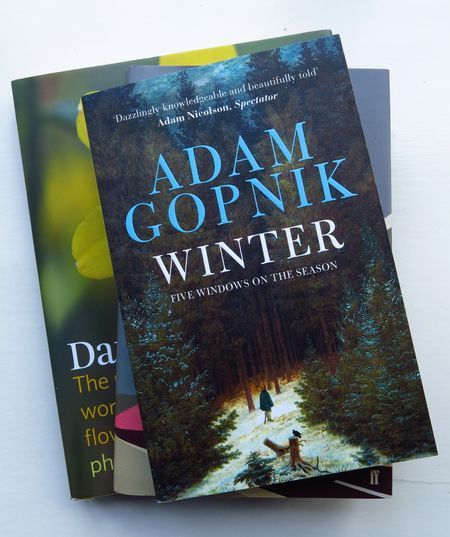
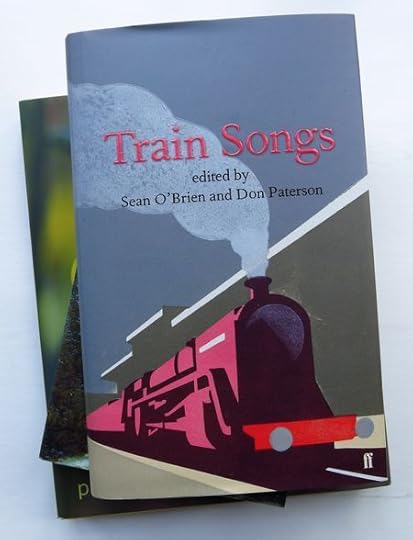
My recent reading has been a real mix with no apparent connections. Except I now see that I've been reading books with remarkably simple, concise titles - Winter, Daffodil, Maps, Eat - and they all link to make a great December literary combination. I've also been reading books with simple two-word titles where both parts are necessary: Train Songs, Barbara Hepworth, Joan Eardley, and Nairn's Towns.
I do admire writers who can find (and keep) a brief title, especially when it's spot-on. I also respect writers who stick to their subject and what they know best. Winter has been criticised for including too much about ice hockey, but as the author grew up in Canada it seems a fair way to approach the subject of winter, even if it is a little alien to UK readers. Although there are good sections on cities in winter and Antarctica, the rest of the book is packed with cultural references and rather highbrow, as you'd expect from Adam Gopnik, so I think there's still room for a simpler but still thought-provoking book on winter.
Nigel Slater's book is incredibly simple, but it's almost too pared back and too reduced for someone who can write so evocatively about food. He's been writing recipes for so long now, he probably wishes he could just scribble out a few words on the back of an envelope - and this is pretty much what he's done here. I miss context, and I find it very difficult to get used to reading the right hand page then the left hand page.
I have experience of writing books that have to be suitable for more than one market, and know it's not easy. Sometimes, I wish publishers would accept that a writer is from a certain place (like Adam Gopnik) and that this is what makes him or her special, and is what gives their work a specific voice and personality. I am quite sure readers can cope with this, although many publishers think not. So this is why Train Songs includes mostly British poets who write about British trains, train journeys and stations (it's a wonderful selection), but also a few American poets who write about the equally atmospheric but very different American railroads. Instead of a compromise, I'd rather have than an anthology of train poems for each country - or a huge world railway anthology that includes India, Russia, South America, Africa and so on.
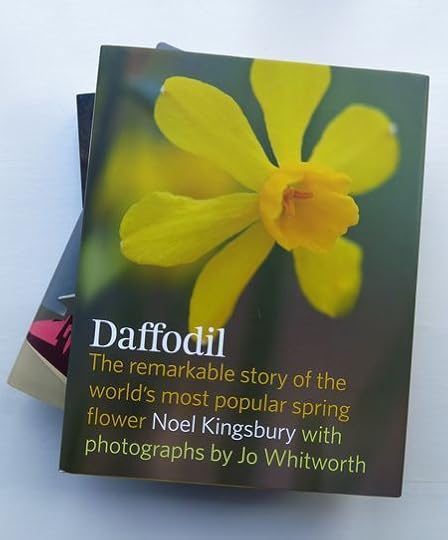
It's the same with Daffodil. This is a flower that is loved by so many people in this country, and the book reflects and explains its special status (much of which is due to the fact that it's so easy to grow). I have no doubt that many American growers love the daffodil, too, but in a book that covers so much UK history and UK growers and gardens, the profiles of the US growers feel bolted on, as though they are afterthoughts. Again, surely the US deserves its own celebration of the daffodil?
There are pros and cons with keeping it simple. Too simple and a book can become simplistic and devoid of texture. Not simple enough, and the book can be compromised. Something that could not be said of the brilliantly complex Barbara Hepworth and Joan Eardley, both of whose work I've seen recently, both of whom worked and worked to hone and simplify the way in which they expressed themselves in stone, wood, and paint, and whose biographies convey this vividly.


Jane Brocket's Blog

- Jane Brocket's profile
- 27 followers

