5 Pro Tips to Make your Next Event Better
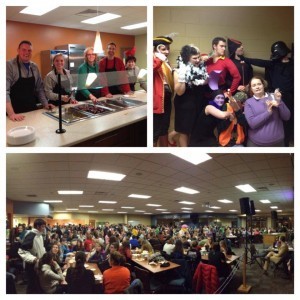 I recently hosted a campus-wide event for college students, just before finals’ week. The cafeteria was packed for the midnight breakfast and our job was to provide an entertaining evening with costume contests, giveaways, and other humorous elements. A tough order. College students are among the most savvy and regularly-entertained people groups, so any slip would come up “lame” and not achieve the event’s goals.
By all accounts, the event was a supreme hit with the students, many saying it was the best one ever. As the host (and readers here know that I love watching TV hosts), many of those comments came my way and I deflected them to those (especially the amazing producer/director Reed Lyons) who had done the hard work to make it such a success. As I drove home after the event, I started to reflect on why it was a hit. I came up with a quick “hit list” of five elements that made it better than average.
None of these five will be new to you, but think about the last time you were at an event. I bet they didn’t “hit” on all five of these. If you pay attention to these five elements for your next event (youth group, large gathering, conference, retreat, camp), I bet you’ll hear more positive comments from those who attended.
Make sure the media (sound, video, lighting) is near-perfect. Listen, THIS is what separates events from other ones and its your first impression. No matter how good your material is, if videos don’t fire when called for, if mics aren’t working or there is feedback (low end rumble, squeals), or if the lighting is poor, the senses of those who attend your event will be telling them this is mediocre at best. Can we make a pact right now? The events you lead from here on out will be practiced and ready, the sound people will have everything ready (and they’re paying attention), and you’ll invest in training/supervising those who run the equipment. For our event, we had a professional sound tech and two killer presentations (video and PowerPoint). All I had to do as the host was set it up (read a few prepared lines) and the laughs followed as the presentations rolled on cue.
Write out your material beforehand … and practice (memorize where necessary). I can’t stress this enough for hosting, speaking, and coordinating: What separates events is the quality of the material. Find/write about five appropriate jokes to have at the ready. When asked to host, my time was limited in preparation, so a team of college students wrote a bunch of jokes over a week’s time and we picked the best ones. In 45 minutes of material, we had over 15 major laughs where all 400+ were rolling. Remember, with good preparation, you’ll cast off as much material as you use!
Have a quality band … that practices … and can play. This may not be applicable to all events, but when you can… DO. The “iTunes” world in which we live now is demanding of quality. Poor bands (and poor sound!) will, again, immediately tell your audience that the event planners had a low standard of quality. We had a GREAT house band than knew how to fill in the gaps and could play music the audience wanted to here. The leader, Cristian Mihut, could solo and the band even featured renowned author J.B. Stump on bass.
Be interactive. It’s not about the host, but about those who come. Get them on stage, let them talk, and create a synergy among the audience members. Sometimes audiences bond because they’re sharing in an event of significance (a moving concert, powerful speech, or meaningful worship service), but good event planners pay attention to how the attendees can leave realizing they didn’t just watch something, but they were a part of something. And that builds your event’s reputation for the future.
Keep it moving and don’t take too long … for anything. One of the surest signs of poor planning is that certain elements go way too long. What separates quality events from mediocre ones are the transitions. Good program planners, even those who plan worship services for Sunday mornings, think through transitions. They pay attention to how something is introduced, who is moving on and off the stage, what media is playing when, how the audience is instructed, etc.
It’s not about the host. He/she just takes the prepared material and delivers it. True, some of us enjoy this type of thing more than others, but pre-planning and attention to details are what make an event special. And anyone can do those.
What would you add to this list? What are some of the elements you see as important? What are your pet peeves when attending an event?
The post 5 Pro Tips to Make your Next Event Better appeared first on In this Corner of the World - TerryLinhart.com.