
Roadtrip to NaNo: Of Research & Local History
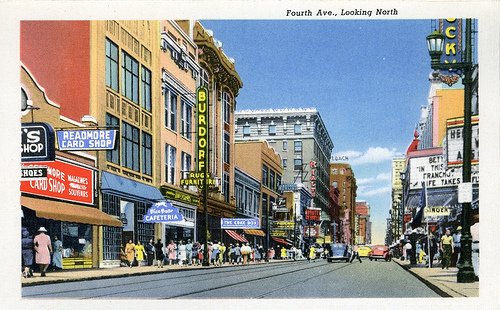
November is coming. To get ready, we’re taking a Road Trip to NaNoWriMo. On the way, we’ll hear from writers about how their cities can inspire your novel. Today, volunteer Municipal Liaison Angela in Louisville, Kentucky touts the importance of research:
Did you know that “Happy Birthday” was written by two Louisvillian sisters in the nineteenth century? Or that the Kentucky Derby is nicknamed the Run for the Roses, because of the garland of roses that gets placed around the winning horse’s neck? Or that it is also affectionately referred to as the Greatest Two Minutes In Sports?
You may not be writing something that takes place in the real world or present time, but local history can be useful in ways you don’t expect. You never know when some aspect of your local environment can make your novel feel real. While I don’t usually plan my novels out, I do love to research beforehand so that I have a plethora of facts to work with when my novel’s plot reveals itself to me.
I’m from Louisville, Kentucky—a city that is both larger and smaller than most people think. Despite Louisville’s seemingly never-ending associations with sports (ahem, Louisville Slugger baseball bats) we don’t actually have any major league teams. This type of local contradiction that speaks so deeply to the fabric of a city is exactly the type of thing you can discover more about by researching regional history.
A simple trip to the Kentucky Derby Museum will result in boxes full of photographs documenting the fashions of wealthy men and women since the very first Derby in 1875! Seeing floral artisans at the Derby Festivals construct garlands of roses for the winning horses makes flower arrangement a visceral and exciting activity to imagine.
You can always find historical sites in your town to spice up every kind of novel. For example, if you’re researching something historical, medical, or spooky, Louisville is home to the Waverly Hills Sanatorium, one of the most haunted spots on earth. Or a visit to the Louisville Slugger Museum & Factory will show you every step of the infamous bat-making process, including woodworking techniques for ensuring the proper weight and balance.
These details may sound random, but when you are in a novel and trying to describe processes, whether they be historical or manual, there is no better way to talk about them convincingly than actually understanding them.
Knowing how a bat is made can help you when you are writing about your character’s Little League game: it’s really hot out and your character’s little sister is practicing her swing, three bats before she gets up to the base, when suddenly a loud crack fills the air, and you realize that she accidentally knocked all the bats right into the metal fencing. How fast did the bats have to be going for them to actually crack upon impact? How strong does your little sister have to be? And how long were the bats?
Thanks to your research, you can write this scene inside and out, with pitch-perfect accuracy. Throw in a spooky tuberculosis-ridden ghost and some perfectly arranged rose garlands, and you’ve got yourself a chapter!
You never know what unusual things you might find when you look at the world around you. No matter where you live, explore your city’s history. Feel the facts that live around you. Delve deeper.

Angela Szalay has participated in NaNoWriMo nine times, and won eight of them. She has been an ML for 6 years, and is known for her last minute finishes. Weather is no deterrent to a true Louisville Cardinals fan, nor is sleep a requirement for the faithful concert-goer. Her scrunchies, like her pens and her website, are color-coordinated. StarAndrea wrote this bio for her.
Photo by Flickr user Olivander.


Chris Baty's Blog

- Chris Baty's profile
- 63 followers

