SHOW the World You Come From or are Perfectly Content

How to Describe a Place
in a College App Essay
If you are applying to the University of California, you need to write two college application essays. I wrote about how to Describe the World You Come From three years ago, explaining how to think about the first prompt and brainstorm ideas for your essay. It would help you to read that advice first, then come back.
This time, I want to give you some ideas on how to SHOW the world you decide to write about when describing the setting of your world. These also can help you with The Common App prompt #4, which asks you to describe a place where you are perfectly content.
Since in the UC essay your world will be some type of community, I believe you might need to describe where you experienced it. (In The Common App Prompt #4, it would be the “place or environment.”) In writing, that’s called the setting. If you want a powerful essay, you will use descriptive language, sensory details and specific examples to help us see your world.
You can either explain your world, or show it to us. If you show it to us–help us see and experience it along with you–we will find it much more interesting! And chances are, if we find your world interesting, we (colleges!) also will find you interesting.
I recently discovered a wonderful short writing guide by James Thayer, who does one of the best jobs of teaching how to “show” in writing. He has one section just about how to show The Setting. (You can download Show or Tell? A Powerful Lesson on a Crucial Writing Skill on Amazon for less than a buck. If you want the golden key to great writing–including your college admissions essays–take ten minutes and read this gem!).
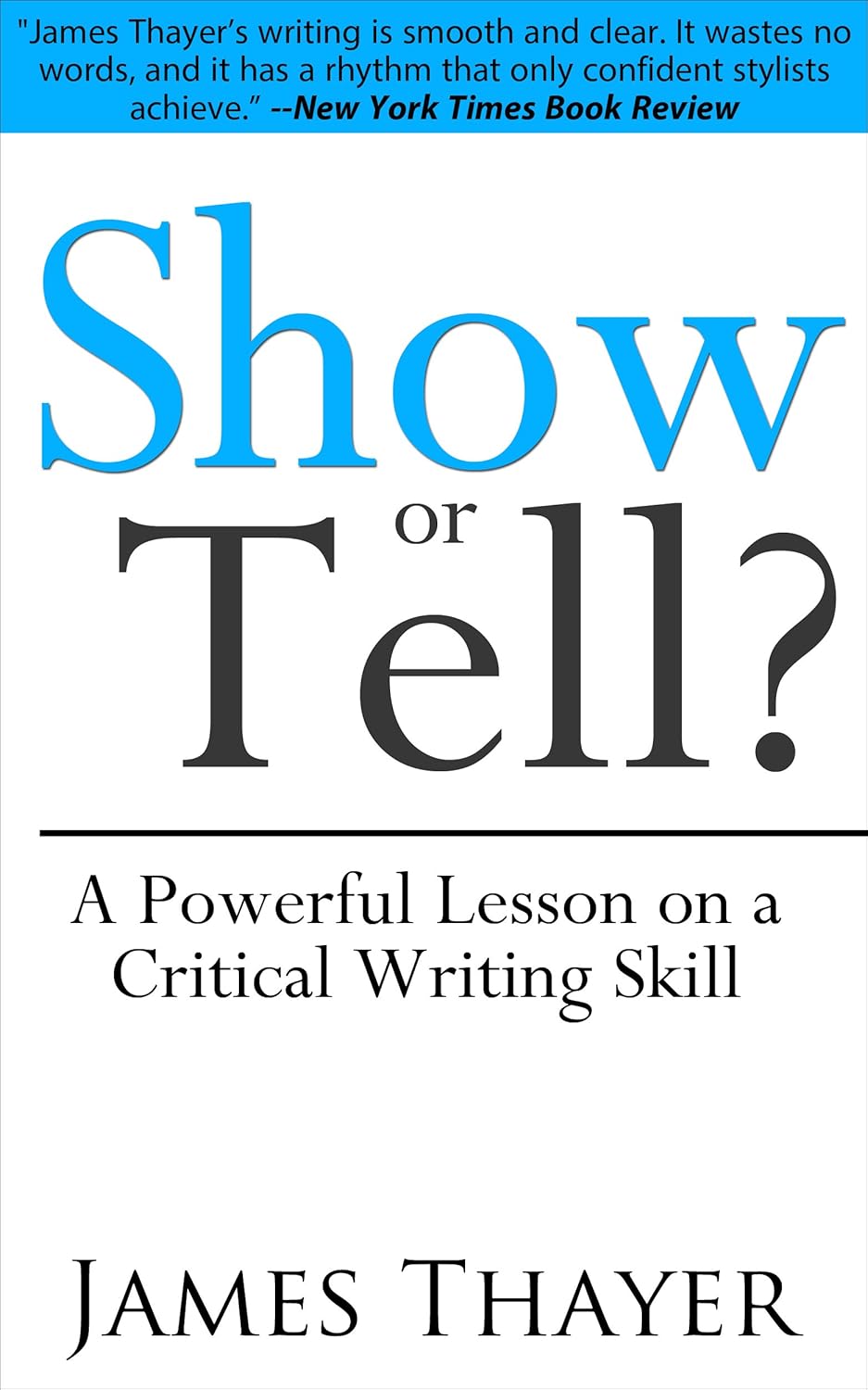
Here are some of his examples of how to Show your setting/world/place instead of simply explaining it (Tell). I’m going to bold the sensory details that help you see, hear, smell and feel the settings. Also, notice how Thayer also includes some action (things happen) to describe these places, using strong verbs.:
Tell: Rob’s bedroom was a mess.
Show: Rob kicked aside two empty Coke bottles, and swatted an empty pizza box off on his bed. He pushed aside a pile of shirts, then sat down.
* * *
Tell: The forest was gorgeous in the autumn.
Show: Aspen leaves had fallen, covering the forest floor in gold.
* * *
Tell: Janet had a colorful room.
Show: Streamers hung from the chandeliers, and helium balloons rose from every corner. A red and yellow banner read, Happy Birthday.
* * *
Tell: The house was stark and uninviting.
Show: The house was made of unpainted concrete blocks, and the windows didn’t have shutters or shades.
* * *
Tell: The lawn was dead.
Show: The grass rose as high as his knees, and dandelions grew between the paving stones.
In his book, Thayer has examples of how to SHOW other parts of writing, which could help you bump up your narrative essay–ranging from showing weather, aches and pains, how people look, reactions, personality and emotions. Did I mention it’s only 99 cents?
Here’s Thayer’s brilliant way to tell the difference between showing and telling:
“What’s the difference between these two sentences?
His arm itches.
He scratched his arm.
The difference is profound, and knowing it will instantly make someone a better writer.”
(In case you are still confused, “His arm itches” is telling and “He scratched his arm” is showing.)
Side Note: If you are applying for the University of California, keep in mind that your essay about Describe the World You Come From could be recycled for The Common App prompt on describing a place your are perfectly content. They might not be talking about exactly the same thing, but if they are close enough, why write an extra essay if you don’t have to?
Both of the prompts–the UC Prompt 1 and Where Are You Perfectly Content–that ask you about places, however, have potential pitfalls, and I have included warnings and ideas on how to avoid them in the posts I wrote about them. I strongly urge you to read them. Especially if you end up using the same one for both applications–they need to be good! (Hint: both are highly improved if you include something that happened in your world or special place.)