Reading to Do
Welcome back everyone.
I hope you’re looking forward to the new school year where the focus is
on nonfiction. Here’s
where you can learn how it can enhance your life and your students' from the
people who eat and breathe it on a daily basis.
How do you learn best? When you know the answer to this question you have the secret
to life-long learning and a rich life of discovery and skill acquisition. There
is, perhaps no more important knowledge for each individual to acquire. I wrote a post
about my process. Since this blog's theme this
month is "Life Changing Nonfiction: Past and Present," I’m going to discuss one
very important way of learning, the way I LOVE to learn and that’s by doing. I am the product of a progressive elementary school that emphasized experiential learning. It carried over to my life at home as a parent, as a teacher and as a nonfiction author.
First, the past:
When I
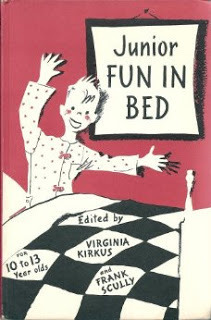
was a kid, my mother made me stay in bed when I was sick. I didn't mind because I loved to read, but more importantly, I loved to do projects. The book I remember most was called Junior
Fun in Bed and it was edited by none other than Virginia Kirkus, who started
the "Kirkus Reviews." I remember thinking that the title was
odd. Why did they have to put in the
word “Junior,” which wasn't all that common back in those days? Why didn't they just call
it “Fun in Bed?” Childhood back then was
definitely more innocent!
You can still find it on Amazon where it now has the subtitle: Making a Holiday of Convalescence that is absent from the original title and the jacket art. But the original description
is still there: “….You'll discover
that the authors have crammed the pages with pleasant ways of passing the time.
There are dozens and dozens of magic stunts, puzzles, riddles, mazes, and
indoor games, most of which you've never played before. There are limericks and
cartoons and question-and-answer tests. There is a whole section devoted
specially to hobbies and to the really useful things you can make indoors when
you find time lying heavy on your hands…”
This book kept me busy. The best things were the activities where
I made something. In the process, I learned how to read
to follow directions, an important life skill.
Fast-forward
to young adulthood:
As a mother of small children, I retired from teaching, and scrambled to earn money at home writing nonfiction for
children. My first books were literally
First Books—on Logic, Cells, and Gases. I had also written a book on economics: Making Sense of Money and navigation: Sense of Direction: Up Down and All Around. Now, thankfully, all of them are out of
print; I use them as excellent examples of bad traditional
writing.
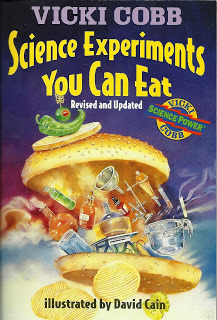
The book that put me on the map was the sixth book I wrote: Science
Experiments You Can Eat. It was my first activity book. As a NY State certified high school science teacher, I knew enough settled science to take a very creative approach to research—prowling up and down supermarket aisles and reading labels to invent experiments. I did every experiment in the book, some of them several times to make sure that they gave results and to hone the procedures. The purpose of this book is to teach basic science—chemistry, physics, and biology—through food and food preparation. It was an instant hit with its outside-the-box title and has had proven staying power because it is strong on content and stays true to its purpose. Published originally in 1972, it was revised once and has never been out of print. That's 41 years! In preparing this post, I read some of the recent reviews on Amazon from many people who remember this book
as a child and are sharing it with their grandchildren! There were also reviews by teachers who are still using it in
class.
I'm proud that it is still very relevant and providing as much fun as ever. But it is not a book just to read. It's a book that calls the reader to do.

I hope you’re looking forward to the new school year where the focus is
on nonfiction. Here’s
where you can learn how it can enhance your life and your students' from the
people who eat and breathe it on a daily basis.
How do you learn best? When you know the answer to this question you have the secret
to life-long learning and a rich life of discovery and skill acquisition. There
is, perhaps no more important knowledge for each individual to acquire. I wrote a post
about my process. Since this blog's theme this
month is "Life Changing Nonfiction: Past and Present," I’m going to discuss one
very important way of learning, the way I LOVE to learn and that’s by doing. I am the product of a progressive elementary school that emphasized experiential learning. It carried over to my life at home as a parent, as a teacher and as a nonfiction author.

First, the past:
When I
was a kid, my mother made me stay in bed when I was sick. I didn't mind because I loved to read, but more importantly, I loved to do projects. The book I remember most was called Junior
Fun in Bed and it was edited by none other than Virginia Kirkus, who started
the "Kirkus Reviews." I remember thinking that the title was
odd. Why did they have to put in the
word “Junior,” which wasn't all that common back in those days? Why didn't they just call
it “Fun in Bed?” Childhood back then was
definitely more innocent!
You can still find it on Amazon where it now has the subtitle: Making a Holiday of Convalescence that is absent from the original title and the jacket art. But the original description
is still there: “….You'll discover
that the authors have crammed the pages with pleasant ways of passing the time.
There are dozens and dozens of magic stunts, puzzles, riddles, mazes, and
indoor games, most of which you've never played before. There are limericks and
cartoons and question-and-answer tests. There is a whole section devoted
specially to hobbies and to the really useful things you can make indoors when
you find time lying heavy on your hands…”
This book kept me busy. The best things were the activities where
I made something. In the process, I learned how to read
to follow directions, an important life skill.
Fast-forward
to young adulthood:
As a mother of small children, I retired from teaching, and scrambled to earn money at home writing nonfiction for
children. My first books were literally
First Books—on Logic, Cells, and Gases. I had also written a book on economics: Making Sense of Money and navigation: Sense of Direction: Up Down and All Around. Now, thankfully, all of them are out of
print; I use them as excellent examples of bad traditional
writing.

The book that put me on the map was the sixth book I wrote: Science
Experiments You Can Eat. It was my first activity book. As a NY State certified high school science teacher, I knew enough settled science to take a very creative approach to research—prowling up and down supermarket aisles and reading labels to invent experiments. I did every experiment in the book, some of them several times to make sure that they gave results and to hone the procedures. The purpose of this book is to teach basic science—chemistry, physics, and biology—through food and food preparation. It was an instant hit with its outside-the-box title and has had proven staying power because it is strong on content and stays true to its purpose. Published originally in 1972, it was revised once and has never been out of print. That's 41 years! In preparing this post, I read some of the recent reviews on Amazon from many people who remember this book
as a child and are sharing it with their grandchildren! There were also reviews by teachers who are still using it in
class.
I'm proud that it is still very relevant and providing as much fun as ever. But it is not a book just to read. It's a book that calls the reader to do.


No comments have been added yet.