
How to Improve Flexibility and Mobility for Squatting
The squat is an incredibly effective exercise for training your entire lower body and core, but only if it’s done correctly. Half-squats don’t count.
And while it’s common for gymgoers to sneer at others that squat incorrectly, what they don’t realize is many people simply lack the flexibility to squat properly. They couldn’t perform a proper rep even if they wanted to.
The fact is learning proper form for the squat is tough regardless of your current condition, and the longer someone has been half-repping, the harder it will be for them to correct their form. (Repeatedly training a muscle with a limited range of motion reduces flexibility.)
Well, in this article, we’re going to talk about what a proper squat looks like, and how we can use hip and ankle flexibility and mobility exercises to help us improve our squatting.
(In case you’re wondering about shoulders, they got their own post! Check out how to improve shoulder flexibility and mobility.)
What a Proper Squat Looks Like
There are two “acceptable” forms of squatting if you want to get the most out of the exercise:
The parallel squat.
The full squat.
Anything else is just cheating. (If you’re not too familiar with the squat, or are afraid that doing either the parallel or full squats will lead to a knee injury, I recommend you read my article on squatting and your knees.)
Here’s what the parallel squat looks like:
As you can see, his legs are reaching (and going a little deeper than) the parallel (to the ground) position.
This is the parallel squat, and it requires a fair amount of hip and ankle flexibility to do properly.
Here’s what the full squat looks like:
Here, the legs break the parallel plane and the lifter’s butt comes to within a few inches of the floor at the bottom of each rep.
This is the full squat, and it requires significant hip and ankle flexibility to do properly.
Now, before we move on to the flexibility and mobility stuff, I want to quick address a question that many will wonder:
Which of the two squats are best?
Well, in terms of working the muscles, the deeper you go, the more effective the squat. So the short answer is that the full squat is the ultimate lower body exercise.
That said, the full squat is significantly harder to perform than the parallel squat simply due to the amount of flexibility it requires. While everyone can benefit from including the full squat in their routine, I would first recommend that you really master the parallel squat, and then gradually work your way into the full squat.
How to Improve Hip Flexibility and Mobility for Squatting
Lack of hip flexibility is probably the most common problem that prevents people from squatting properly. This is a matter of hip flexion.
What’s that?
Well, hip flexion is simply the technical term for a decrease in the angle between the thigh and pelvis. As your knee rises, hip flexion occurs:
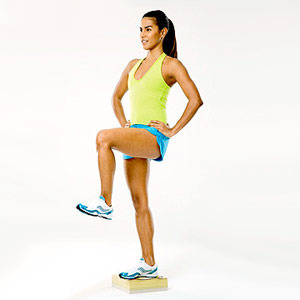
There are several muscles involved in this action, and if they lack enough flexibility, you will not be able to squat correctly.
Fortunately, there are simple stretching exercises that you can do to improve hip flexibility and mobility and thus eliminate the problem. Here are my favorites:
Kneeling Hip Flexor Stretch
This is one of the best stretches for improving hip flexibility:
Work on this for 2-3 minutes per leg, and then move on to the next stretch below.
Psoas Quad Stretch
The psoas major is a pelvic muscle that plays a key role in hip flexion. Here’s what it looks like:
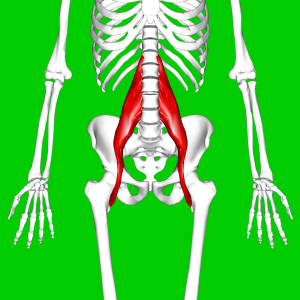
When this muscle is too tight, squatting properly is basically impossible. I ran into this problem years ago when I finally fixed my squat form, and I had to do a lot of psoas stretching in addition to regular squatting to finally handle it.
One of the stretches that helped is a simple psoas quad stretch. Here’s how to do it:
It looks simple, but it can be quite uncomfortable if you’re lacking flexibility.
You perform this stretch by assuming the position, and then driving your knee into the ground and leaning forward, getting a good stretch, followed by releasing.
Perform this drive and release pattern for 2-3 minutes for each leg.
Your Weekly Hip Flexibility and Mobility Routine
Do the above stretches as described 3-4 times per week.
How to Improve Ankle Flexibility and Mobility for Squatting
Ankle tightness can prevent you from being able to properly drop into the bottom of a squat, with the weight solidly on your heels, your chest up, and spine in a neutral position.
If your heels want to lift off the ground when you’re squatting, or if you tend to shift the weight forward onto your toes and have trouble dropping your butt down to the parallel position or lower, then ankle tightness is likely the problem.
To improve your ankle flexibility and mobility, you can mash up and stretch the tissues of your feet, ankles, and calves. Here’s a great video from MobilityWOD showing how to do it properly:
As you can see, you’ll need a lacrosse ball for this (size 1 or 2), which can be used to perform quite a few great mobility exercises (if you want to know more about this, I recommend you pick up a copy of Becoming a Supple Leopard).
Buy now
AmazonAmazon UK
Your Weekly Ankle Flexibility and Mobility Routine
Do the above routine 3-4 times per week, either before or after your hip work.
How to Drill In Proper Squat Form
As you improve your hip and ankle flexibility and mobility, you’ll find it easier and easier to squat properly.
In order to get the squat form down so perfectly that you don’t even have to think about it, I recommend you do the following squat drill at the end of each of your flexibility and mobility sessions.
It will not only teach you proper form through repetition, but show you how much the stretching exercises are helping.
Wall Squat
The wall squat is a great squat form drill. It’s very simple, but can be quite a challenge to do properly:
Face the wall about a foot width away, with your feet shoulder width apart and turned slightly out.
Fully extend your arms above your head and place your palms against the wall, arms parallel with each other.
Push your hips back and lower yourself down into a full squat position (or as low as you can go), with your hands remaining on the wall. Don’t allow your head, knees, or torso to touch the wall.
Focus on keeping your knees in line with your toes (pushed out), and your chest up. Keep your spine in a neutral position (don’t over-arch nor round it).
If your head, knees, or torso touch the wall, stop at this point, fix your form, and hold the position. Move around a bit to get a good stretch.
Here’s a video on the wall squat (in this video she does them with her toes touching the wall and hands at her sides, which is a more difficult variation):
If you start doing a weekly flexibility and mobility for your squatting, you should see a rapid and dramatic improvement in your workouts.
What do you think about this flexibility and mobility routine? Have anything else to add? Let me know in the comments below!


