The Presumption of Stupidity: A Warning About Old Research Sources
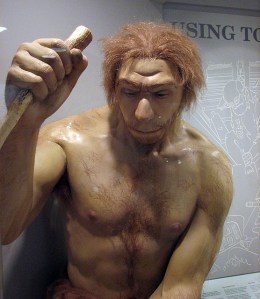
Images in this post are from http://www.flickr.com/photos/hmnh/ under a Creative Commons Licence. Photos were taken at the Cleveland Museum of Natural History. This post does not comment on their views. I haven’t been there, I am just using the images.
Textbooks are expensive and as a researching writer, I rely heavily on old library books for information. I have recently learnt to be wary. The age of a publication can work against you.
Beware of any books written who have based their work on old theories or fads that were popular at the time. Mindsets change. If you want to know about any area, look for recent research. As technology has improved across every discipline, new insights into old ideas have been gained and some old text books, especially medical, are now only fit for fuelling bonfires. It’s sad for the authors, but essential progress.
Take the representation of the Neanderthals as an example. Just because they looked different, used stone tools, didn’t own an iPhone and didn’t attend University, they have often been pictured as simple minded, primitive savages. Much study has been done on bones, head sizes etc., and theories developed which have become the basis of an image which may not stand up to modern ideas, objective scrutiny or logic. Science relies on individual brains and no one thinks with a completely clear head; plus we tend to go with the first viable ideas put to us.
Think about it deeper: for anyone to survive in the wild with no decent weapons, no technology, no health care and no formal education, they were probably smarter than us! It is one thing to follow along with the herd, another thing altogether to design a herd and make it work from scratch. That takes the sophisticated qualities of reasoning, problem solving, planning, adaption from trial and error and considerable courage and determination. Neanderthals may look odd and be hairy, but they weren’t stupid. Plus they now know that the Neanderthals had better tools than we did.
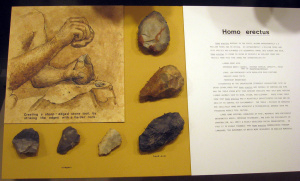
People have an unwarranted tendency to belittle people they don’t understand. It leads to inaccurate conclusions and in some cases, racism. When people groups such as the Neanderthals have died out, it is even easier to lean heavily on negative assumptions and brand them as brainless.
So when you’re researching, think deeper than what’s presented to you. When you’re writing about any people / aliens / places, consider the theories later generations or explorers form about them. They may be correct; they may be racist; they may be based on scant evidence and have no solid foundations. There are many plot possibilities you can weave between the truth and inaccuracies.
Read widely and it will give you a wealth of inspiration.

This article / blog post is Copyright Cate Russell-Cole 2013. All rights are reserved Internationally. You may not reproduce it in any form, in part of whole, without Cate’s prior written permission. That includes usage in forms such as print, audio and digital imaging including pdf, jpg, png etc. A fee may be requested for re-using her work if it is for a commercial venture. Link sharing and Pinterest pins are most welcome as long as Cate is the attributed Author.
No images on this blog may be copied, captured, or altered for your own purpose without the consent of the originating owner.
Filed under: Writing Resources Tagged: accuracy, author, books, discovery, fantasy, history, ideas, inaccuracy, Neanderthal, problem solving, racism, research, science, science fiction, writer, writing