SLINGSHOT Blog Tour: Interview with Matthew Dunn
%Úte%% | J.C. Martin
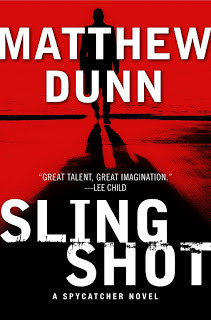
Slingshot
by Matthew Dunn
on Tour June 25 – July 31, 2013
Former MI6 agent and author of the Spycatcher series, Matthew Dunn gives readers a peak into his former life.
1.     While you probably canât get too specific about this, how do you translate your experiences as an MI6 agent into the scenes and characters in your novels?
One of the joys of writing fiction is that I can disguise my experiences inside a fictional tale. In SLINGSHOT, youâll read about real events and people. The names of the people have obviously been changed, and the events take place in different locations and under different circumstances. I will leave it to readers to attempt to deduce truth from fiction.
When I write, I see everything through the prism of being an MI6 officer. A frequent question I will ask myself is, âwhat would I have done?â Itâs a useful question and there is often no right or wrong answer, just as it is in the field when youâre an operative and youâre faced with intractable problems. Will Cochrane makes mistakes, as I have done in real life, has to recover from those mistakes, and has to keep going. The people I write about are similar to people I know. The events are similar to those that I and others have been in. Thatâs the world I know. I concede itâs very different from the world that most others know.
2.     From James Bond to Will Cochrane, what do you think accounts for the timeless appeal of fiction featuring dashing spies?
Though I never wrote the Spycatcher series with comparisons in mind to Bond (or for that matter, at the opposite end of the spectrum, John le Carréâs George Smiley), it is understandable that comparisons are made.  I write my novels with a contemporary and very precise understanding of espionage and for that reason Cochrane is different to other fictional espionage characters.Â
Regardless, all share in common a dislocation from the real world in favor of an understanding of a very real, yet secret world that is all pervasive and often deadly. Such characters’ ability to operate in that world, and to be supremely intelligent, often charming, frequently deadly, is very intriguing. But more than that, I think the ability of operatives to be chameleons has a tremendous appeal. Readers want to know who they really are. That is a challenge.
3.     Could a frightening story like the one in SLINGSHOT actually take place today?
Something similar and dreadful nearly took place. I know, but can’t reveal details.
8.     There are a few pivotal roles played by women in SLINGSHOT: a retired operative named Betty whoâs brought in on a vital assist; and a whip-smart CIA analyst named Suzy. Did these women come to life entirely from your imagination? Or did you work in the field with women like these?
      I’ve met some of the bravest women and men in the world. Gender doesn’t differentiate them; they are the same breed of unique animal. I can’t give you details of specifics about people I knew beyond one anecdote.Â
      During one of my trips to MI6′s training facility, I walked off the shooting range and confronted an old woman. It was common to meet unusual people in the facility as we often received briefings from Cold War warriors, for example, from both sides of the Western/USSR fence in order to inform the contemporary work we did. But I’d never seen this woman before. She asked me what I was doing and I told her that I’d just been testing a new customized handgun. She immediately had a look of horror and said, “Guns terrify me!”. I smiled, walked her to the range and showed her how to shoot it. She took the gun from me and, ignoring my instructions to position the weapon at eye-level, then held the gun against her belly and fired five shots at the target. All hit a tiny radius around the target that any Special Forces operative would have been proud to strike. I asked her how she did it, given she looked as fragile and as old as my grandmother. She didnât answer, but just smiled and walked off.
      That evening I found out she was a former British Special Operations Executive officer who’d been parachuted into Nazi-occupied France and the Netherlands, who’d blown up German transportation lines, had – together with the resistance civilians she’d rallied – killed hundreds of Nazis, and had ultimately been captured by the Gestapo who put her in dungeons, brutally tortured her, before sending her to an extermination camp.
      Men and woman, young and old, risk their lives every day by operating in the secret world. I know many of them, and in my novels you’ll meet some of them as well. Women like Betty and Suzy existed. SLINGSHOT is my heartfelt homage to them. Â
Author Bio:
As an MI6 field officer, MATTHEW DUNN recruited and ran agents, coordinated and participated in special operations, and acted in deep-cover roles throughout the world. He operated in environments where, if captured, he would have been executed. Dunn was trained in all aspects of intelligence collection, deep-cover deployments, small-arms, explosives, military unarmed combat, surveillance, and infiltration.
Medals are never awarded to modern MI6 officers, but Dunn was the recipient of a rare personal commendation from the secretary of state for work he did on one mission, which was deemed so significant that it directly influenced the success of a major international incident.
During his time in MI6, Matthew conducted approximately seventy missions. All of them were successful. He lives in England, where he is at work on the fourth Spycatcher novel.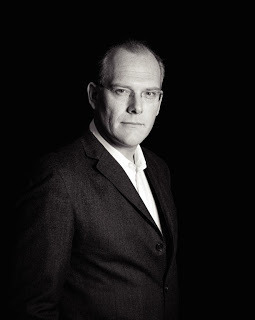
Catch Up With the Author:


Book Details:Genre:Â Fiction
Published by: William Morrow / HarperCollins Publishers
Publication Date: June 25, 2013
Number of Pages: 416
ISBN: 9780062038029
Purchase Links:


Synopsis:
Master spy Will Cochrane must catch a missing Russian defector as well as one of Europeâs deadliest assassins in this action-packed follow-up to Sentinel, written by real life former field officer Matthew Dunn.
Will Cochrane monitors the nighttime streets of Gdansk, Polandâwaiting for the appearance of a Russian defector, a man bearing a top secret document, who Will believes is about to step out of the cold and into the hands of Polish authorities. But suddenly everything goes sideways. The target shows up, but so does a team from Russian Foreign Intelligence Service (SVR) hell-bent on keeping the man from walking. Then, in a hail of crossfire, a van speeds into the melee and snatches the defector out from under them all. Everyone wants the man and the codes he carriesâbut now heâs gone and itâs up to Will and his CIA/MI6 team to find him before the Russians.
Will tracks both the missing Russian and his kidnappers, believing the defector has his own warped agenda. But soon itâs apparent that the real perpetrator could be someone much more powerful: a former East German Stasi officer who instigated a super-secret pact between Russian and US generals almost twenty years ago. An agreement, which if broken for any reason, was designed to unleash the worldâs deadliest assassin.
Then Will learns that the Russians have tasked their own âspycatcherââan agent just as ruthless and relentless as Willâto retrieve the document. Now Will knows that he faces two very clever and deadly adversaries, who will stop at nothing to achieve their aims
Read an excerpt:
Chapter 1
Berlin, 1995Each step through the abandoned Soviet military barracks took the Russian intelligence officer closer to the room where men were planning genocide.
Nikolai Dmitriev hated being here.
And he loathed what he was about to do.
The barracks were a labyrinth of corridors and rooms. Icy water dripped over the stone walls, covered with paintings of Cold Warâera troops and tanks; the air was rank with must; the officerâs footsteps echoed as he strode onward, shivering despite his overcoat and fur hat. Previously, the complex would have housed thousands of troops. Now it resembled a decaying prison.
He turned into a corridor and was confronted by four men. Two Russians, two Americans, all wearing jeans, boots, and Windbreakers, carrying silenced handguns. The Special Forces men checked his ID and thoroughly searched him. It was the seventh time this had happened as heâd moved through the barracks. Two hundred Russian Spetsnaz operatives and an equal number of U.S. Delta, SEALs, and CIA SOG men were strategically positioned in the base to ensure that every route to his destination was defended. Their orders were clear: kill any unauthorized person who attempted to get near the men in the room.
The men motioned Nikolai forward.
Reaching the end of the corridor, he stopped opposite a door. Extending his hand to open it, he hesitated as he heard a high-pitched noise. Glancing back, two rats in a stagnant pool of water and grease were ripping skin and flesh off the dying carcass of another screeching rat, neither predator attempting to fight the other for the meat; instead they seemed to be cooperating. He wondered if he should turn around and leave while there was still time. Everything about his presence here was wrong. But he was under orders.
He entered.
It was a large mess hall. Ten years ago, he would have seen long trestle tables and soldiers eating their meals. Now it was bare of any furnishings save a rectangular table and chairs in the center. Graffiti covered the walls, most of it crude, deriding the Soviet Union. Cigarette smoke hung motionless in the stagnant air. Rainwater poured from cracks in the high ceiling onto the concrete floor.
Sitting on one side of the rectangular table were a U.S. admiral, a U.S. general, and a CIA officer. Opposite them were two Russian generals. Between them were two files, and ashtrays. None of the men were in uniform; the presence in Germany of Americaâs and Russiaâs most powerful military commanders was secret.
As was the presence of the intelligence officers. Nikolai himself was Head of Directorate Sâthe SVRâs division with responsibility for illegal intelligence, including planting illegal agents abroad, conducting terror operations and sabotage in foreign countries, and recruiting Russians on Russian soil. The CIA officer at the table was Head of the Special Activities Divisionâresponsible for overseas paramilitary activities and covert manipulation of target countriesâ political structures.
At the head of the table was a small, clean-shaven, middle-aged man with jet black hair. Dressed in an expensive black suit, a crisp, woven white silk shirt, and a blue tie that had been bound in a Windsor knot, the man removed his rimless circular glasses, polished them with one end of his tie, and smiled. âAlways late for the party, Nikolai.â
Nikolai did not smile. âA party requires salubrious surroundings. Youâve chosen unwisely, Kurt.â
Kurt Schreiber nodded toward the vacant chair next to one of the Russian generals. âSit, and shut up.â
Nikolai said with contempt, âYouâve no authority over me, civilian.â
Kurt chuckled. âWhen you and I were colonels in the KGB and Stasi, youâd have called me comrade.â
Nikolai sat and nodded. âDifferent times, and Iâd have been lying to your face.â
Kurtâs shrill, well-spoken words were rapid: âThe Russian premier chose me to chair this meeting. Not you.â He placed his manicured fingers together. âThat is telling.â
âI agree. It tells us how low weâve stooped.â Nikolai looked at the Americans. âHave the protocols been drawn up?â
âThey have.â Admiral Jack Dugan nodded toward the Russian generals. âIt took us two days.â
General Alexander Tatlin lit a cigarette. âIt was worth the effort.â The Russian exhaled smoke. âThe results are precise.â
âSeems to me,â CIA officer Thomas Scott said, eyeing Nikolai with suspicion, âthat youâre not comfortable with this.â
Nikolai laughed, his voice echoing in the bare hall. âHow can any sane man be comfortable agreeing to this?â
âKurt Schreiberâs idea is brilliant.â
âItâs psychotic.â Nikolai looked at Schreiber and repeated in a quieter voice, âPsychotic.â
U.S. general Joe Ballinger pointed across the table. âSchreiberâs right. The act has to shock the fuckers into submission. Man comes at you with a knife; you defend yourself with a gun. Trouble isâwe havenât got anyone on our side of the fence whoâs got the balls to do another Hiroshima or Nagasaki. So we make the decision, and itâs a sane oneâas uncomfortable as it may make us.â
Nikolai frowned. âYou havenât reported the true meaning of the protocols to your president?â
The U.S. commander shook his head. âNope, and weâre never going to. Nor are subsequent presidents going to find out.â He gestured toward his two American colleagues. âWeâre the only Americans whoâll know the secret. No one else stateside would ever agree to this plan.â
âAnd thatâs because they lack my . . . imagination.â Kurt withdrew two ink pens, handed one to General Leon Michurin and the other to Admiral Dugan. âSignatures, please.â
The Americans signed a sheet of paper inside one of the files; the Russian generals did the same in their files; they exchanged documents, countersigned, and moved both files in front of Nikolai.
The SVR officer stared at the two files. All that was needed to make this official was his signature on both documents.
âNikolai, weâre waiting.â Kurtâs tone was hard, impatient.
Nikolai looked at the men opposite him; ordinarily they were his enemies. He pictured the two large rats, feasting at opposite ends of the third rodent.
âNikolai!â
The Russian intelligence officer shook his head. âThis is wrong.â
âAnd yet the alternative isnât right.â
âIf I sign this, millions of people could die.â
âNot millions, you fool.â Schreiber smiled. âHundreds of millions.â
Nikolai couldnât believe this was happening. Heâd always hated Kurt Schreiber. The man was undoubtedly highly intelligent, but also untrustworthy, manipulative, and cruel, and since the collapse of East Germany he had made millions through illegal business ventures. Now he had the ear of the Russian president, and that made him more dangerous than when heâd been a Stasi officer. âHow can you live with yourself?â
Schreiber shrugged. âI view the deaths as necessary statistics. I suggest you do the same.â
Nikolai was tempted to respond but knew there was no point.
Schreiber would not listen to reason.
Pure evil never did.
Nikolai gripped the pen, momentarily closed his eyes, muttered, âForgive me,â and signed both documents.
âExcellent.â Kurt reached across, grabbed both files, shoved one at the Russian generals, the other at the Americans. The former Stasi colonel smiled. âThe protocols for Slingshot are now in place, ready for use should ever the need arise.â
âGreat.â General Tatlin stubbed his cigarette out. âSo now we can get out of this shithole.â
âNot yet.â Kurt placed his hands flat on the table. âHow can we ensure that no one in this room ever reveals the secret of whatâs missing in the files?â
Thomas Scott huffed. âSlingshot wonât work if one of us talks. Weâve agreed that.â
Kurt stared at nothing. âWe have, but we need more than agreement.â
âWhat are you proposing?â
âInsurance.â Kurt looked at the men before resting his cold gaze on Nikolai. âTime can erode a manâs resolve. But fear can keep him resolute.â
âSpeak plainly.â
Kurt nodded. âOne day, one of you may wake up with a crisis of conscience and decide that he can no longer carry the burden of this secret. That canât happen. So, my solution is simple and effective. The Russian president has authorized me to activate an assassin. He will be deployed as a deep-cover sleeper agent, and his orders are to kill any of youââhe looked at the CIA officer and smiledââwho talks.â
General Tatlin lit another cigarette and jabbed its glowing tip in the direction of Schreiber. âYou expect us to live our lives with a potential death sentence hanging over us?â
Schreiber interlaced his fingers. âYes.â
Dugan laughed. âTake a look around this base, Schreiber. Weâre the kind of men who like to have impenetrable security wherever we go.â
âImpenetrable?â
âDamn right.â The admiralâs tone was now angry. âSend out your assassin, for all we care. But youâre going to need better insurance than that.â
âThere is no better insurance.â
Nikolai wondered why Schreiber looked so smug. âWhoâs the assassin?â
The sound of rainwater striking the concrete floor seemed to intensify as Schreiber momentarily closed his eyes. âYou know of him by the code name Kronos.â
âKronos!â Nikolaiâs stomach muscles knotted. âWhy was he selected for this task?â
Before Schreiber could answer, General Ballinger asked, âWho the hell is Kronos?â
Nikolai looked at the American commanders as he began to sweat. âHe was a Stasi officer, tasked on East Germanyâs most complex and strategic assassinations. Since the collapse of communism, heâs been on the payroll of Russia. Heâs . . . heâs our most effective killer. One hundred and eighty three kills under his belt. Always successful.â As he returned his attention to Schreiber, he felt overwhelming unease. âWhy was he selected?â
Schreiber opened his eyes. âBecause the Slingshot secret is so vital. We needed our very best assassin to ensure thatââhe swept his arm through airââno amount of impenetrable security can protect a man who might betray us.â Schreiber checked his watch and looked toward one of the far corners of the mess hall. In a loud, clipped tone, he called out, âShow them.â
Nikolai and the others immediately followed Schreiberâs gaze. At first nothing happened. Then, movement from within the shadows at the corner of the room.
A big man stepped into the light.
Standing directly underneath one of the streams of water pouring down from the ceiling.
Was motionless as he allowed the icy rain to wash over his head.
His handgun held high and trained on them.
Kronos.
Schreiber smiled and looked at the others. âNot only did Kronos get past all of your men, he did so with very precise timing. I ordered him not to enter this room until one minute ago, so that the contents of our discussion would remain confidential to only the men around this table. Since then, heâs been pointing his weapon at you.â
General Michurin slammed a fist down onto the table. âHow dare you make fools of us!â
Schreiber responded calmly, âIt wasnât my intention to make fools of you. Rather, to demonstrate to you that you do indeed have a potential death sentence hanging over you.â He darted a look at Kronos. âGive them what they need.â
Nikolai felt fear course through him as he watched the German assassin take measured steps toward the table, his gun still held high. Though Nikolai was one of only a handful of SVR officers who was cleared to know all about the Kronos operations, he didnât know the assassinâs real name. Moreover, this was the first time that heâd been in the presence of the man. Kronos was well over six feet tall, muscular, had black hair, and was wearing clothes identical to those Nikolai had seen worn by the baseâs protection detail.
Kronos lowered his weapon, withdrew a piece of paper from his jacket, tore it in half, and slapped one piece of paper on Admiral Duganâs chest before moving to the other side of the table and doing the same with the other bit of paper on General Michurin.
Schreiber spoke to the Americans. âI suggest you bury your paper deep in the vaults of the CIA.â Then to the Russians, âPut yours in the SVR vaults.â He cupped his hands together. âNever combine them, unless there is reason to do so.â
âReason?â
âOne of you needs Kronos to put a bullet in your head.â
âYou . . .â
âEnough, admiral!â Schreiber composed himself. âThe relevance of the two pieces of paper will be made known to you if the need arises. Until that time, Kronos will vanish. No one, not even me, will know of his location. Heâll wait for years, decades if necessary, until he is . . . needed.â
Thomas Scott shook his head. âOur men have been here for three days.â The CIA officer felt disbelief. âAnd when they arrived, they searched the entire base.â
General Ballinger shrugged. âThereâs no way he couldâve penetrated the base today. He must have entered the complex before our men arrived and hid in a place they failed to search.â
âThatâs the only possible explanation.â Admiral Dugan pointed at Schreiber. âNext time weâll be more thorough.â
Schreiber grinned, though his expression remained cold. âKronosâshow them where you were two and three days ago.â
The German moved around the table, placing a photograph each in front of the Russians and Americans. Incredulity was on all of the menâs faces as they stared at the shots.
Each showed the inside of their homes in America or Russia.
A local newspaper clearly showing the dayâs date.
And Kronos pointing the tip of a long knife toward family photos.
âBastard!â
Kronos retrieved each photo, placed them in a pile in the center of the table, and lit them with a match.
Schreiber watched the flames rise high. âOur meeting is concluded. You will take the Slingshot protocols back to your respective headquarters. You will secrete the torn papers as instructed. You will keep your mouths shut. Otherwise, my assassin will find and kill you.â
Kronos stepped away from the men, hesitated, then turned to face them. In a deep voice, he said, âGentlemen, I left all of your men alive, though I must apologize for the harm I had to cause some of them.â
Then he disappeared into the shadows.
Tour Participants
Source: J.C. Martin, Fighter Writer