Self-Editing for Everyone Part 3: Attack of the Adverbs!
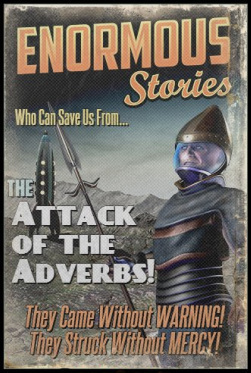 They've come for your verbs. Kill them. Welcome to Part 3 of Self-Editing for Everyone, based on all that super-useful stuff in The Little Book of Self-Editing for Writers. This time we'll be focusing on the dreaded adverb, but if you want to cut to the chase and pony up $2.99, you can buy the e-book at
Amazon
,
Barnes & Noble
, and
Kobo
.
They've come for your verbs. Kill them. Welcome to Part 3 of Self-Editing for Everyone, based on all that super-useful stuff in The Little Book of Self-Editing for Writers. This time we'll be focusing on the dreaded adverb, but if you want to cut to the chase and pony up $2.99, you can buy the e-book at
Amazon
,
Barnes & Noble
, and
Kobo
.In case you missed it, here's where to find Part 1: The Most-Hated Writing Advice Ever, and Part 2: Vampire Verbs, Zombie Verbs, and Verbs That Kick Ass .
Attack of the Adverbs!
My former students and editing clients probably won’t believe I said this, but an adverb is a useful and necessary part of speech. It does a job. It just doesn’t do the job a lot of writers seem to think it does—that of somehow making up for having chosen a flabby verb.
Adverbs modify verbs or adjectives. That's their job. When used wisely and in moderation, they help convey meaning, and they can improve a non-specific sort of verb by giving the reader more information.
Adverbs modifying verbs
Bob read voraciously in all genres.
Jax placed the eggs carefully into the basket.
Adverbs modifying adjectives
Merkel’s frostily pale eyes scanned the restaurant.
“Lightly sautéed works best for mushrooms,” Bashir assured her.
That said, when a strong, specific verb is called for, an adverb is not.
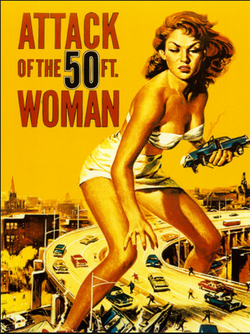 She TOLD you to use stronger, more specific verbs! My position may sound extreme to you, but I believe you can delete, without tears, most examples of adverbs modifying verbs; a robust verb standing alone is always stronger than a weak verb leaning on an adverb. Inexperienced writers tend think adverbs will shore up weak verbs and make their meaning clearer. In fact, adverbs only trick you into thinking they’re supporting a weak verb; what they’re actually doing is kicking its skinny little legs out from under it.
“Sprinted” is stronger than “ran quickly,” “smashed” tells us more than “hit hard,” “shrieked” is more evocative than “cried loudly.” You get the idea. A good verb shows rather than tells, strengthening—and tightening—the sentence while conveying maximum information and emotion to the reader.
Adverbs modifying adjectives are usually far less of a problem in writing. If you have a tendency to overuse them, you’ll soon figure it out when you search your manuscript for “ly.” While you’re at it, you’ll probably find a lot of verb-modifying adverbs that wormed their way into your sentences without you having been aware of them. Kill them and rewrite to favor good healthy verbs.
Not all adverbs end in “-ly,” but many do. It’s a good place to start when searching your manuscript.
 Keep saying "very," and I'll make you deal with them. “Very” is a very sneaky adverb—one that tries to fool you into thinking it improves an adjective. For instance, the second “very” in the preceding sentence could be eliminated without losing meaning. And it should be. It makes me itch just looking at it.
A good adjective can walk on its own two legs most of the time, or it can partner with another adjective or a more meaningful adverb to further describe the noun in question. Or you can just back up and re-describe the noun in other terms.
“Very” can almost always be cut from narrative as well as most dialogue. See also “absolutely, definitely, mostly, simply, really, totally, terribly, utterly,” and any word, really, that stands in the way of a simple, well-chosen modifier trying to do its job.
“A very tall man” is rarely as good as...
...a tall, slender man (two adjectives doing their job without the intervention of an adverb).
...a freakishly tall man (an adverb doing yeoman duty. Well done, adverb!).
...a man so tall his head threatened the door lintel (bringing the POV character’s reaction into play).
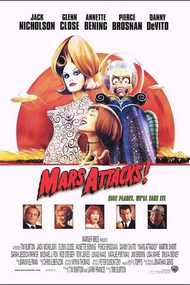 Terribly, totally, utterly vile Martians want your brain. Or just make the man’s height part of the action:
She looked up and up and up, and the man just kept on going.
“Very” is not only sneaky, it’s lazy. There’s almost always another word that will do more work for the same pay.
TL;DR
How many of your verbs are weaklings hoping in vain for help from an adverb? How many are already perfectly good verbs that can stand on their own without an adverb?
How many times have you used these and similar words?
Very, Absolutely, Definitely, Mostly, Simply, Really, Totally, Terribly, Completely, Utterly...
Search for “ly.”
Eliminate unnecessary adverbs.
Replace weak verbs with strong, specific ones that convey more meaning.
COVER ART
All the fabulous pulp magazine covers on this article series were created using the amazing Pulp-O-Mizer from art by its creator, Bradley W. Schenck.
 Part 2: Vampire Verbs, Zombie Verbs, and Verbs that Kick Ass
Part 1: The Most-Hated Writing Advice Ever


No comments have been added yet.