A different leak, a different probe, a familiar problem
Associated Press
It wasn't just the Associated Press.
When the Justice Department began investigating possible leaks of classified information about North Korea in 2009, investigators did more than obtain telephone records of a working journalist suspected of receiving the secret material.
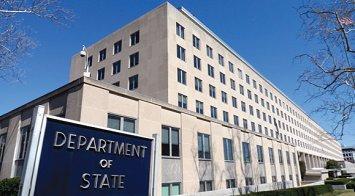
They used security badge access records to track the reporter's comings and goings from the State Department, according to a newly obtained court affidavit. They traced the timing of his calls with a State Department security adviser suspected of sharing the classified report. They obtained a search warrant for the reporter's personal e-mails.
This case has nothing to do with last week's story involving AP phone logs, but rather deals with Fox News chief Washington correspondent James Rosen and government adviser Stephen Jin-Woo Kim. About four years ago, Rosen reported on possible North Korean nuclear tests, the same day Kim, at the time a State Department arms expert with security clearance, was briefed on the matter. FBI investigators "used the security-badge data, phone records and e-mail exchanges to build a case that Kim shared the report with Rosen soon after receiving it, court records show."
The scope of the probe is certainly alarming and worth checking out in detail.
The next question, at least in my mind, is whether these law-enforcement tactics are legally permissible. There are legal experts who can speak to this with far more authority than I can, but most of the reports I've seen of late suggest that these leak investigations may be excessive and chilling, but are probably within the law.
But shouldn't that necessarily lead to a debate over whether it should be legal?
Part of the frustration with last week's scandal-mania is the way in which the underlying policy problems were obscured. On Beghazi, there is no political scandal, but there's room for a debate about how best to improve security at diplomatic outposts and implement Mullen/Pickering recommendations. On IRS, there's probably is no real scandal, but there's still a need for discussion about how to improve the process through which groups seek non-profit status, and the need to clarify what on earth a "social welfare" group really is.
And when it comes to leak probes affecting journalists, now seems like an ideal time to explore the merits of a media shield law, checks and balances against abuses, and the necessary protections under the First Amendment.
The Rosen/Kim story only makes the need for such a debate more acute.
If we look at controversies primarily as political scandals, their importance hinges on political and/or electoral considerations -- who'll get fired, who'll be held accountable, whose poll numbers will go up or down, etc. But if we look at these primarily as policy problems, it shifts the focus to substantive resolutions.
And when it comes to reporters in need of protection, some substantive resolutions are welcome.