
The New Scourge of Orthorexia.
I’m taking a one-week break from The Flexitarian Pantry to call your attention to an increasingly diagnosed eating disorder – Orthorexia.
Orthorexia is an extreme preoccupation or obsession with avoiding foods deemed to be unhealthy. Orthorexia can become so extreme that eventually almost all foods are deemed unhealthy. It can lead to malnutrition and death. In other words, you start out trying to eat healthy. Pretty soon you’re eliminating all sorts of food groups from your diet because you imagine they cause some weird symptom or physical reaction. Eventually you’re eating iceberg lettuce and drinking water.
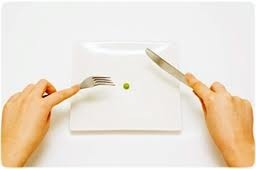
Because you know, it’s not as if we women have enough problems already.
Take my middle sister, the uber pure foods nut. At last I have my diagnosis – Orthorexia. Instead of including healthy fresh foods in her diet, she eliminates. She thinks she’s reactive to entire food groups therefore she’s on a quest to find the perfect healthy way of eating, a way which will heal everything that ails her and perhaps bestow upon her immortality. Instead she’s always sick.
Almost every dish she prepares and eats is some nasty tasting, weird-ass substitute for a real food.
For instance, she claims a single kernel of sweet corn will cause the production of copious amounts of green snot within seconds of its ingestion.
Unfortunately because I am unworthy I’m not blessed enough to witness the magical mystical miracle known as the fountain of green snot.
I’m not minimizing true food allergies. They can be deadly. I have several good friends who suffer severe food allergies. My younger daughter is deathly allergic to crab and mussels. My father is deathly allergic to kiwis, for my mother it’s shrimp. I’m allergic to yellow jacket stings, of course. We may be allergic to different things, but what we have in common is the need to carry an epipen with us at all times.
Food allergies are not the same as Orthorexia.
From the Academy of Nutrition and Dietetics - Orthorexia: An Obsession with Pure Eating.
“Orthorexia starts out with a true intention of wanting to be healthier, but it’s taken to an extreme,” says Academy of Nutrition and Dietetics Spokesperson Marjorie Nolan, MS, RDN, CDN, ACSM-HFS, who specializes in working with eating disorder clients. “If someone is orthorexic, they typically avoid anything processed, like white flour or sugar. A food is virtually untouchable unless it’s certified organic or a whole food. Even something like whole-grain bread – which is a very healthy, high-fiber food – is off limits because it’s been processed in some way.”
Orthorexics typically don’t fear being fat in the way that an anorexic would, but the obsessive and progressive nature of the disorder is similar. Orthorexics may eliminate entire groups of food – such as dairy or grains – from their diets, later eliminating another group of food, and another, all in the quest for a “perfect” clean, healthy diet. In severe cases, orthorexia eventually leads to malnourishment when critical nutrients are eliminated from the diet.
From the Mayo Clinic: Orthorexia– When healthy eating goes awry.
Everyone can benefit by paying more attention to choosing healthy foods, right?
For the most part, yes. However, a small number of people seem to become obsessed with the “perfect diet.” These individuals fixate on eating foods that make them feel pure and healthy…
A great article from Fox News: Orthorexia: Taking healthy eating to a whole new level.
Can healthy eating actually harm your health? Caring about what you eat is a great thing, but when it turns into an obsession and a hunt for perfection, you can do permanent damage to your body on several levels. A very restrictive diet means you may miss out on nutrients your body needs.
Here are some of the foods orthorexics tend to restrict, or completely remove from their diets:
Dairy, meats, and eggs: Cutting out these foods could mean you’re not getting B12, needed for proper brain function and red blood cell production. Strict vegans should consult their doctors on how to get this vital vitamin into their diets.
Gluten and grains: Gluten-free diets are all the rage these a days, but experts estimate only 6 percent of the population may be be affected by gluten sensitivity or celiac disease. Whole grains contain high levels of minerals that we need (like magnesium, which is needed for healthy bones and nerves; and manganese, which is needed for healthy heart function). Eating whole grains may provide the balance your body needs to stay fit. If you suspect you have issues with gluten, it’s better to get a medical test instead of missing out on this nourishing ‘food group.’
Fat: Good quality fats, found in foods like olive oil, avocado, nuts and seeds, grass-fed beef, grass-fed dairy and pasture-raised eggs are a must for the body. They keep skin healthy, cushion and protect vital organs, insulate the body against heat loss, protect nerve tissue, and help regulate women’s menstrual cycles. Getting enough fat in your diet also means you feel full longer and have a better absorption rate of fat-soluble vitamins like A and D.
I apologize for the quality of the following video – if you can’t see it well, just listen. It’s a good description of the lifestyle of an orthorexic.
Next week – The Flexitarian Pantry. Three. Fats Are Our Friends.
Related posts:
Going Flexitarian. It’s a good thing for me. I realized something this weekend. I am no longer a...
I like Rotel and Velveeta as much as the next guy, but… I’m in favor of eating food. Aside from the above-mentioned...
Did I hear that right? Food = Guilt? Or is this the fever talking? When I was in...
Related posts brought to you by Yet Another Related Posts Plugin.


Julia Rachel Barrett's Blog

- Julia Rachel Barrett's profile
- 98 followers

