A to Z Challenge: T is for Tense

Welcome to the 2013 A to Z Challenge!
This year, I’m focusing on two themes: Emotions and grammar,depending on which letter we’re on each day.
Today’s a grammar day!
But first, check out this review by Literary Mania Reviews.
And please, give her a follow.
She’s an up and coming book blogger with LOTS of Facebook likers. And if you know anything about the power of book bloggers on FB, you'll get why that's so important. ;)
__________
T is for Tense: in grammar, a category of verbal inflection that serves chiefly to specify the time of the action or state expressed by the verb; a category that locates a situation in time: past, present, or future
Writers and readers alike have definite preferences in verb tense, typically past, which is the most common, or present, which is becoming ever more popular, especially in Middle Grade and Young Adult genres. Keep in mind, these tenses can also be more specifically broken down into either simple or non-auxiliary verbs (I sit, I sat, or I will sit), perfect or auxiliary verbs (I have sat, I had sat, or I will have sat), or progressive or auxiliary gerund (I am sitting, I was sitting, orI will be sitting.)
Some say present tense feels more immediate, more in the moment, and I can see the logic in that. The narrator is telling the story as if it’s happening right then and there. Personally, I find it distracting and that it actually has the opposite effect, taking me out of the story rather than pulling me in.
I’m not sure why exactly. Maybe because my logical brain is telling me that the action is obviously not happening right then and there. I find it more believable that the narrator has just come from a harrowing event and is retelling it—in the past tense.
This is probably why present tense is more convincing in MG and YA, because young minds don’t rely on this rationale. Everythingis in the moment for them. With very little in their personal past, it’s allan adventure. But for adults, it’s more about escape, and past tense seems to work better in that respect. Still, like most aspects of literature, it’s very subjective, much the same way narration point-of-view is subjective.
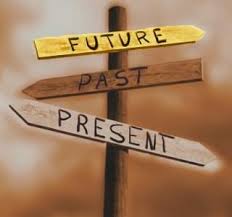
But no matter what you prefer, if you’re a writer, you have to be careful to maintain verb tense consistency. That is to say, don’t waffle back and forth between present and past. I know that might seem obvious to most of you—it certainly does to me—but you’d be surprised how often I see it when editing manuscripts, sometimes within one sentence. So perhaps it’s not obvious to everyone.
Which tense do prefer to write and read in? Do you ever have trouble maintaining tense? If so, do you have any tricks you’d like to share?
Psst…don’t forget to check out the review!


No comments have been added yet.