
On Inspiration: Interview with Sherry Jones

My guest today is Sherry Jones, an American journalist and the internationally best selling author of the controversial The Jewel of Medina and other historical fiction novels about women's power. She is also a speaker on issues including women's rights, free speech, and Islamophobia. Her novels explore the obstacles women have long faced in reaching their highest potential in a patriarchal world.
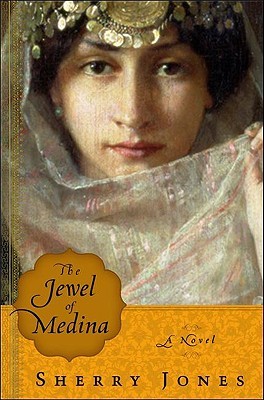
Sherry became the center of a national controversy in the summer of 2008 after Random House cancelled publication of her historical novel, The Jewel of Medina about Aisha, a wife of the Prophet Muhammad. Historical novelist, Colin Falconer, recently interviewed Sherry on her experience in his blog post If you write that, I'll kill you.
Given Sherry's determination and courage to publish The Jewel of Medina, I was particularly keen to learn about the sources of her inspiration and what's in the pipeline for her next book. You can connect with Sherry on Twitter , Facebook and on her website . Australian Fans can also keep up to date with Sherry's new on the Sherry Jones Australian Fan Club .
What or who inspired you to first write?My second-grade reading teacher, whose name I donât recall. She praised my writing in front of the whole class. âWhen you become a published author, keep your real name so I know itâs you.â It took me until age 47 to get there, so I donât know if sheâs even still alive.
 What is the inspiration for your current book? Is there a particular theme you wish to explore in this book?The true meaning of love â or the meaning of true love â is an important theme that is emerging as I write.
What period of history particularly inspires or interests you? Why?
The real-life people who serve as the basis for my characters, especially women who make a difference in the world, inspire me to write about them, no matter that the time period. Thatâs why The Jewel of Medina and The Sword of Medina , my first two books, are set in 7th century Arabia while White Heart and Four Sisters, All Queens take place in 13thcentury Europe. The book Iâm now working on takes place in the 12thcentury My next book may be something more contemporary â either post-Civil-War or the 1930s. But I also have a third book to write for my âJewel of Medinaâ trilogy, which would take me back to 8th century Arabia.
 What resources do you use to research your book/s?
 I go to the setting in person, when I can. I travelled to Egypt and Europe for Four Sisters, All Queens. For the book Iâm now writing, I made a special trip to France. Also I use libraries, the internet, Questia, chronicles of the era, literature, art, and music of the era, old newspapers (where applicable), used bookstores â this is my favorite. I love digging through stacks of history books and finding a gem with information about the period Iâm studying.
Which authors have influenced you?Hilary Mantel springs to mind for Four Sisters, All Queens. I had actually started writing it in third-person present tense, liking the sense of immediacy and intimacy while being able to write in my own voice, but worried that it wouldnât work in telling a tale that happened so long ago. When I read Wolf Hall, I saw that it could be done. That was huge for me. And then there are all those authors whoâve written about strong women: Debra Magpie Earling, whose lyrical style I so love; Ellen Gilchrist, the queen of the feisty Southern heroine; Dorothy Hansford Johnson, whose Helena trilogy makes you fall in love with her quirky heroine. Also, Nicole Krauss is an expert at voice. I also read lots of poetry to keep my writing fresh and beautiful. Natasha Trethewey, the U.S. Poet Laureate, is my current favorite. The English language is just breathtaking in its variety and all the possibilities it offers. When choosing a book to read, I look for poetic language first.
What do you do if stuck for a word or a phrase?I try, try again, and if Iâm still coming up short Iâll write any old thing and boldface it to change later. Revision is where the real art happens, anyway.
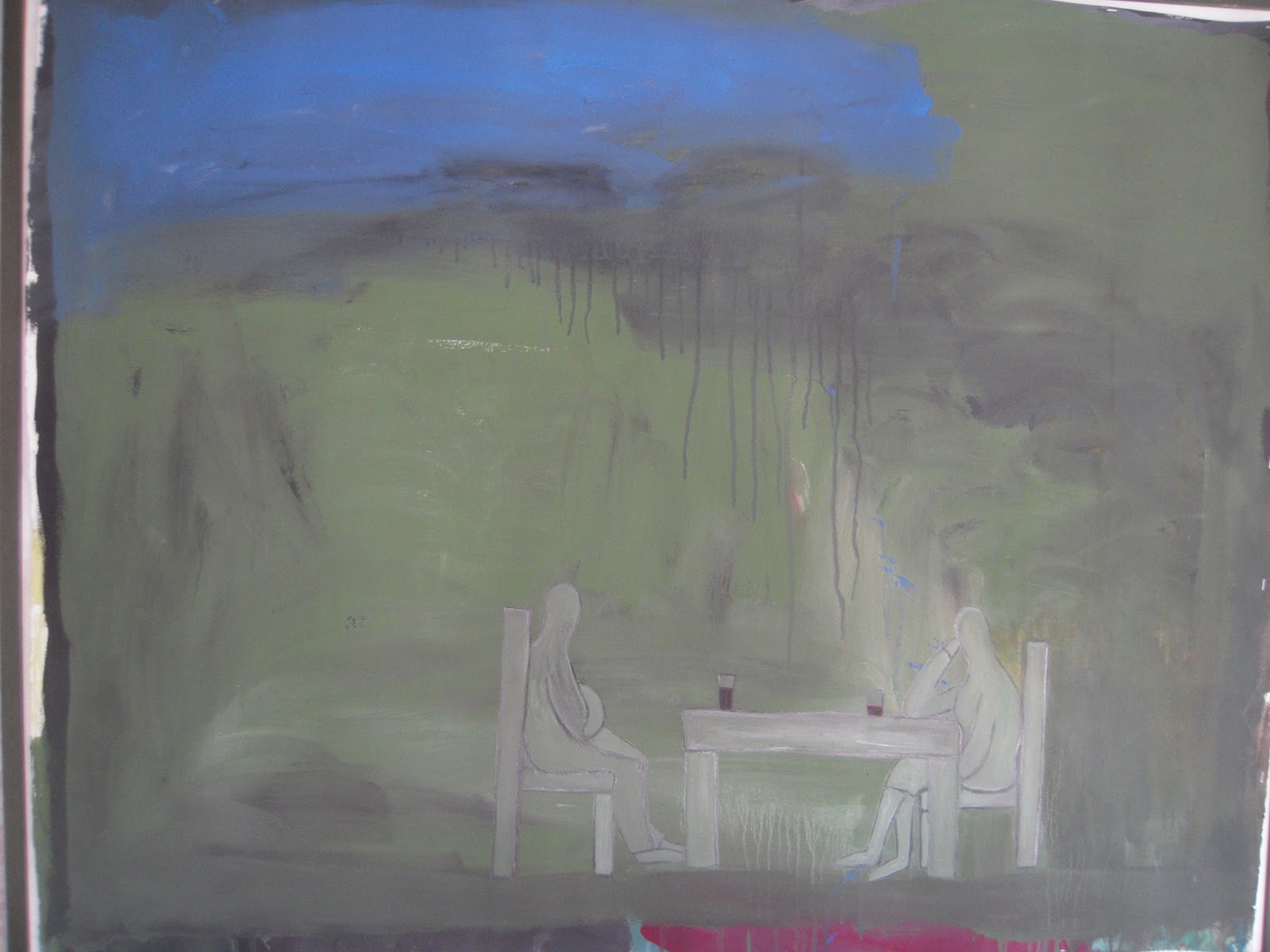
Is there a particular photo, piece of art, poetry or quote that strikes a chord with you? Why?The art of Sheila Miles, one of my best friends in the world, inspires me more than that of any other. Sheila, who now lives and works in Santa Fe, offers a unique and quirky look at life and love from a womanâs perspective. Her painting Passing Time, which I own, is one of my favorite pieces ever. It depicts a man and a woman sitting at a table across from each other but not engaging with each other at all. Heâs reading the newspaper and she just looks bored. Itâs a reminder of what Iâve had in relationships before, and what I never want again. I even wrote a poem about it! I have a number of paintings by Sheila in my home. You can see more of her artwork at www.artistmiles.com.
What advice would you give an aspiring author?Donât give up! And, even if you decide to self-publish, make sure you get a good literary agent. Mine, Natasha Kern, is indispensible.
Tell us about your next book.Abelard was the most famous philosopher in the world around the year 1115 when, as headmaster of the Notre Dame Cloister School, he met Heloise, an accomplished scholar living in Paris, a master of Latin, Greek, and Hebrew with a knowledge of literature that Abelard praised as unsurpassed. Theirs was a passionate, erotic affair that broke all the rules of Church and society, and which ended abruptly and tragically.
My next book, coming out in 2014, is the first retelling of the Abelard and Heloise tale since the scholar Constant Mews discovered and published, in 1999, their correspondence of 113 letters exchanged during their courtship. Previously we had only Abelardâs autobiography, disseminated during his lifetime, and several letters they wrote to each other beginning 15 years after their romance had ended.

Heloise, in particular, interests and inspires me. She defied the Church and her culture to live life on her own terms, and lost everything that mattered to her. My novel is a tale of passion and deep love, and of womenâs struggle throughout the ages to govern our own lives in a patriarchal, misogynistic world. Iâve tentatively titled it The Sharp Hook of Love, after a phrase Heloise used in her own, breathtakingly beautiful, letters.
Rich in intrigue and scheming, love and lust, Sherry Jonesâs vibrant historical novel follows four women destined to sway the fate of nations and the hearts of kings. . . . Amid the lush valleys and fragrant wildflowers of Provence, Marguerite, ElÃonore, Sanchia, and Beatrice have learned to charm, hunt, dance, and debate under the careful tutelage of their ambitious motherâand to abide by the countessâs motto: âFamily comes first.â
With Provence under constant attack, their legacy and safety depend upon powerful alliances. Margueriteâs illustrious match with the young King Louis IX makes her Queen of France. Soon ElÃonoreâindependent and daringâis betrothed to Henry III of England. In turn, shy, devout Sanchia and tempestuous Beatrice wed noblemen who will also make them queens.
Yet a crown is no guarantee of protection. Enemies are everywhere, from Margueriteâs duplicitous mother-in-law to vengeful lovers and land-hungry barons. Then there are the dangers that come from within, as loyalty succumbs to bitter sibling rivalry, and sister is pitted against sister for the prize each believes is rightfully hersâProvence itself.
From the treacherous courts of France and England, to the bloody tumult of the Crusades, Sherry Jones traces the extraordinary true story of four fascinating sisters whose passions, conquests, and progeny shaped the course of history.
Thanks so much Sherry, for the great interview - I'm looking forward to reading how you bring the ageless love story of Heloise and Abelard alive in The Sharp Hook of Love.
Image courtesy of Wikimedia Commons - Les Amours d'Heloise et D'Abielard by Jean Vignaud 1819


No comments have been added yet.


