
Who You’re Sitting Next To At This Dinner Party: Carla Pfeffer
This year, I’ve decided to run a series of short interviews with some of the marvelous people I know or have worked with (or both), because I know far too many fascinating people not to share. Each person answers the same questions. All of them give thought-provoking, interesting, wonderful answers.
These are the people you’re sitting next to at this dinner party. Enjoy.
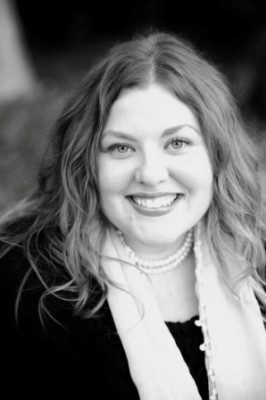 Carla Pfeffer will school you, and you will love it.
Carla A. Pfeffer is an assistant professor of sociology whose work focuses on intersections among sex, gender, sexuality, queer identities, bodies, and families. She is serving as the guest editor of a forthcoming special issue of the Journal of Homosexuality focusing on “Trans Sexualities” and is also working on her first book (Postmodern Partnerships: Women, Transgender Men, and Twenty-First Century Queer Families), under contract with Oxford University Press. Her most recent work has been published in Gender & Society, Journal of Lesbian Studies, Journal of Marriage and Family, and Teaching Sociology.
Please describe yourself in 25 words or less.
I’m a queer feminist sociologist professor living in the Midwest with two cats, my partner, and our brand new baby. Wish us luck (and sleep)!
What are three things about you that most people either don’t know or wouldn’t expect?
Something that people might not expect or know about me, since “college professor” was just rated the “Least Stressful Career of 2013″ (http://www.careercast.com/jobs-rated/10-least-stressful-jobs-2013), is that I generally work ten to twelve hours per day in order to conduct and publish academic research while managing a very heavy teaching load (up to nine courses per year). The fact that I’m responding to these questions at 3am on a Sunday is pretty much par for the course.
People also might not know just how much I appreciate personal paradox–the ways in which our personal politics, ideologies, and behaviors can get really messy and tangled in everyday practice. For example, one of the groups that I study is fat and size-acceptance advocates and activists. I find that, despite holding personal politics and beliefs that are pro- body and fat acceptance, it is often much more difficult to fully accept one’s own fat body without desiring or acting to change it in some way. While it might seem easy to dismiss this sort of dissonance as hypocritical, it makes sense to me. I think it simultaneously points to our need to develop more in-depth understandings of people’s subjective experiences of their own bodies and to consider the ways in which a fat-hating and shaming culture affects and shapes these subjective experiences for all people–fat, thin, and in-between.
One final tidbit that people may not know about me is that, despite being a sociologist who studies families, I lost my third-grade spelling bee by misspelling the word “marriage.” Fortunately, I’ve gotten that one down now.
Of the things you’ve done in your life so far, what are you proudest of?
When I was growing up, my dad worked overtime–both weekdays and weekends–at an automotive factory outside of Detroit and my mom worked day in and day out raising my sister and me. In their “spare time” they created a family business buying dilapidated houses, taught themselves how to renovate them, did all of the work themselves, and then rented the houses in order to save enough money to send my sister and me to college. Both of my parents made it clear that they wanted us to have access to education so we might be able to have different sorts of possibilities and opportunities in our lives than those that had been open to them. I became the first person in my family to graduate from college. The proudest moment of my life was earning my Ph.D. from the University of Michigan and having my entire family with me at graduation. President Obama delivered the commencement speech that day, but my family members were more excited to see me; they were beaming.
What’s an as yet nonexistent thing about which you’ve thought “why hasn’t someone created that yet?”
All email should be fully retractable–a technological boomerang that remains faithful to you no matter how haphazard your toss.
If you could get everyone who reads this to do one thing, just once, what would you get them to do?
Tell the people who make you feel special and loved just how special and loved they make you feel. Loving, kindness, and consideration–whether it comes in the form of an I-love-you message written in the sink in toothpaste or someone holding your hair while you puke–is part of what makes life so meaningful. It deserves to be acknowledged and paid forward. A critical aspect of my work on contemporary families focuses on emotional labor–the sorts of unpaid, often-unacknowledged work that we do each and every day to maintain and nurture our connections with one another. By bringing this work from the background to the foreground, we affirm just how integral and undervalued it really is.


Hanne Blank's Blog

- Hanne Blank's profile
- 121 followers

