Worst Case Scenario Is Something To Aim For
Sometimes in life we get worried and worked up about something and it
turns out not to be as bad as we had feared. The terrible thing we were
convinced was about to happen doesn’t materialise. It’s good when it turns out
that way. In real life.
In a story, however, that kind of build up and release is not rewarding,
it’s disappointing.
When a character thinks: I hope the killer doesn’t look in this closet
where I’m hiding... definitely have the killer open the closet door.
On a basic level, you always want to choose the path of most conflict.
If a robber is trying to sneak past security guards, having him slip past
without any problems isn’t going to be a very interesting robbery. You need
problems and for things to go wrong in order to create an interesting
narrative.
But this principle also applies to a character’s reason for being in
the story in the first place.
Let’s take a woman at her younger sister’s wedding. Seeing all this love
and romance and happily ever after stuff makes her freak out that she’ll be alone
and single for the rest of her life.
That fear drives her to get involved with the wrong guy, to do what he
wants, whatever it takes to make him happy. But in the end she realises it’s
better to have no man than the wrong man.
You might think the fear she had at the beginning is enough to show motivation
for what happens to her, and it comes full circle when she has her epiphany.
And you could do it that way— I’m sure readers will get why she does
what she does.
But you’d have far more impact on the reader if you showed her getting
everything she wanted—the rich handsome, the beautiful house, the posh new
friends—and showed how she changed and did whatever it took to get all this.
But she had to abandon her friends, lost contact with her embarrassing
family, ended up stuck in her new home entertaining people she doesn’t even
like.
Then the fact she’s utterly alone and unhappy, the feeling she did all
this to avoid, will resonate strongly with the both the character and the
reader.
Then her realisation at the end will carry weight.
Whenever a writer brings a fear or warning to the reader’s attention,
it’s tantamount to an agreement with the reader that just such a thing will
take place. The reader might not be all that aware of this agreement and the
writer may have just mentioned it in passing to add motivation, but the
expectation has been created, and it needs to be met.
Even if there is a way to avoid the horrible outcome in a plausible and
entertaining way, don’t. Falling into the worst possible situation is the best
thing for a story. It’s not easy to write and it may not be fun for the
characters involved, but it’s the most entertaining version for the reader.
In fact, the only time you shouldn’t have it work out the way the
character was most afraid of is to have it turn out even worse.
Making the character aware of the possible negative outcomes (and
through them, also making the reader aware) enables you to set up foreshadowing,
create tension and anticipation and establish stakes. But all that dissolves
very quickly if they just stroll through the story never having to face those
fears.
Whatever the character dreads most is what they should end up having
to deal with at some point.
This is by no means a hard and fast rule. It’s just that if the character
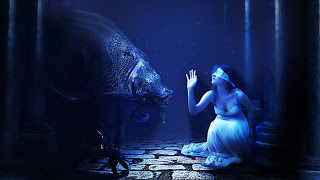
is worried about a monster under the bed, it tends to be a more fun if there
really is a monster under the bed.

If you found this post useful please give it a retweet. Cheers.


No comments have been added yet.