Common Ground, Common Core
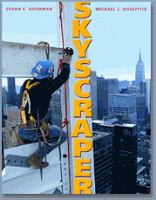 In 2004, my book Skyscraper was published. In 2010, it went out of print. I wrote a post about it, Skyscraper RIP, a eulogy for a book that was well received, but really because I loved the experience of researching and writing it.
Lazarus, you aren't the only one. I'm happy to say that Skyscraper is alive once more, in some classrooms at least. The story of its resurrection, however, is also the story of how some publishers and school systems will be handling Common Core.
Scholastic has published a series called Math Reads. Marilyn Burns, whose resume in teaching and designing math curricula seems impressive, headed a team of other teachers to create it. Here is a description of their product:
Math Reads is the NEW math and literature program from
Marilyn Burns. Designed to support the Common Core State Standards for
K–5, each grade-level collection of books brings math alive and serves
as a springboard for math instruction.
Each grade-level Math Reads program includes:
25 children’s literature titles (5 copies of each)
Lessons written by Marilyn Burns and Math Solutions authors
eBooks of select titles for interactive whiteboards
Math Solutions’ Math and Literature professional development book
If you look at the curriculum for Math Reads' 5th grade, you'll see Skyscraper has been included and is in some very good company, including Hottest, Coldest, Highest, Deepest by my I.N.K. colleague Steve Jenkins, Pennies for Elephants by a friend Lita Judge, Wilma Unlimited by the always good Kathleen Krull, and Mordicai Gerstein's The Man Who Walked Between the Towers, an extraordinary book I've blogged about before.
So this Math Reads series contains good fiction and nonfiction books (although only 5 copies of each per classroom), additional titles in eBook format, and lesson plans to use all these books to satisfy Common Core. Hopefully, teachers and students will be exposed to good literature they might not have ever seen. Hopefully it will spur a greater interest in reading as well as a better understanding of math. It will help overworked teachers adapt to the demands of Common Core quickly and, again hopefully, once they get their bearings, they will feel confident to use their own ideas and own favorite books to enrich their teaching. These are possible positive outcomes of this series--along with good profits for Scholastic.
It also seems to be a model we will see more and more as publishing and education fulfill both the needs and opportunities that Common Core has created in terms of nonfiction in the classroom. I'm not advocating for this model, I mentioned it to start a discussion of what other models and reactions we'll see. What we think about them. What we realistically hope to see. What we think are practical and will work.
What do you all think? I'm particularly interested in what all the teachers, librarians and other educators who read our blog have to say about the matter.


No comments have been added yet.