
Last Lecture: What matters more: Story or Sentence?

Every time I teach novel writing, I end the semester with a “Last Lecture” on a topic that’s been on my mind all semester long. Last spring, I wrote about learning to self-identify as a writer; this post, “Am I Writer?” has been viewed about 1,500 times. And Google Analytics tells me that people spend an average of eight minutes on this post–which is not that surprising when you consider how urgently people need an answer to that question. This semester, I’ve decided to write about whether a novelist should focus more on The Story or The Sentence, using the occasion of announcing who won my “Most Words Drafted Contest” to reflect on the topic.
The Announcement
Here are the two students who won the Total Word Count Challenge: Kayla Weiss (85,007 words) and Kameron McBride (43,880 words).
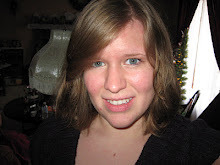
Kayla Weiss
Kayla averaged over 7,000 words a week, or 28 pages a week, for 12 weeks. This is really sort of amazing.

Kameron McBride
Kameron averaged about 3657 words a week, or 14 pages a week, for 12 weeks. Also pretty amazing.
Scroll down to see how many other students took this challenge and did really well. What’s significant about this is that they were only required to turn in 2,250 words per week as their “Weekly Words,” which I talk about here.
Observations
This is the second time Kayla has taken my class, and she won last time, too.
Kayla started the semester writing one novel, but discovered that she really wanted to work on a different project. For awhile, she alternated between the two projects before finally committing to the second manuscript. This is smart. When you run out of steam with one manuscript, don’t just stop writing. Pull up another manuscript.
Kameron says that what really helped him was using 750words.com. It provided a clean, uncluttered writing space that he’d keep open on his laptop during the day.
What were their novels about?
I don’t want to give too much away, because both novels have good premises.
Kameron’s is sort of a meta-horror novel. Kayla’s is part of a trilogy she’s been working on for a few years.
Kayla and Kameron won a year’s subscription to Poets & Writers.
You can continue following their writing journeys here:
Kameron’s Twitter
Kayla’s Twitter
Runners up
ENG 407-2
Scott Bugher 65,878
Andy House 62, 353
Sarah Hollowell 52, 025
Amy Dobbs 38, 365
Jackson Eflin 32, 971
Samantha Zarhn 27, 393
407-3
Kiley Neal 40,910
Aaron Beal 38, 167
Katelyn Wilhelm 33, 857
Christian Jones 31,915
Hilary Wright 30,694
Aaron Price 27, 555
The Last Lecture Begins!
Why did Kameron and Kayla win? What set them apart?
Both wrote scene-driven fiction with lots of dialogue. They took my advice and “sketched” their novels, temporarily suspending concern for “good writing” at the sentence level and focused on “getting the story down.”
In Anne Lamott’s famous essay “Shitty First Drafts,” she makes a distinction between the Down Draft (getting the words down on the page) and the Up Draft (fixing up the words on the page). What I’ve learned from teaching this class for a few years is that those of you who are able to compartmentalize the writing process into these two modes have a much easier time getting your Weekly Words done. The class itself all but demands that you do Down Drafts, although many of you just cannot bring yourselves to write shitty first drafts and spend a lot of time doing Down and Up drafting simultaneously. This is fine. It’s your life. It’s your time. But it won’t give you a better grade.
Are their partials flawed at the sentence level? Do their manuscripts show signs of having been written quickly?
Yes. Definitely.
But so did yours.
And this is okay with me. In this particular class.
Why? Because ultimately, I think that you have a better chance of publishing a novel if you can learn how to write a sort-of-shitty first draft. Because before you can publish a novel, you have to actually write one. The whole freaking thing.
Sentence vs. Story
 I don’t understand why some people simply do not recognize awkward writing (their own or someone else’s).
And yes, I also recognize that what constitutes “good” and “bad” writing is rather subjective. (Here’s a great article about that.)
In his essay “It’s a Short Story” about his own creative writing apprenticeship, John Barth said, “I [had] an all but reality-proof sense of calling, an unstoppable narrativity, and I believe a not-bad ear for English.” He compares this kind of writer (driven, prolific, a decent wordsmith) with its opposite, “Young aspiring writers with a strong sense of who they are and what their material and their handle on it is, but little sense of either story or language…by far the less promising, although I would be reluctant to tell the patient so.” Barth believed that “essential imaginativeness and articulateness, not to say eloquence, are surely much more of a gift.”
I’m living proof that even if you lack those essential gifts, you can develop them. I wouldn’t teach creative writing if I didn’t believe this was so.
However, I’ve been teaching fiction writing for almost twenty years now, and one thing I’ve discerned is that my students always fall into one of three groups:
A. Students who are proficient at the sentence level but suck at story.
B. Students who are proficient at the story level but suck at sentences.
C. Students who are proficient at both. (Rare.)
I can tell within a paragraph or two whether someone is an A. I know it because I’m able to “just read” the prose. As Hawthorne said: “Easy reading is damn hard writing.”
And I don’t mean that the A’s write “lyrical prose.” I mean they can write what I like to call “invisible prose,” functional sentences that do not distract nor draw attention to themselves. It’s prose that’s maybe just a tad underwritten, the opposite of overwritten. An A is novelist who can do what Willa Cather was talking about here:
“I don’t want anyone reading my writing to think about style.
I just want them to be in the story.”
It takes a lot longer to discern whether someone is a B, proficient at the story level, which is more about structural skill. Because I have to read the whole thing.
Honestly, my least favorite kind of student is a B, the ones who suck at sentences. They are my least favorite because I’ve never–not in 20 years–been able to figure out a way to help them other than to point out their weak sentences. This is what my MFA thesis director, Thomas Rabbitt (a poet) taught me: how to take out my own eyeballs and read my work through the eyes of someone else.
Honestly, a creative writing student who cannot consistently craft a graceful, clear sentence is (to me) the equivalent of a music major who can’t carry a tune or a colorblind art major.
I’ve had more than one student tell me that great stories take shape in their heads, and they speed-write them down because they speed read fiction, too. They consume stories as quickly as possible, and so when they turn to writing–not reading–stories, they do the same thing. Having spent years ignoring sentences for the sake of “getting the gist,” they unconsciously assume that readers won’t notice the sentences.
Honestly, that’s exactly how I read when I was young. Voraciously. Quickly.
 I accomplished this by reading the scenes only and skimming the words and paragraphs in between the scenes. I’d learned that all the important plot points were almost always conveyed in scenes, so my eye would travel down the page until I found a sentence like, “Cassandra took a deep breath and prepared to enter the sitting room.” Or I’d look for an exchange of dialogue—which is usually apparent to the eye just by looking at a page.
I focused on the scenes only because it was scenes that brought me into the vivid and continuous fictional dream of the story, and that’s the experience I wanted: to crawl into the dark portal on floor 7 ½ and be inside John Malkovich or Stephen’s King’s Carrie White or Judy Blume’s Tony Miglione or C.S. Lewis’ Lucy and Edmund Pevensie. I didn’t much care if the main character was male or female, young or old. I just wanted to be inside them for awhile until the book ended and I found myself stranded along the New Jersey Turnpike.
Discovering Sentences
And then something happened.
My sixth-grade teacher required us to memorize the Gettysburg Address. Did Mr. Schwartz read it aloud? Did we watch a video or listen to a recording? I don’t remember. But still, I recognized the beauty of those words without being presented with external evidence of the way they should sound. Just by reading them on the page, I heard the cadence, the rhythm, the inflection, the musicality of the words in my head.
But when it came time to recite them from memory in front of the class, my classmates delivered the address in a rushed monotone:
Fourscoreandsevenyearsagoourfathersbroughtforthonthiscontinentanewnationconceivedin libertyanddedicatedtothepropositionthatallmenarecreatedequal.
This is when I realized that stories are made of sentences capable of providing their own pleasures. It was as if I’d never noticed sentences before–and suddenly–there they were!
I realized that words are variables in a syntactical equation, and if you can come up with the right order, the perfect equation, those words can affect people.
In How Fiction Works, James Wood writes: “There is a way in which even complex prose is quite simple—because of that mathematical finality by which a perfect sentence cannot admit of an infinite number of variations, cannot be extended without aesthetic blight: its perfection is the solution to its own puzzle; it could not be made better.”
Exactly.
If I had my druthers, if students had to “audition” for undergraduate creative writing programs the way they audition for other arts programs, I’d pick the A’s over the B’s. Every time. Because I believe it’s much harder to teach someone how to write a good sentence than it is to teach them how to write a good story.
Feel free to disagree with me if you want.
Micro vs. Macro
 Perhaps now that I’ve told you how much I value good writing at the sentence level, you can appreciate how difficult it is for me to teach a class in which sentence-level proficiency isn’t all that important.
What counts is that all of you did exactly what I asked you to do: start writing a novel as fast and as well as you can.
As I read all of your partials these last few weeks, I could have marked an infinite number of things that weren’t working yet or needed to be fleshed out or needed to be eliminated. But I tried really hard not to do that. I tried not to focus on the micro and focused on the macro instead.
But don’t forget the micro is really important.
In the film A Beautiful Mind, John Nash looks at a wall of numbers—intercepted radio signals from Moscow, supposedly—and some official-looking dudes ask him to break the Russian’s secret code. He stares at the numbers. Some begin to glow more brightly than others. He’s able to look past the physical numbers and discern emerging patterns under and within the numbers.
It’s like me, seeing the sentences under and within a story for the first time.
In the film Amadeus, Salieri hears “the very voice of God” just by perusing Mozart’s sheet music. As he reads the notes on the page, we hear the fully orchestrated music inside Salieri’s head. He doesn’t need to hear the music played to know that “displace one note and there would be diminishment. Displace one phrase and the structure would fall.”
What I’m trying to tell you is that a good book operates on many levels.
Sentence.
Scene.
Story.
It takes a while to discern those levels—if you ever do. And it takes a while to acquire proficiency at all those levels—if you ever do. This semester, we focused on Scene and Story, but make no mistake: Sentences Matter.


