
Flying domestically (usa) with a service dog
Vagablogging :: Rolf Potts Vagabonding Blog
Flying with your Service Dog takes a bit of pre-planning. Most airlines require 48 hours advance notice about your canine partner. Initially tickets can be booked online through a collective search website like CheapOair. Before purchasing tickets, check out the Airlines direct website for Service Animal rules. Under Federal Law airlines are required to allow Service Animals but a few are friendlier about it than others.
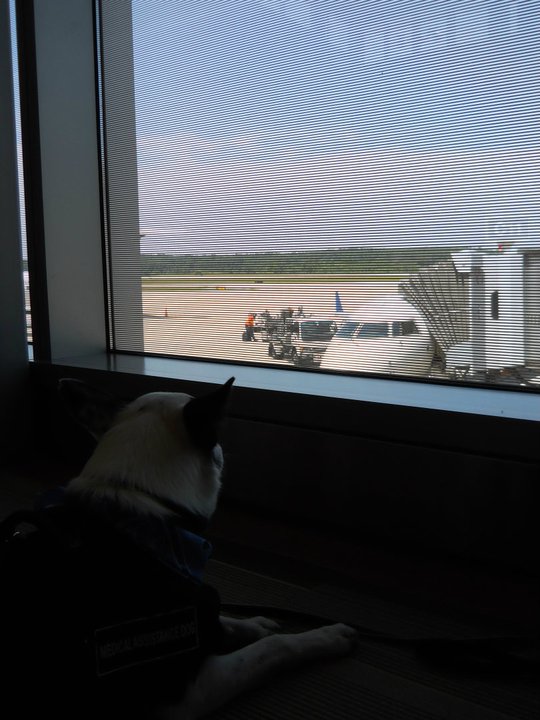
For example: Delta Airlines states on their Special Concerns page “We welcome trained service animals in the aircraft cabin. Trained service animals are different from emotional support animals in that they have been trained to perform a particular function or service to assist a passenger with a disability in the management of their disability. Under most circumstances, we do not require passengers using trained service animals to provide additional documentation. However, it is expected that a service animal behave in public and follow the direction of its owner.”
Special note: If you have an Emotional Support or Psychiatric Service Animal you must provide documentation from your Mental Health Professional.
Before finalizing travel plans take into account if your dog will need to relieve itself during a layover. Allow yourself as much time as possible in case you’ll need to exit and re-enter a security check point.
Two days before, call into customer service and follow the extensions for an existing flight. Have your ticket conformation number handy. Let the representative know you’re traveling with a Service Dog and at this time you may request a bulkhead seat. From experience, I’ve found that the bulkhead window seat provides the most floor room for my dog to curl up. Sometimes (but not always) they’ll ask the breed and size of your animal and also what tasks it preforms for you. Any airline staff or airport personal are allowed to ask what tasks your dog preforms for you. They can NOT ask directly what your disability is. Answer them nicely. They only do this to confirm legitimate Service Dogs.
Navigating security isn’t as horrible as the media advertises. Liquid restrictions and the taking off of shoes is a pain; but it’s just part of the process. On the upside you don’t have to stand in those long, long security lines. Look for a sign that says, “Crew or Passengers needing extra assistance.” These lines are generally shorter and will help accommodate your needs. To enter, hand them your boarding pass, ID and Service Dog Handler ID. That last one isn’t required; however it helps to have one. Mine is plastic (size of a credit card) has my countries flag, the names of myself and my Service Dog as well as our photos. On the back is printed the U.S. Federal Law about ADA Act, along with phone numbers and website address for the Department of Justice. Occasionally this ID has been photocopied, along with her vet papers, when we’ve flown internationally.
Generally, I opt for the old fashion metal detectors and put my dog in a sit-stay on one side. Pass through myself, and call her through to me. Do not remove your animals harness or vest. Only their packs need to go on the belt. If possible I take extra care not to “beep”, but my dog always does. Her working harness, collar and leash all have metal buckles—no avoiding that. This does mean TSA will pat down and search your dog. I use a stand-wait command for my Service Dog. That way she can be searched without interaction with the agent. The process doesn’t take long. They feel her harness and usually swab her for explosive residue. If you need to hold your dog during the search, they’ll swab your hands too. In the event your dog is uncomfortable being handled by strangers with rubber gloves, get a thin cape with plastic buckles and a rope leash to avoid them “beeping.” Place their normal working gear in the bin with your shoes.
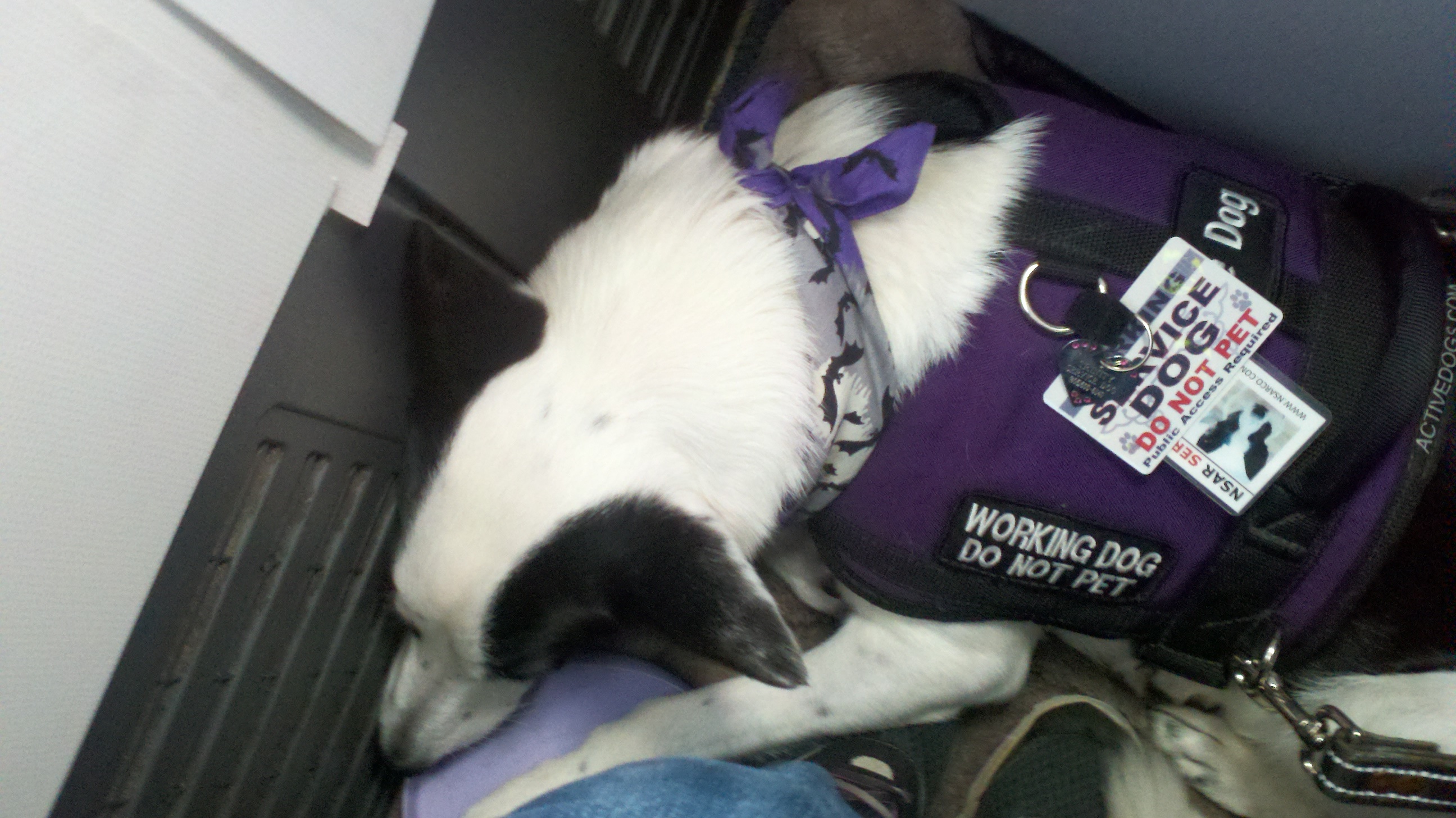
When at your gate; take advantage of pre-boarding. You can get yourself and your animal settled before the wave of other passengers. I take along a small blanket to place on the floor so she doesn’t leave fur behind. It’s also good practice to find out if the fellow passenger beside you likes dogs once they sit down. I’ve personally never had an issue with anyone not.
Flying international with your Service Dog requires extra paperwork and attention to detail; as well as, traveling with mobility equipment, such as a wheelchair. I’ll address that in another post.
Original article can be found here: Flying domestically (usa) with a service dog


Rolf Potts's Blog

- Rolf Potts's profile
- 325 followers

