
Steve Mandel, Saving Wildlife One Frame at a Time
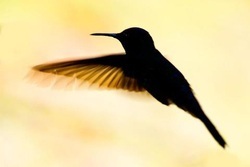 Copyrighted photo by Steve Mandel An “amateur” photographer from Soquel is using his hobby to help save endangered animals around the world. Orangutans in Borneo, Asiatic lions in India, leopards in Africa, and tiny tree kangaroos in the tiny remnants of Australia's rainforests are just some of the species getting widespread attention through Steve Mandel's stunning wildlife photographs. All are on the verge of extinction, as are the lemurs in Madagascar, proboscis monkeys in Borneo and the Japanese snow monkeys Mandel has photographed.
“These animals are disappearing at a frightening rate due to human encroachment,” Mandel said, adding that he hopes his images will move people to advocate for their protection. “The more people see them (my photographs) the better. I want people to look at them, appreciate them and think about wildlife.”
Thousands of people have been able to view some of Mandel's photographs at the Smithsonian Museum of Natural History in Washington DC. One of his images is currently on display as part of the museum's exhibit honoring the top 150 wildlife photos submitted in their annual Nature's Best Windland Smith Rice Competition. Judges for the annual contest, which drew over 21,000 entries this year, selected Mandel's photo of lemurs for its Highly Honored Awards. This is the second time Mandel's work has been displayed by the Smithsonian. In 2009 his photograph of two Japanese snow monkeys also won that prestigious honor. That image also graced the cover of a book published in 2010 by Palgrave Macmillan entitled“Second Nature: The Inner Lives of Animals.”
A collection of some of Mandel's top images can be found on his website: www.mandelphoto.com. The website includes an array of astronomy, landscapes, and people as well as wildlife.
“The guy's brilliant and his skill level is off the charts,” said Santa Cruz's Nola Moosman, another“amateur” photographer who routinely captures professional quality images, after viewing his website. “His photos are beautiful, and the subjects he shoots are very exotic.
“His subjects are well chosen and well edited,” added Moosman, who has a degree in fine arts.
Mandel submits his work to publications, but has yet to hang his photographs in a gallery.
“I haven't done any shows,” he said. “My main focus is my business and my family.”
Married for 29 years to Carol Foote, a former photojournalist, Mandel has three adult sons who are also skilled photographers. Mandel moved to the Central Coast in 1978 to teach communications at UC-Santa Cruz. He left academia in 1983 when he started a consulting firm as a presentations trainer and communications coach in the Silicon Valley. Today Mandel Communications which teaches effective communication skills to business professionals in 15 different languages in 42 different countries. Headquartered in an office in Capitola, Mandel's work requires him to travel extensively.
A highly accomplished amateur astronomer and astrophotographer Mandel became obsessed with photographing endangered wildlife in 2007 while vacationing in Australia with his youngest son. Mandel decided to focus his camera on animals on the verge of extinction rather than the night skies after looking into the eyes of a doomed tree kangaroo.
Even after five years Mandel still gets emotional describing the moment when he first witnessed the disastrous effect habitat destruction has on endangered wildlife. Standing on a hill in what was once an Australian rainforest, which had been clear cut as far as the eye could see, Mandel saw a single a tree kangaroo in the only remaining Eucalyptus tree in the area. Initially he was enthralled by the sight. Then he was sickened after the guide he was with told him the isolated animal would probably die.
“It shocked me out of my complacency,” Mandel said. Pausing for a moment to regain his composure he continued. “I got so upset I decided I had to try to do something. “I decided I would use photography to make people aware of what was going on,” he said.
Although Mandel's astronomy photographs have been published by NASA, Smithsonian Books and Sky and Telescope Magazine, he knew very little about photographing wildlife. Undaunted, he made it his mission to learn everything he could about the medium. Shortly after returning home to the Central Coast Mandel flew to New York for a weekend seminar on wildlife photography---the first of several seminars he would take from experts. Eager to learn more about his new passion, Mandel hired the instructor for a half day tutoring session after the seminar had concluded.
Two months later, Mandel was scheduled to fly to India for business. He decided to go early so he could visit the Gir Forest and photograph Asiatic lions, which once roamed from India up to Greece. The population had dwindled to a dozen animals a century ago when they were finally protected from hunters. Today, there are about 450 individuals left in the world, and the species remains threatened by the practice of digging and using open pit wells in the region. Without barricades to protect them, unsuspecting lions have drown after falling into the wells.
Mandel decided to do something about the situation. In 2008 he launched a non-profit called the Lions of Gir Foundation. Working with an organization in India called the Wildlife Conservation Trust, the foundation raises funds for barricades to be built by natives. To date, about 2,000 wells have been secured, and fund raising to barricade the remaining 9,500 wells is ongoing. For more information about the foundation visit www.lionsofgir.com
Mandel has also helped purchase equipment for a sloth sanctuary in Costa Rica. He and his wife are planning to travel to the sanctuary in the near future to photograph the endangered sloths. They then plan to donate the pictures to the sanctuary to use to publicize the plight of the animals.
The avid amateur photographer plans to continue his quest to photograph endangered wildlife throughout the world. He lugs 50 pounds of camera equipment with him routinely on business trips, arriving early and/or staying a few days later to capture compelling images of vanishing species.
“I travel quite a bit to visit clients in Brazil, Singapore, India, Europe, Hong Kong and Vietnam,”Mandel noted. “When I can I take my photographic equipment with me and do a lot of photography.”
This article originally appeared in the Fall 2012 issue of Santa Cruz Style Magazine.


No comments have been added yet.
Terri Morgan's Blog

- Terri Morgan's profile
- 10 followers
Terri Morgan isn't a Goodreads Author
(yet),
but they
do have a blog,
so here are some recent posts imported from
their feed.

