
CMP#236 Context-Free BBC
 This blog explores social attitudes in Jane Austen's time, discusses her novels, reviews forgotten 18th century novels, and throws
some occasional shade
at the modern academy. The introductory post is here. My "six simple questions for academics" post is here. Spoilers abound in my discussion of these forgotten novels, and I discuss 18th-century attitudes which I do not necessarily endorse. CMP#236 The BBC forgets everything it knew about Shakespeare
This blog explores social attitudes in Jane Austen's time, discusses her novels, reviews forgotten 18th century novels, and throws
some occasional shade
at the modern academy. The introductory post is here. My "six simple questions for academics" post is here. Spoilers abound in my discussion of these forgotten novels, and I discuss 18th-century attitudes which I do not necessarily endorse. CMP#236 The BBC forgets everything it knew about Shakespeare
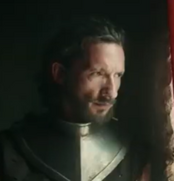 Pensive Shakespeare You may have seen some news headlines about a fracas over in the UK over the institutional bias of the British Broadcasting Corporation, the BBC. Top BBC executives have resigned over allegations of bias in the news department. These documented examples of agenda-driven journalism indicate an abandonment of basic journalistic standards.
Well, I’m here to say that something exceedingly strange and disappointing is going on in BBC Arts as well. Since I live in Canada, I don’t have access to all BBC channels, but I happened to watch an episode of the three-part docu-drama Shakespeare: Rise of a Genius (2023) when it aired on our local Knowledge Network Channel. So I’m late to this party, but I want to clutch my pearls anyway.
Shakespeare: Rise of a Genius is technically a documentary, or I suppose we could call it info-tainment--cultural education made entertaining and accessible for people who might not have much of a grounding in English history or literature. At least I think that must be the intended audience, judging by the elementary History 101 stuff the talking heads give us. The talking head segments are interspersed with re-enactments of Shakespeare’s life and times. The actor who plays Shakespeare elbows his way through the mucky, ribald, dangerous, streets of London with a helpful voice-over: “He was living at a time where everybody was just swimming in muck, sex, and you know, violence”.
But keeping things simple is no excuse for the errors and the opinions dressed up as facts that are presented here. The same BBC that green-lit this production also gave us, for example, the radio program In Our Times, in which distinguished academics discussed all aspects of British and International culture. No institution in the world has more resources to draw on for a compelling and accurate portrait of Shakespeare than the BBC. I'm not saying this to sneer at the credentials of the diverse panel of "historians, actors and experts" who are the Shakespeare experts used in this docu-drama. I am self-taught myself and only recently acquired a Master's Degree (by research) in English Literature. But it's the BBC's responsibility to use basic research skills and fact check any of the assertions their talking heads make.
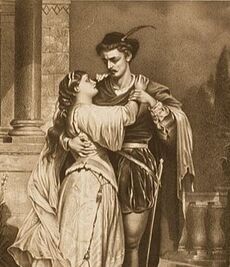 Star-crossed lovers Subversive Shakespeare
In the first episode, it becomes clear that there is an agenda in play. One of the “historians, actors, and experts” explained that since Shakespeare lived in the times he did, he had to be cautious about writing anything that could be construed as criticism of the government. The authorities, you see, viewed the stage as a potentially seditious place, where “boys can be girls” and “where vagabond players can be kings.”
True enough, I suppose. I don’t think cross-dressing boy actors playing girls were a concern so much as pro-Catholic sentiments or any other seditious notions. And England has a long tradition of vagabond players being kings, as with the Lord of Misrule revelries during Twelfth Night. (Fun fact: the British did not end stage censorship until 1968!)
At any rate, we are told that Shakespeare, a rising playwright, is moved to protest against the government repression he sees in the mucky, dangerous streets of London. To do this, he must be subtle and subversive. This is the same argument being made about the subtle and subversive social commentary modern critics find in Jane Austen, you'll note. Maybe modern academics believe the only way people can be interested in some moldy old playwright is if they are told he was a secret revolutionary. As opposed to explaining iambic pentameter or the Great Chain of Being. Boring!
At any rate, the talking head tells us: you might think a play about two kids in love would be a comedy, a story that ends with marriage: “up until now, romantic plays have been comedies, but Shakespeare writes this as a tragedy.” The Bard of Avon turns things on their head! “Shakespeare didn’t do that. We’re going to get other ideas”. The talking head tells us what Shakespeare is thinking: “No, we’re going to look at what I want to write about, which is very different.’ “Theatre is subversive.”
“As a response to the injustice he’s seeing, Shakespeare writes a play that will last forever.”
Come again? A play about the teenage offspring of two wealthy and influential Italian families is a response to the injustice he's seeing?
I am not a Shakespeare expert. But even I know that Shakespeare got his plots from other sources. He didn’t take a standard rom-com about two young lovers and turn it into a tragedy. Why didn't the experts in this mini-series explain that Romeo and Juliet (1595) was sourced from a poem called The Tragicall Historye of Romeus and Iuliet? Tragicall, how about that? And this poem was itself a translation and adaptation of earlier Italian tales. Why didn't someone involved with the production know this--or did they know and not care?
The 1595 poem included a preface which unequivocally presents Romeo and Juliet as a cautionary tale, not a love story. It's a story that upholds the status quo and conservative values. And to this end, good reader, is this tragical matter written to describe unto thee a couple of unfortunate lovers thralling themselves to unhonest desire, neglecting the authority and advice of parents and friends, conferring their principal counsels with drunken gossips and superstitious friars… attempting all adventures of peril for the attaining of their wished lust, using auricular confession (the key of whoredom and treason) for furtherance of their purpose…” The reference to "auricular confession" means the writer of the 1595 poem used the tragic tale as anti-papist propaganda. Doesn’t sound very anti-establishment to me.
Further, if Romeo and Juliet was written in support of the ordinary people, the downtrodden, the people of low degree, it might be logical to ask, how are people of low degree presented in the play? Juliet’s Nurse, for example?
As it happens, she’s presented in the way servants were still being presented in years later in Jane Austen’s time—as loquacious, gossiping, and vulgar. (The actress in this production really gets it!)
The Nurse is the comic relief and the exposition device. What is subversive about that? Over the ages, different critics—Freudian, feminist, queer theorists—have proposed a theme and meaning for Romeo and Juliet. But if you had only the authority of this BBC mini-series to rely on, you would come away thinking that it was Shakespeare’s idea to turn Romeo and Juliet into a tragedy, and his reason for doing so was to protest social injustice. What a strange assertion for an “expert” to make, and what a clear illustration of the disservice of presenting so-called literary criticism that’s really agenda-driven and devoid of context. In contrast, the witty comedy series about Shakespeare, Upstart Crow, written by Ben Elton, demonstrates a deep know of Shakespeare and his times, and manages to make him relevant to a modern audience. And that, patient reader, is the drum I’ve been beating about Jane Austen for several years now in this blog. If you are going to make an assertion about Austen's hidden subversive meaning, first, you might what to check out what her peers were doing--check out what others had to say about slavery, for example, or women’s rights. How can you assume that Austen was breaking new ground in her social commentary if you don't have a good grasp on the social commentary of the period, if you only know big-picture stuff, like "women were oppressed back then."
But soft!… turns out that the BBC partnered with the same production company who gave us Shakespeare: Rise of a Genius, to produce Jane Austen: Rise of a Genius, which aired this past May in the UK. I’m sure that when this program airs in North America, it will be as a delightful cap to a year of Austen celebrations. Stay tuned…. Contrary to what is depicted in the documentary, Shakespeare's wife and daughters did not publish his collected plays in the First Folio after his death, it was his colleagues, John Heminge and Henry Condell. Another example of the utter indifference for accuracy on display in this program.
Previous post: What a snorefest


No comments have been added yet.


