It’s Not Your Brain
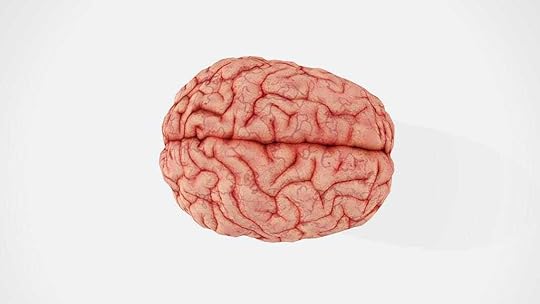 Photo by BUDDHI Kumar SHRESTHA on Unsplash
It’s uncomfortable, isn’t it?
This moment we’re in. You feel it. I feel it. It’s the background hum of anxiety beneath the non-stop scroll. It’s the sense that the tools we built to connect us are also the tools that are unmooring us.
We look at generative AI and then at the breakthroughs in biologics — gene editing, neural interfaces — and we feel a profound, visceral unease. We’re at an inflection point. And the thing about inflection points is that they always feel, in the moment, like a breaking point.
We look around and, if we’re honest, we harbor a deep-seated suspicion: We’re getting dumber. Lazier.
We’re outsourcing our navigation to a map app, our memory to a search engine, and our conversations to a text prompt. We’re sacrificing our deep, human faculties for the cheap-and-easy dopamine of convenience. We see our kids, and we worry they’ve lost the ability to be bored, to be creative, to be… human.
And we might be right.
But what if we’re only half right? What if this “laziness,” this “dumbing down,” isn’t a failure? What if it’s an unconscious, collective sacrifice? What if, to borrow a business-school phrase, we’re divesting from a legacy asset to free up capital for the next big thing?
What if we are sacrificing our 20th-century “humanness” in the service of… something else?
This isn’t our first time at this particular rodeo. We’ve felt this specific, cognitive discomfort before.
Travel back with me. Let’s go to ancient Athens, circa 370 BC. The new technology isn’t AI; it’s writing. And one of the greatest minds of the age, Plato, is deeply, profoundly worried.
 Photo by Gabriella Clare Marino on Unsplash
In Phaedrus, he laments that this newfangled tech will “create forgetfulness in the learners’ souls.” He argues that by outsourcing memory to the written word, we will lose the very essence of wisdom, which, to him, was an internal, hard-won, memorized truth. He was convinced we were getting dumber.
And you know what? He was 100% correct.
We did lose that capacity. The great oral tradition of the bards, the ability to memorize 10,000-line epics, withered and died. We sacrificed that part of our humanity.
But what did we get in return?
We got philosophy. We got science. We got the novel. We got law. We got the cumulative, iterative, ratchet-like progress that is only possible when one generation can build on the recorded thoughts of the last. We didn’t get dumber. We got different. We re-allocated our cognitive resources. We outsourced the storage to free our brains up for the synthesis.
Now, flash forward. That external, awkward-to-use technology — the book, the computer, the smartphone — is facing its own endgame.
The smartphone, that tiny, tyrannical, distracting god in our pocket? It’s just the prototype. It’s the awkward, clunky, external phase. The next phase is integration.
 Photo by Kelli McClintock on Unsplash
Let’s think out 50 years. The phones, those annoying, addictive, glass-and-metal slabs, are gone. In their place is the “Link,” or the “Neuralace,” or whatever serene, Silicon-Valley-approved name they give it. It’s a biological-AI interface woven into our neocortex.
And yes, at first, it’s just for the rich.
The finance folks in London and the VCs in Palo Alto will get it first, just like they got the brick-sized mobile phones in 1988. They’ll use it for an “edge.” To trade faster, to process data quicker.
But information technology has a relentless, gravitational pull toward democratization. The printing press didn’t stay in the hands of kings, and the smartphone didn’t stay in the hands of executives. It won’t be long before the “Link” is as standard as a childhood vaccine. An even playing field.
And then what?
Think of it. The average human IQ — a flawed metric, I know, but a useful one — is 100. What happens when the new average is 150? Or 200? What happens when 10 billion people can access the sum total of human knowledge, not by searching it, but by knowing it, instantly?
What about all those problems that our mere, 100-IQ, ape-descended brains are hopelessly unable to solve? Climate change? Cancer? Interstellar travel? We’re trying to solve multi-variable, exponential-scale problems with a brain that evolved to find the next piece of fruit and avoid a tiger. We’re bringing a cognitive knife to a quantum gunfight.
 Photo by Markus Spiske on Unsplash
When 10 billion of us have a collective, AI-mediated brain, those problems don’t stand a chance. It won’t be your brain, struggling in isolation. It won’t be my brain. It will be, for the first time, THE BRAIN.
AI won’t be an overlord in a sky-castle, as we fear. It will be the operating system. It will run things, yes, but it will run them through us. It will be the synaptic network that connects all of us into one, cohesive, planetary consciousness.
Let’s push it. 100 years. 200 years.
The very concept of the individual — that isolated, frightened, ego-driven “I” that has been the center of our art and our conflicts for 10,000 years — may be the next great sacrifice. We will trade our lonely, beautiful, flawed individuality for a connected, collective, transcendent “We.”
So, when do we become the aliens? The cold, hyper-intelligent, hive-minded beings we’ve feared for so long?
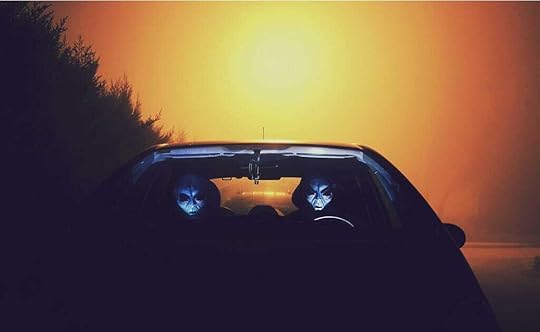 Photo by Miriam Espacio on Unsplash
The answer is simple. We become them the moment we realize they aren’t coming from the stars.
They’re coming from us.
This is the next step. It’s uncomfortable. It’s terrifying. And, like every inflection point before it, it is probably, in the long run, inevitable.
[image error]