why I don't read mythological retellings
>why I don’t read mythological retellingsFrom the Writer’s Desk:
>New Releases
>Current Projects
>What I’m ReadingIn Other News:
>A QuoteMy Books (where to buy)
My Podcast (where to listen)
why I don’t read mythological retellings: Persephone & Hades as romance
As someone who studied Classics and loves the ancient world, people are always surprised to discover that I don’t read Ancient Greek mythological retellings. I hesitate to admit I haven’t read Percy Jackson either. While I did read Madeline Miller’s The Song of Achilles and Circe when they were published, I fear those novels have opened the floodgates of less researched, rather hollow mythological retellings, like the various iterations of the Persephone and Hades myth that slip into romantasy (aka ‘romance with a side of fantasy’) territory.
This isn’t hate or censorship! Let me be clear. I love that people enjoy ancient myths in all their forms, and that so many people are still fascinated by the ancient world, their mythologies, and their stories. I love that people are reading at all. But personally, I cannot enjoy these kinds of novels—specifically the blatant romanticizing and eroticisation of previously religious myths—and there are a few reasons why.
Let us take the Persephone and Hades “myth,” which is a regrettable misnomer the modern world has imposed on ancient religions that mastered the art of storytelling to breathe life into the inanimate as well as divine realm.
The story of Persephone’s marriage to Hades, lord of the Underworld, comes from the Homeric Hymn to Demeter. Unlike the modern romanticized retellings, the original version is anything but romantic. Persephone, for one, is named for most of the hymn as κόρη (korē), literally a maiden or virgin, and thus unmarried. As the daughter of Zeus and Demeter, she is a goddess and immortal, but in the story, she is depicted nevertheless as a young girl. In that time, girls could be as young as twelve (if not younger) when they were married, most likely to a man twice or even thrice their age, and certainly not willingly or chosen. Like Zeus, fathers would give their daughters away in marriage, as property that would then become the property of their husbands.
To make matters worse, the depiction of Persephone, the korē, given to Hades in marriage, is blatantly violent. While picking flowers in a field with her friends, she reaches for a narcissus grown to deceive her. As she does so, the earth beneath her gapes open. Hades rushes out on his chariot and seizes her, carrying her down into the Underworld. The much-discussed verb used for this ‘siezing’ act is ἁρπάζω, meaning ‘to snatch away, carry off, or seize,’ but with such an underlying violence that many scholars will translate it as ‘rape.’ As she’s being carried away, she cries out to Zeus, claiming the union as unjust and lamenting her fate.
When Demeter, Persephone’s mother, hears the cry of her daughter on the wind, she immediately rushes to find her. The grief of losing her daughter in marriage to Death sends Demeter into a wrathful revenge. She punishes the earth, rendering fields and farms barren. This motif is found in many other cultures and is closely associated with the cycles of the seasons, more so than the dying-and-rising god archetype, like that of Persephone. Even so, the hymn to Demeter has much less to do with explaining the four seasons than ritualizing the cycles of a woman’s life, from girlhood (or maidenhood) to womanhood, marked in those days by being a wife, mother, and even grandmother, represented in the lineage of Persephone as the korē, Demeter as mother and wife, and Rhea, mother of Demeter, as the head of the matriarchy.
In the Underworld, Persephone famously eats pomegranate seeds—a trick by Hades, supposedly, though many a scholar has debated the willingness of Persephone in this exchange (which could perhaps be the seed, if you will, for the modern, more romantic retellings). Metaphorically, the consumption of food in the Underworld is related to the consummation of marriage and the loss of the korē’s virginity. The idea of eating food and becoming trapped in some kind of dead or undead realm is not unique to the Ancient Greeks; a parallel can be found in Celtic and Germanic traditions, for instance, with the land of faerie, where maidens were snatched away to marry the faerie King in an underworld realm.
Therefore, the reason I struggle to romanticize, let alone eroticize, this relationship between Persephone and Hades is because of the inherent violence and weight of the original myth. The fact that Ancient Greeks equated a woman’s marriage to literal Death is profound and worth contemplating, even if most of our lives today do not look like theirs. Marriage, after all, is a kind of Death, whether of the self, childhood, our past life, innocence, or the final separation from our mothers. Even the ancients recognized a level of injustice to it all, whether you romanticize marriage or not.
Some may argue it is empowering, on a certain level, for modern women to retell the story and allow Persephone to fall in love, to take charge of her fate, and most importantly, her sexuality, which has so often been weaponized against women or controlled. And I respect and support our modern right to do so. But the intense eroticism of modern romantasy retellings (and perhaps more to the point, the various erotic iterations of the “trope” girl x immortal male Death figure in romantasy) often obscures the complexities inherent in the original myth, which point to the brutal realities of womanhood in that time (and for some women in our time too), as well as meaningful, enduring truths about marriage that may surprise us, given the archaic nature of these stories.
It is important, ultimately, to recall that these myths, especially those centered around gods, like the myth of Persephone and Hades in the Hymn to Demeter, were ultimately religious hymns. They would have been sung in ritualistic contexts, most likely in spaces made up entirely of women, honoring as well as lamenting the stages of life, from maidenhood to the full maturation of womanhood, our entangled relationship with Death and immortality, and the contradictions of marriage and power which we still must grapple with today.
If we lose sight of the original context, we risk not only forgetting this ancient wisdom but also overshadowing the lives of women in the past, who were already so overlooked and forcibly eroticized, just as Persephone in the myth.
From the Writer’s DeskI’m focusing most of my attention on illustrating a poetry book inspired—not coincidentally—by the myth of Persephone, and her marriage/death as a korē and resurrection as a woman, when she is reunited with her mother. In my poem book, the korē figure is named Sofia, like the Greek word for wisdom, before she was “loved” by philosophers, alluding to the wisdom carried maternally and rarely given such a prestigious name as philosophy. Here is a look at the first poem in the book (almost all of which is written in meter!), called Ode to Sofia:
Text within this block will maintain its original spacing when publishedOde to SofiaI used to sleep under the starsWhen gods kept watch at nightAnd Sun chased Moon across the skyLike two love birds in flight.If then my Fate is bound to EarthAnd Spring and Winter herald Death,Why calls Eternity my nameAn icy wind Her divine breath?Please tell me, Mother, who am IWhen snow buries me deepAnd Time is a forgotten nameI dream of in my sleep?Then will you hold me in your armsAnd whisper in my ear goodnight?Can then you call me Daughter andsay everything will be alright?I used to sleep under the starsBefore the taste of Love.My body knew without Him allthe deathless gods above.In the meantime, if you missed my interview about my ancient myth-inspired portal fantasy novel, THE SONG OF GAIA, check it out on YouTube below:
NEW RELEASES: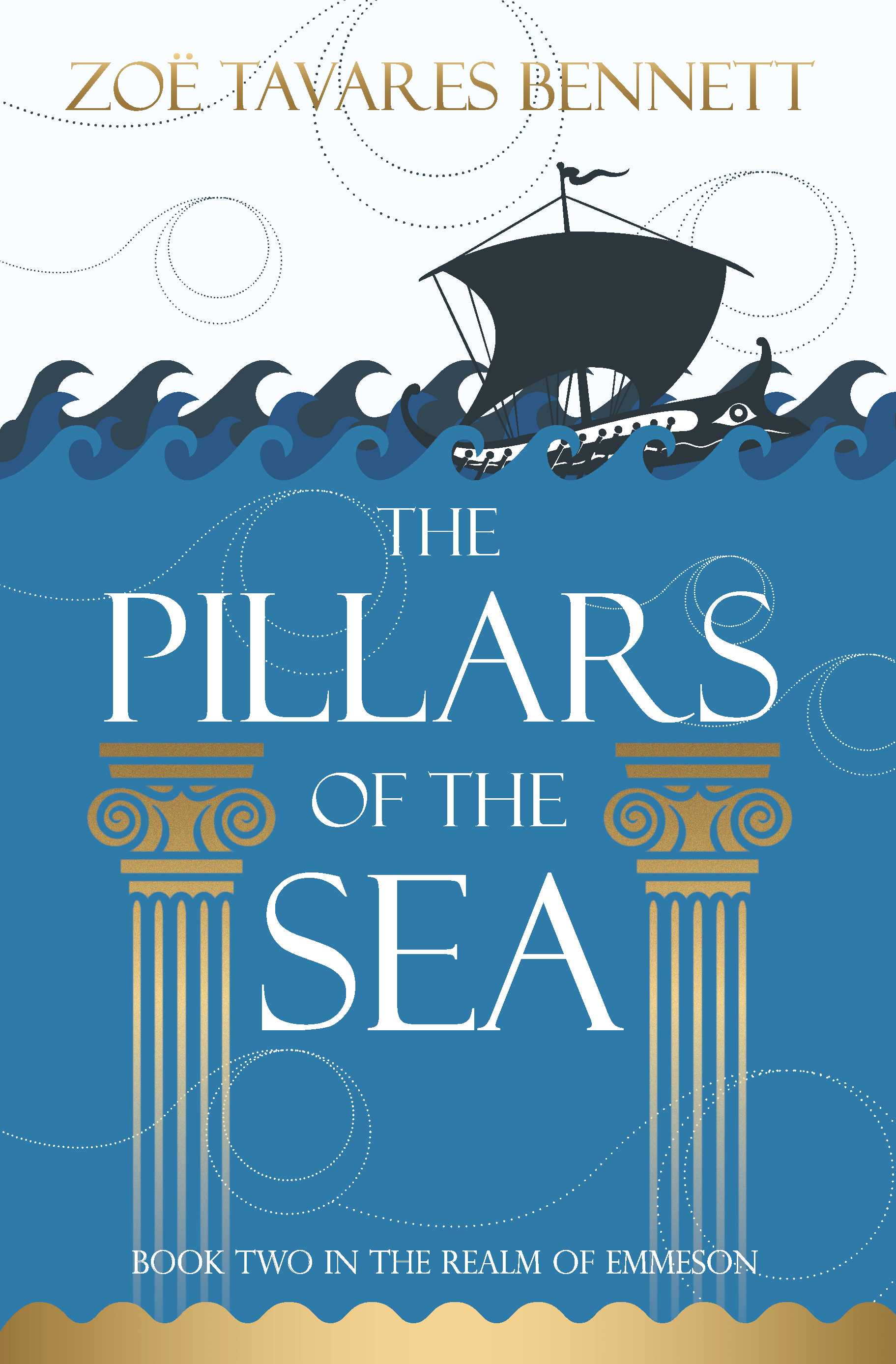 LEARN MORE
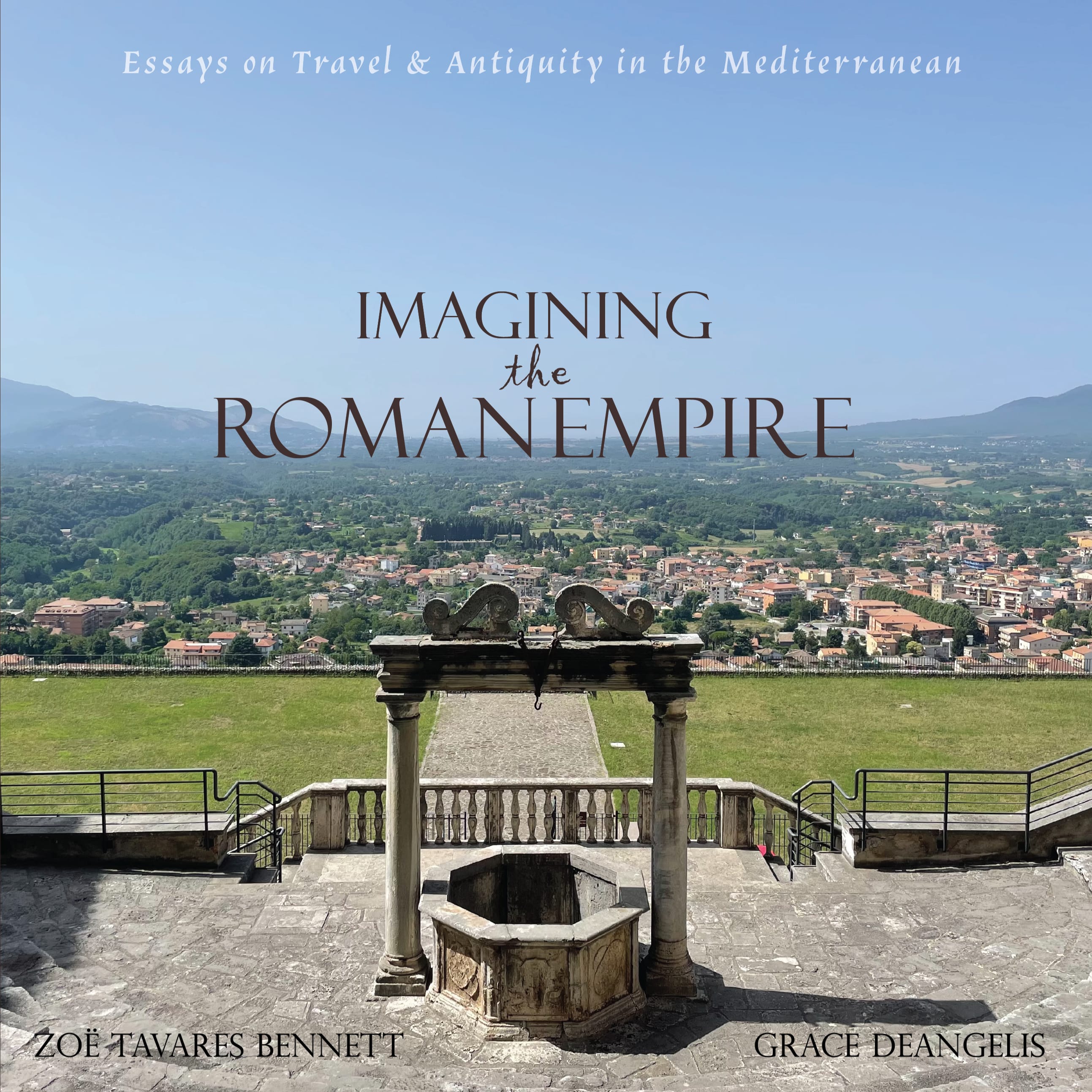 LEARN MORECURRENT PROJECTS:
BOOK 3 REALM OF EMMESON - Third draft
SOFIA BEFORE LOVE (a book of poetry) - Illustrations
Iliad by Homer (in Ancient Greek!)
Lyra Mystica by Charles Albertson
Messenger of Olympus MJ Pankey
My other Substack, The Fellowship of the Readers, is slow-reading The Silmarillion over the next year. Join at any time if you are interested in reading or just following along with the occasional quote excerpts that I’ll send out to mark our journey!
A QUOTE:
Δήμητρ᾽ ἠύκομον, σεμνὴν θεόν, ἄρχομ᾽ ἀείδειν,
αὐτὴν ἠδὲ θύγατρα τανύσφυρον, ἣν Ἀιδωνεὺς
ἥρπαξεν, δῶκεν δὲ βαρύκτυπος εὐρύοπα Ζεύς,
I begin to sing of rich-haired Demeter, holy goddess,
of her and her trim-ankled daughter, whom Aidoneus
rapt away, given to him by loud-thundering, all-seeing Zeus.
―Homeric Hymn to Demeter, 1-3
Vale!
-Zoë
The Sun of God — an epic historical novel set in Ancient Rome
(Buy on Amazon, discount paperback, discount special edition hardcover, audiobook)
Imagining the Roman Empire: Essays on Travel & Antiquity in the Mediterranean
(Buy on Amazon coffee table book)
The Song of Gaia (Book #1)
(Buy on Amazon, discount paperback, discount hardcover, special dust jacket hardcover)
The Pillars of the Sea (Book #2)
(Buy on Amazon, discount paperback, discount hardcover)
My Sister’s Best Friend (Book #1)
(Buy on Amazon, discount paperback, audiobook)
Best Friends & Their Exes (Book #2)
(Buy on Amazon, discount paperback, audiobook)
Hot takes on the ancient world by two grad students and dead language fanatics!
Listen to our latest episode:“WORD You Rather: Germanic vs Romance Descendants in English”
Find it on Spotify, Apple Podcasts, and most other podcast streaming services!
MEDITERRA is a reader-supported publication. To receive new posts and support my work, consider becoming a free or paid subscriber.