Pennhurst: A Place of Memory, Decay, and Reckoning
When I stood before Pennhurst’s gates in Spring City, PA, camera in hand, I felt a quiet tremor in my chest caused by the weight of stories unseen, and the smell of age that would cling to me hours later. It was an otherworldly tension. This place is dead, yet its echoes are alive. This was a research trip as the first scene of my current manuscript opens at Pennhurst (this is a gothic mystery I’m working on for my agent), but the day turned out differently than I expected.
On the drive up to Pennhurst, I thought I was ready. I’d read about its history, I’d seen the photographs online, and I knew what the word “asylum” carried with it, although it was never labeled as an asylum other than anecdotally. But nothing could prepare me for the weight of the place or the smell that seemed to sink into my skin and follow me home.
There is power in remembrance. There is healing in truth. And there is beauty in your relentless devotion to honoring those who were once unheard.
…MR. Andacht, a Pennhurst Visitor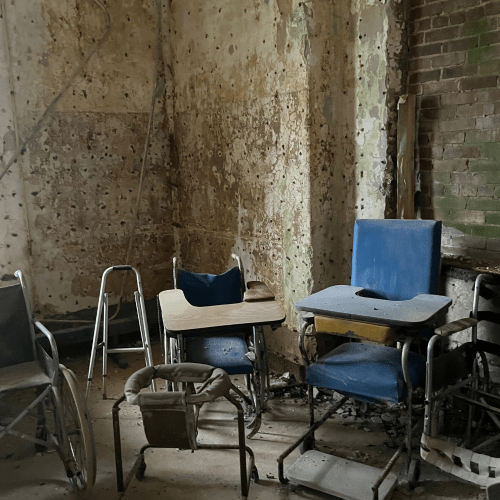 More about Pennhurst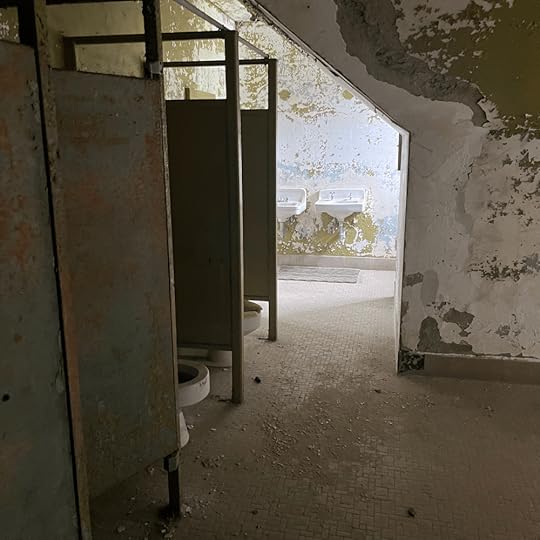
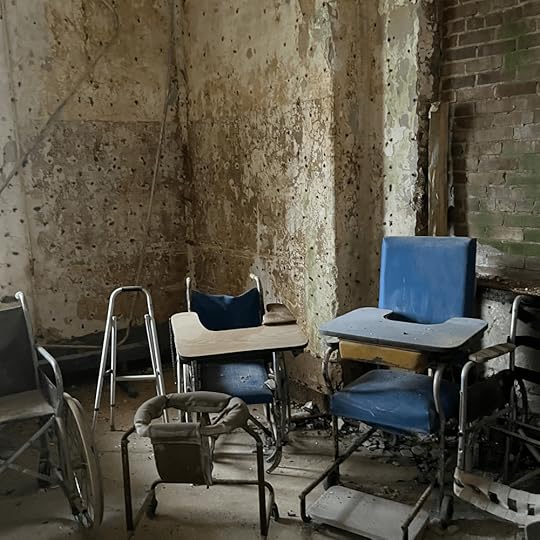
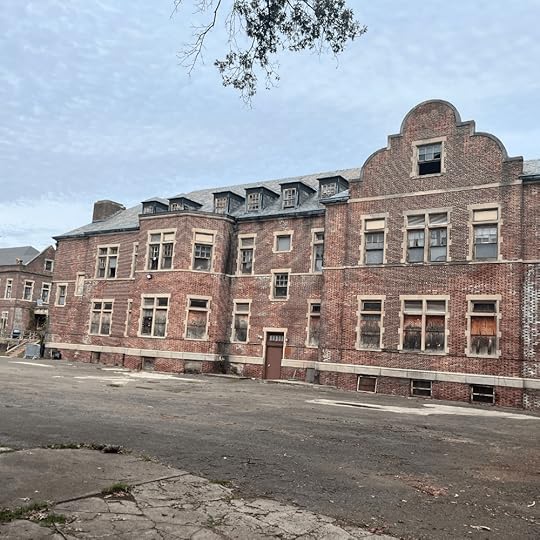
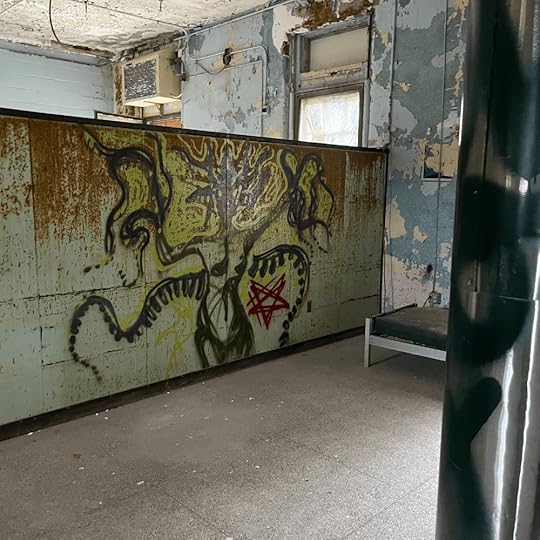
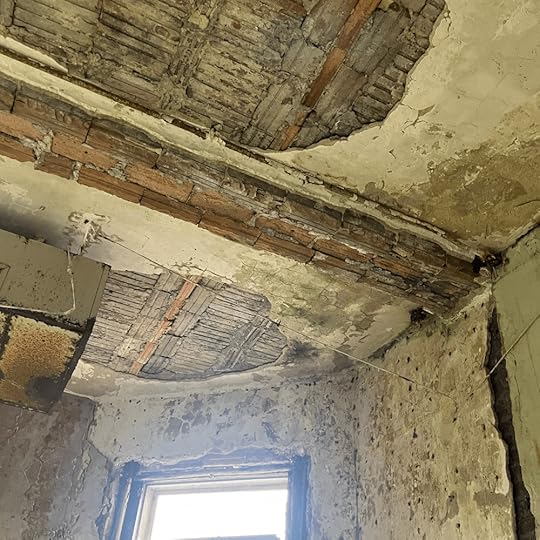
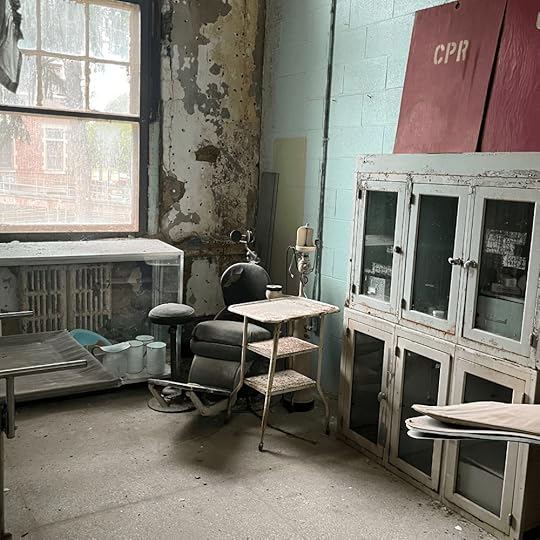
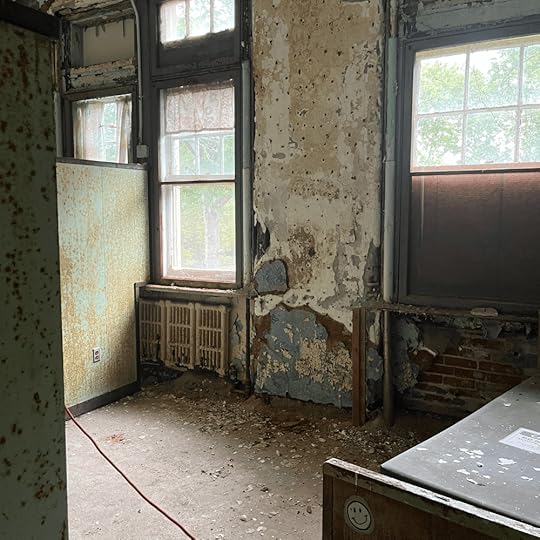
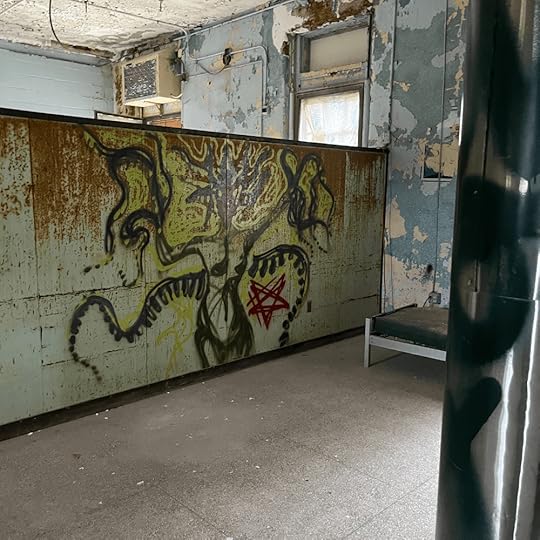
But let me start at the beginning: Pennhurst opened in 1908 under the name Eastern Pennsylvania State Institution for the Feeble-Minded and Epileptic. (The name already carries the cruelty of its era.) The original mission, in theory, was to give care and instruction to those deemed “feeble-minded” or epileptic. It was supposed to be a place of hope, rehab, and restoration for people who struggled with physical and emotional disabilities. But the numbers swelled. Within decades, what should have been a modest institution turned into a sprawling, overcrowded facility where neglect, abuse, and dehumanization became systemic.
By the 1960s, scandals erupted: whistleblowers, journalists, lawsuits all revealed that patients — children and adults — were restrained, left unclothed, locked in squalid conditions, denied dignity. After many landmark court cases, the institution officially closed in 1987, but the trauma of the place didn’t close with it. Over the next few months, I’ll outline the history of this school as well as the how the court cases that ended up closing the school also led directly to a series of federal laws we now know as the Americans with Disabilities Act.
After its closure, Pennhurst was designated by the United Nations as an International Site of Conscience, a recognition that the site must remain a locus for memory, education, and vigilance against repeating historical injustices. Similar to prisons, gulags, and concentration camps in Europe and throughout the world that are now living museums so the rest of us will never forget.
“The International Coalition of Sites of Conscience (ICSC), founded in 1999, is a global nonprofit network of memory sites dedicated to preventing forgetting by connecting past human rights abuses with present-day issues. It is not a UN body, but it does have consultative status with the United Nations’ Economic & Social Council. That gives it a recognized role in certain UN processes, though it remains independent. Pennhurst’s designation through ICSC, in 2008, thus represents recognition by an international human rights memory network, rather than direct UN governance.“
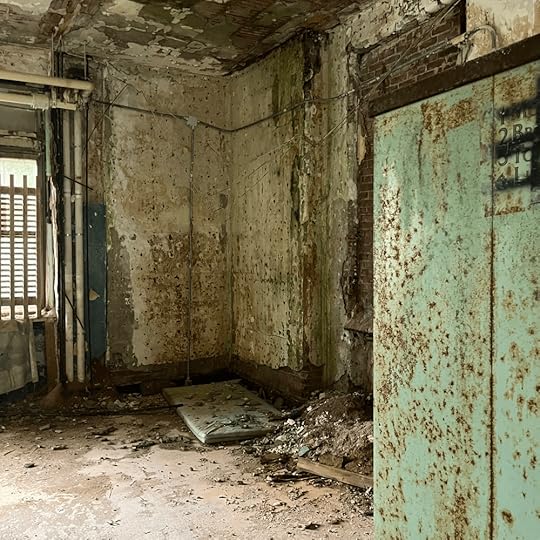
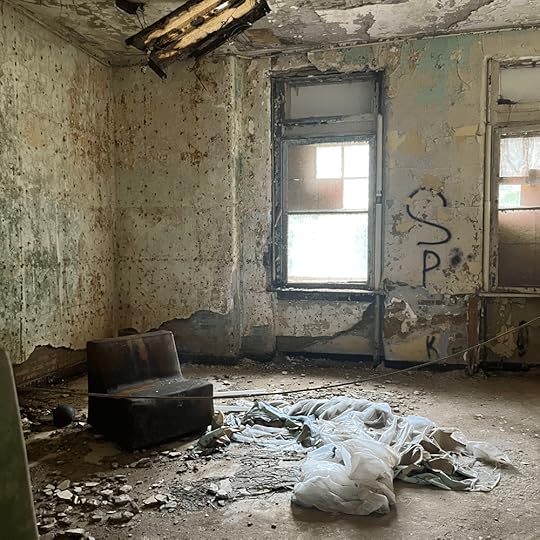
Walking through the hollow halls, I felt time folding. The peeling paint, the broken windows, the drafts that carry distant dust, and where every detail felt heavy with silence. And that odor, A strange, tangy mix of mildew, chemicals, earth, and something metallic, is still with me although I’ve been home for a week. The stench (there’s no other word for it) anchored me in a type of discomfort that remains. Even my car still holds it now, a ghost of that visit.
I left Pennhurst feeling shaken. But I’m glad I went. To see is the first step toward witness. Over the coming months, I’ll share its architecture, the lives it housed, how memory lingers, and why we must resist erasure. I’ll also outline the history of this site, all the reasons it was closed, and how it was eventually saved and preserved… not by any state of federal government authority. The campus was saved by a haunted house attraction and paranormal ghost tours. And that is a very interesting story all by itself. But for now, I’ll leave you with a few photos so you can get a small glimpse into a place where almost 11,000 people lived and more than half died alone and in squalor… yet through the work of hundreds of volunteers their voices are now being heard.