It Is Always Ourselves*
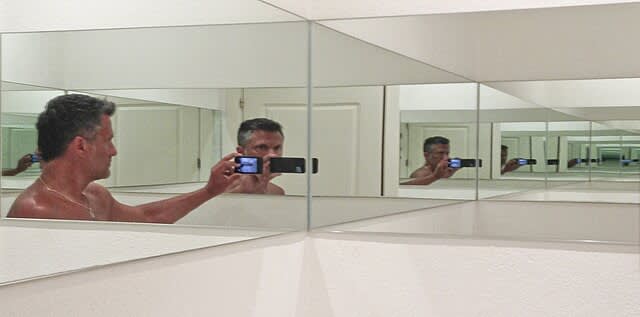
This is the writer William Morrow, who is the author of Alias Tomorrow.
(Comes out in November. Pre-order here.)
"Whether we are describing a king, an assassin, a thief, an honest man, a prostitute, a nun, a young girl, or a stallholder in a market, it is always ourselves that we are describing" Guy de Maupassant
The phone buzzed on his desk. He hoped it would be Daniel, calling with an update on travel plans. He picked up the phone, thumbing the cracked screen. It was not a known contact, but a 603 area code. He took a chance. A tele-marketer would be an amusing distraction, he thought.
“Hello, is this William Morrow?”
“Yes, who is this?”
“Good morning, William. This is Shelly Patenaud with Sun River Bank in Hanover. I believe you are the executor of the Margaret O’Donnell Cox estate. Is that correct?”
“That’s right.”
Margaret O’Donnell Cox. Six months gone. Predeceased by second husband Rich Cox, from Covid. Nana’s remembrance service in St. Agnes a muddy March morning. Siblings, cousins and long lost acquaintances arrived in waves. Sarah, Mackenzy, and Ellen between, cradling them each with her arms, together in the front row of folding chairs in the community room, facing the table lined with photos and candles. He spoke, tears streaming freely on some of their faces. He couldn’t remember now what he had said. Daniel stood in the back with his cousins, dressed in rough weather gear and work boots. The month before, when the old woman had tossed and turned on her final fevered dream, Daniel had called home at midnight on WhatsApp from the depth of the PNW, fuzzy cell phone image of his face, long, black hair covering his eyes, in some darkened Portland street, swaying in the dusk.
Two weeks ago she'd appeared in two dreams. He'd noted them down, as much as he could remember.
“You are aware that the account here is off limits until the probate process has run its course.”
“Yes,” said Morrow, red flags slowly rising on the tracks of his muddied synapses. He reached for his coffee and waited. The woman cleared her throat and shuffled around in her swivel seat in the Hanover branch office.
“There was an attempted withdrawal several hours ago from that account. The server indicates it came from a computer logged in in your vicinity, William.”
“Well, that’s impossible.”
“In any case, we are obligated by federal regulations to inform you and do some verification. You’re saying it wasn’t you.”
“Yeah, no. Wasn’t me. Or anybody here.”
Ellen drifted by in her slippers behind him, padding softly on the old, worn pine boards. Mackenzy and Saroj slipped in the back door from the apples. Ellen caught them and directed them to the kitchen table with some commentary on the state of the season and early fall leaf colors.
Shelly Patenaud was going on about “the account has been restored to default status” and “avoiding significant short and long-term financial damage”, and “we are prepared to offer you credit monitoring and identity protection services.”
“Can I have your social security number, William?” she asked.
“My social security number? Sure,” said Morrow, stalling for a second until the numbers appeared in his mind. “Zero five two…”
“No,” said Ellen, appearing at his shoulder. “Don’t give them…”
“What?” asked Morrow, covering the bottom of the cell phone with his index finger.”
“Not your social,” said Ellen.
Morrow lifted his index finger and raised the phone to his chin.
“I’m sorry. I guess I prefer to come in in person.”
“That’s fine,” said the woman. “You do understand the account is frozen until then.”
“Yes,” said Morrow stiffly, putting the phone down on the table. Ellen lifted it and checked it for the details of the call, to make sure it was off. She placed it back on the table.
“Why don’t you come and chat for a bit. There’s fresh coffee.”
“I don’t need more distraction right now,” he grumbled.
“Oh, come on. It will be good for Mackenzy,” said Ellen, her hazel eyes firmly fixed on him. “They’re already bored,” she whispered.
“Well, that’s not…”
“Shh,” she admonished.
Morrow rose to his feet, stretching, putting the work aside. The low morning sunlight in the window struck him harshly. He stepped toward the kitchen. Mackenzy and Saroj sat at the table. Mackenzy laughed at something Saroj was saying. Morrow was jealous for an instant. He loved his daughter’s laugh possessively.
“Well, I guess I will have a refill,” said Morrow, pouring himself a cup of coffee again from the french press on the wood stove. The echinacea flowering outside swayed in a gust of wind, survivor of the tropical storm that had swept through overnight.
“How are you, Dad?” asked Mackenzy.
“I’m all right,” said Morrow. “How did you two sleep?”
“Saroj. Allergies,” said Mackenzy, holding up her palm, a parodic echo of television show comedians.
“I don’t know what it is. Maybe pollen,” said Saroj in a sing-song, congested voice, hints of a British colonial past.
“Maybe it’s the country,” said Mackenzy wryly, screwing up her lips in a comedian’s smile, bringing awkward possibilities to the surface in a way that Morrow identified as one of his mother’s ancient traits to put people at ease. Sometimes it backfired. It took confidence, a social confidence that Morrow himself had never possessed.
Saroj laughed.
“Could be,” he said.
“You’d think the rain would have washed away any pollen in the air. But with the changing climate, the pollen season is getting much longer,” said Morrow, leaning against the window in what he hoped was an authoritative yet friendly pose.
“And the growing season,” said Saroj. “Possibilities for cash crops, Mr. Morrow?” he added.
“Well,” said Morrow. “Maybe.”
“Farming is always going to be a hard row to hoe,” said Ellen, wiping a counter with a kitchen cloth.
“Especially in today’s environment,” added Morrow.
“We had the sheep. Remember?” said Ellen.
“I wish we still had them,” said Mackenzy wistfully.
“Well, you all decided you were vegetarians at some point in the not too distant past. Made keeping the sheep a difficult proposition to justify,” said Morrow.
“We couldn’t stand to see them disappear once we figured out we were eating our cute little things, could we,” said Mackenzy.
“We always tried to get them loaded and off to the butcher while you were asleep on the weekends,” said Ellen.
“Saroj,” coughed Morrow seriously. “We had visions of ourselves as homesteaders when we moved here over twenty years ago.”
Morrow wanted Saroj, from Punjab and studying in his first year at the college in Maine where his daughter also was matriculated, to see that once they had been appropriately filled with grand ideas about how to live lives of balance and sustainability. Now their field, once humming with an electric fence and mowed by the sheep, was overgrown with ragweed, nettles, thistle and milkweed. At least it qualified as a pollinator friendly, successional ecosystem, if Saroj or anyone were to ask.
“Youthful idealism,” said Ellen, smiling at him, tolerant of both their foibles.
“Visions,” said Saroj, looking at Mackenzy.
He wasn't smirking, as far as Morrow could tell. But he didn’t trust the utterance, and Mackenzy’s tight-lipped smile was a new expression. Morrow stored away his thoughts, consigning them in a practiced move to memory.
“We could go for a hike in the woods,” said Ellen. “Show Saroj the woods. Our woods.”
“It’s not our woods anymore, Mom. The ATVs have taken over,” said Mackenzy sourly.
“Oh, no. There’s still our woods,” said Ellen insistently.
Mother and daughter stared at each other, banking their secret accords and disagreements, the shared years that had passed as the children grew into their adult selves in flashes of time. Morrow thought he should say something, but couldn't think what. He gulped a large part of his lukewarm coffee and retreated into thoughts of his book. Where was it headed? Who was the intended audience? He needed to develop the elevator pitch for a phone call he had scheduled with Mitch Epp, his agent in Los Angeles in the coming week. He could feel his throat tighten with the thought.
The buzzing in the kitchen rose in pitch. Seated again at the table in the dining room, away from the main stream of breakfast, Morrow bent to the task, staring at the last thing he’d written before the interruption of the phone call from Sun River Bank. This is what his work had alway boiled down to, staring at a blank screen and waiting patiently for a rising impulse to lift his fingers into action. He could be hiding from something, missing something back at the breakfast table, but Morrow would not contemplate that right away. More to the point though, what was he railing against in this book? How would it all go down in the end? That was the beauty of the calling that had attracted him from the beginning, the notion of being a servant to some hidden narrative rising from the shadows. It always did.
“Come on, Dad. Get ready.”
On the other hand, there was Mackenzy, tugging at his attention. Just as he was about to get started again. There could be no mistaking it now. This was life calling. He couldn’t resist.
Morrow sighed and rose again from the table. Outside, beyond the old double-hung windows, the sun had broken through clouds and streamed a bright, rising light on the dying red leaves of the maple tree that overspread the driveway. The four of them set out up the dirt road, past the new houses that led to the Gorman farm at the top of the hill. Here, up the rutted drive, behind the ruined old farmhouse, beyond the rusting hulks of a tractor and the two moving trucks that had once served as grain storage, was the old Class VI road leading into the reserve of forest that had last been logged when Dwight Gorman had still roamed the earth. Morrow was explaining how Dwight’s life had been forever set on the downward spiral typical of late stage capitalism and the get-big-or-get-out mentality that afflicted his country. Saroj interrupted him.
“Does the town not have a health officer?” he asked. Morrow wondered whether he was being intentionally spoofed.
“Oh, not really,” said Ellen, catching up to them with Mackenzy at her side.
“A health officer,” said Saroj, repeating himself in case she hadn’t heard. “I mean look at the state of this. There could be issues, no?”
“We don’t have that sort of a town,” said Ellen, grabbing Morrow by the arm. “It’s more of a … small town with a libertarian bent. “Live free or die’ is our state motto,” she added. “Wouldn’t you say, William?”
“You’re doing fine, dear,” said Morrow. Ellen had a stronger handle on local politics. Starting out as a school nurse, Ellen had risen to the position of hospital administrator, working in the orthopedic section of the Catholic Medical Center in Manchester.
“My God,” said Saroj. “This would never do.”
Morrow liked the fact that the kid was expressing shock. But he, William Morrow, author of science fiction, creator of imaginary worlds, liked the wrack and ruin of the place. It made it attractive, in his opinion, a better spot from which to observe the entropy that ran the table in the wider sphere. Eventually, all their efforts came to this, to the beauty that lay in decrepitude. You might as well accept it. How could he communicate that thought? He would put it in the book he was writing. He made a note to himself: ruined house, rising tides.
In the woods now, they walked two abreast along the old logging track cut not too many years ago by oxen-drawn carts in the snow and mud of the Wabenaki forest, through stands of beech, birch, oak, and maple second growth, occasionally big old hemlock survivors of the first clearances, and the bare, skeletal remainders of the ash, fallen prey in the last few years to invasive, wood- boring beetles. Morrow looked up at the virgin blue sky through the trunks straining upwards, drawn by the sun in a millennial feeding frenzy. He wondered about his own life and what was pulling him along, now that he had reached the age where the clamor of existence no longer seemed as compelling.