Beyond the Words: How Poetic Devices Shape Meaning and Emotion
I’ve been thinking a lot lately about how we teach poetry to newcomers and young people. Oldtimers, as in all specialities of human experience, tend to defend what they learned and how they learned it.
However, poetry, at its core, is an art of deliberate artifice. The literary techniques that constitute its architecture are far more than mere ornamentation or rhetoric; they are the fundamental instruments through which poets construct meaning, manipulate sound, and shape a reader's cognitive and emotional experience. While a foundational understanding might categorize these devices into neat boxes of imagery, metaphor, or alliteration, a deeper analysis reveals a complex, interconnected system where language itself becomes both the medium and the message.
What’s the Point?Well, to me, it meanst that the poet's toolkit is not a collection of discrete implements but a dynamic palette used to render the ineffable tangible, and the abstract into concrete. More like literal colors a painter might consider, teaching or developing poetic skill is not an effort in teaching the student about how a canvas works or how a brush works (becuase, let’s be real, those things are obvious, aren’t they?) It is a mentorship most similar to philiosphical hermetics; learning poetry teaches us how to think about the world/consciousness/environment we inhabit on a daily basis. I don’t want to teach you what to think though; I want to teach you to challege the ways you already do engage with your thought life, such that the practice of poetry becomes a practice of meditation. And—in the most ideal world, a practice that brings you more peace and connectedness.
The best poetic mentors I’ve ever had moved beyond simple definitions—they taught me poetic history, psychological function, and evolving role of contemporary verse in the public theater (e.g., this form you’re reading now).
A central argument of this essay is that poetic artifice is a primary means through which poets engage in social and political discourse. The techniques themselves are not hermetically sealed within the text but are, rather, powerful tools for reflecting, critiquing, and shaping social realities. They are more spirit than art. And definitely more art than the academy of institutions conveys.
Tenets of PoeticsBelow is the list how each forthcoming essay will be focused. It’s likely you’ll recognize many/all of these items from a literature course or your own writing journeys. So, what’s new here then that merits reading? It is the entire point, of this inquiry to examiner the deliberate1 artifice2 of each poetic device. (quite literally, to weigh and consider the work of art, see footnotes below for an etymology deep-geek).
Imagery is the most foundational element of poetic experience: the sensory world constructed.
Figurative Language is a type of comparative logic used to deconstruct the mechanisms of imagery (metaphor, simile, and personification),
Rhythm lives into the auditory dimension, exploring the intricate musicality of how we actually use language.
Meter: the formal measurement of a poem's rhythm in terms of patterned "feet."
Symbolism is the resonant power of used to imbue the concrete with abstract significance (looking at you, Imagery).
Theme is the penulitmate purpose, second to the poem as a unit in itself. Theme is the conceptual heart of the poem, which is built from the strategic deployment of all preceding techniques.
Innovation/Subversion: efers to the act of challenging, undermining, or overturning established norms, values, and power structures through the work of art.
From William Blake's use of rhetorical devices to interpret the social injustices of 18th-century England to contemporary Nigerian poets employing satire to express frustration with corruption, poetry serves as a vital mirror of society's multifaceted issues. The choice to deploy a particular device, or to subvert a traditional form, is often a political act, imbuing the poem with layers of meaning that extend far beyond its literal content. This framework elevates the discussion of poetics from a formalist exercise to an exploration of poetry's vital role in culture and its capacity to serve as both a "narrative force and a societal barometer."
Finally, we’ll turn to the contemporary landscape, analyzing how 21st-century poets innovate upon and subvert this entire tradition, ensuring that poetry remains a dynamic, challenging, and essential art form.
These posts will be free (one per week ending with Theme), after which, I’ll archive the essay series behind the mighty paywall protector—internet scraping by LLM models is real! I encourage every writer to read up on this autonomous process if you publish your work online, in any forum.
Lots of love & plenty of poems to you from me.
S
Next up is the first essay on Imagery. Subscribe to get it in your inbox next week.
1Origin of the word deliberate
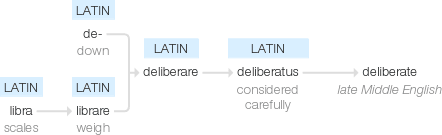
late Middle English (as an adjective): from Latin deliberatus, ‘considered carefully’, past participle of deliberare, from de- ‘down’ + librare ‘weigh’ (from libra ‘scales’).
2Origin of the word artifice
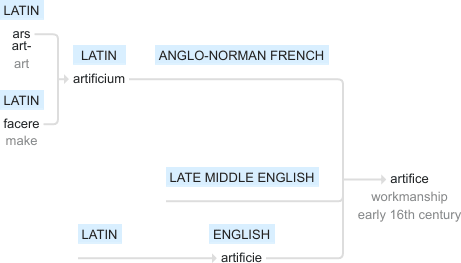
early 16th century (in the sense ‘workmanship’): from Anglo-Norman French, from Latin artificium, based on ars, art- ‘art’ + facere ‘make’. Late Middle English has the form artificie, directly from Latin.