Bridging Generational Gaps with Empathy
I. Workplace & Professional Development Focused Ideas
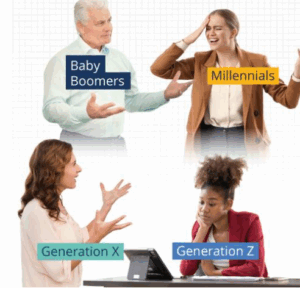
Empathy is the cornerstone of understanding, especially when navigating the diverse landscapes of generational differences. By fostering empathy, we can transform potential friction into opportunities for growth, collaboration, and mutual respect. Here are some creative and well-thought-out ideas to bridge generational gaps with empathy:
“Reverse Mentorship with a Twist” Program:Concept: Pair younger employees (Gen Z/Millennials) with older, more experienced leaders (Gen X/Boomers) not just for technology or social media insights, but for cultural and value exchange. The “twist” is that the younger mentor actively teaches the older mentee about their generation’s unique perspectives on work-life balance, purpose-driven work, and emotional expression in the workplace, as discussed by Mimi Nicklin and the “Empathy Revolution” insights.Empathy Component: Encourages older generations to “stay curious” about younger workers’ motivations and priorities, fostering understanding rather than judgment.“Generational Storytelling Circles”:Concept: Regular, facilitated sessions where employees from different generations share personal stories related to their career journey, key life experiences, and how societal shifts impacted their view of work. Similar to the idea of “story stewardship” from Brené Brown’s research, focusing on listening and believing each other’s narratives.Empathy Component: Builds narrative trust and allows individuals to see the “why” behind different work habits or priorities, moving beyond stereotypes.“Empathy-Driven Project Teams”:Concept: When forming project teams, explicitly prioritize generational diversity. Before starting the project, dedicate time to an “Empathy Charter” where team members discuss their preferred communication styles, feedback preferences, and individual motivations, leveraging the insights from the MEA program on recognizing generational characteristics.Empathy Component: Proactively addresses potential communication clashes and encourages team members to adapt their approach based on empathetic understanding of their colleagues.“Values-Alignment Workshop for All Generations”:Concept: A workshop focused on identifying and discussing core professional and personal values across generations. The goal is to find common ground and shared aspirations (e.g., impact, security, learning) rather than focusing on differences, as highlighted by Mimi Nicklin’s point about being “more alike than different.”Empathy Component: Shifts focus from generational “demands” to universal human desires, fostering a sense of shared humanity and purpose.II. Community & Social Interaction Focused Ideas
“Situational Empathy Training Simulations”:Concept: Develop short, interactive simulations based on common intergenerational workplace scenarios (e.g., a Gen Z employee challenging a traditional process, a Boomer struggling with new tech). Participants role-play and then debrief, discussing the underlying emotions and perspectives from each generational viewpoint, similar to the “recognizing perspectives” domain of global competency.Empathy Component: Provides a safe space to practice perspective-taking and emotional recognition in a practical context.“Cross-Generational Skill-Share Workshops”:Concept: Organize community workshops where individuals from different generations teach each other skills. Examples: a Gen Z teaching social media marketing, a Boomer teaching traditional crafting, a Millennial teaching financial literacy, or a Gen X teaching basic home repairs.Empathy Component: Breaks down barriers by valuing diverse knowledge and fostering mutual respect through shared learning experiences.“Intergenerational Digital Storytelling Project”:Concept: Pair younger and older community members to create digital stories (short videos, podcasts) about their lives, local history, or shared experiences. The younger generation assists with technology, while the older generation provides content and wisdom.Empathy Component: Encourages active listening, curiosity, and appreciation for lived experiences across the age spectrum, as emphasized by “Believing the Answer” in the context of empathy building.“Community Service with a Generational Mix”:Concept: Organize community service events that specifically require collaboration across age groups. For instance, a park cleanup where physical tasks are shared, or a food drive where different generations handle collection, sorting, and distribution.Empathy Component: Working towards a common goal naturally breaks down perceived differences and fosters a sense of shared purpose and contribution.“Empathy Walks”:Concept: Structured walks where individuals from different generations are paired and given prompts for conversation that encourage sharing personal experiences, challenges, and hopes. The focus is on deep, non-judgmental listening.Empathy Component: Facilitates one-on-one connection in a relaxed setting, promoting genuine curiosity and understanding of individual contexts.III. Educational & Personal Growth Focused Ideas
“Generational ‘Ask Me Anything’ (AMA) Panels”:
Concept: Host moderated panels where representatives from each generation (Boomers, Gen X, Millennials, Gen Z) answer questions from the audience about their experiences, challenges, and perspectives on topics like technology, work, family, and social issues.
Empathy Component: Provides a platform for direct dialogue, dispelling myths and allowing for nuanced understanding of generational viewpoints.
“Empathy Journaling for Intergenerational Reflection”:
Concept: Encourage individuals (students, employees, family members) to keep a journal where they reflect on interactions with people from different generations. Prompts could include: “What assumption did I make about X generation today, and what did I learn that challenged it?” or “How might person Y’s generational context influence their current perspective?”
Empathy Component: Develops self-awareness of biases and promotes conscious perspective-taking, a core aspect of empathy.
“The ‘What You Don’t Know About My Generation’ Showcase”:
Concept: A creative event (e.g., a school fair, a company talent show) where individuals showcase aspects of their generation that are often misunderstood or stereotyped. This could involve presentations, performances, or art installations.
Empathy Component: Challenges preconceived notions and celebrates the unique contributions and complexities of each generation, fostering mutual respect.
“Problem-Solving Challenges: Diverse Perspectives Required”:
Concept: Present complex, real-world problems (e.g., local community issues, business challenges) that require input from multiple generational perspectives to solve effectively. Teams are explicitly designed to be generationally diverse.
Empathy Component: Highlights how diverse experiences lead to richer solutions and demonstrates the value of understanding different approaches.
“Empathy-Focused Media Literacy Workshops”:
Concept: Workshops that analyze how different generations are portrayed in media (news, social media, entertainment) and discuss the impact of these portrayals on intergenerational relationships. Emphasize critical thinking about stereotypes and “prevalence inflation,” as mentioned in the “Empathy Revolution” source.
Empathy Component: Equips individuals with tools to deconstruct biased narratives and cultivate a more nuanced understanding of other generations.
“The ‘Shared Humanity’ Art Project”:
Concept: A collaborative art project where people from different generations contribute to a single piece that visually represents their shared experiences, hopes, and fears, transcending generational labels. This could be a mural, a quilt, or a digital collage.
Empathy Component: Focuses on the fundamental truth that “we’re all far more alike than we are different,” promoting unity and connection through creative expression.
The post Bridging Generational Gaps with Empathy appeared first on Peak Development Strategies.